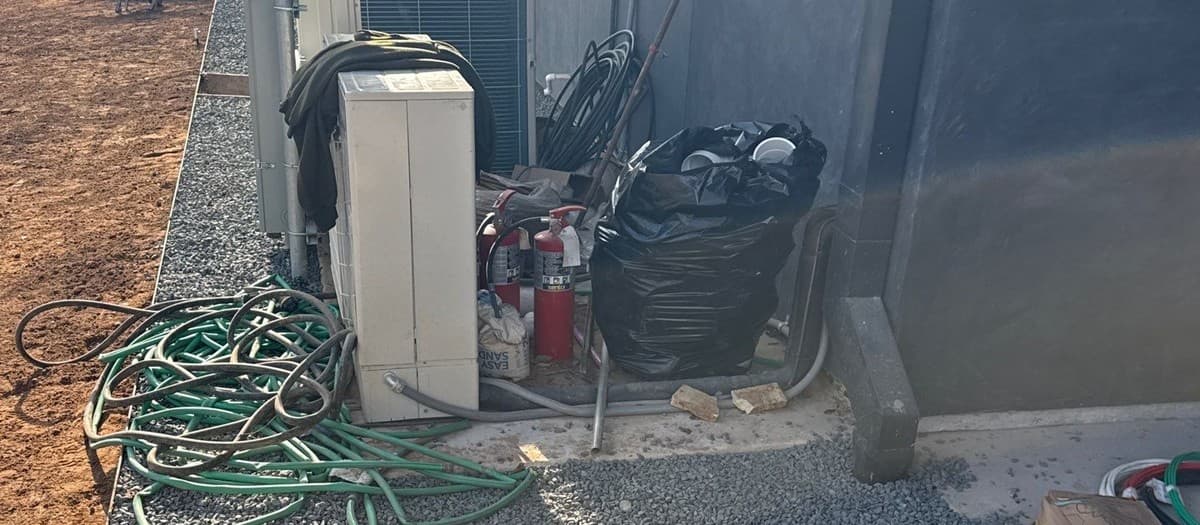
Every downspout that dumps water next to a foundation is a slow-motion problem. Underground downspout drainage is one of the best return-on-investment drainage installs available — when it is sized and sloped correctly.
Splash blocks and downspout extenders move water three feet from the foundation. Underground drainage moves it 30 feet. That distance matters when Texas drops three inches of rain in two hours and every gutter on the house is running at full capacity. The system that handles that event without flooding the foundation is worth the installation cost several times over.
Understanding the Volume: Why Downspout Drainage Matters
A square foot of roof collects approximately 0.623 gallons of water per inch of rainfall. A 2,400 SF roof collecting one inch of rain produces about 1,500 gallons. Split across six downspouts, that is 250 gallons per downspout — all discharged right at the foundation line. In a one-hour storm, that is a sustained flow rate of about 4 gallons per minute per downspout.
A 4-inch PVC pipe at 1% slope carries approximately 100 gallons per minute. So capacity is rarely the constraint on residential downspout drainage. The constraint is almost always getting the pipe installed with adequate slope to the outlet, especially on relatively flat sites where you have only a few inches of grade change to work with across a 40-foot run.
Pipe Sizing for Downspout Drains
For individual downspout connections, 4-inch diameter pipe is the standard. A 3-inch downspout typically connects to 4-inch underground pipe via an adapter. Do not use 3-inch underground pipe for downspout discharge — debris, leaves, and roofing granules in the water flow can clog 3-inch pipe quickly. Four-inch provides adequate flow capacity and significantly better clog resistance.
When multiple downspouts are combined into a single trunk line, size up. Two downspouts combining into a single run: 4-inch trunk is fine. Three or four downspouts merging into one outlet: step up to 6-inch pipe for the combined section. The same capacity math applies — calculate your contributing roof area in square feet, estimate your design storm intensity (Austin's 10-year, 1-hour storm is approximately 4 inches/hour), and verify the pipe size can handle it.
Use Schedule 40 PVC (not SDR-35 thin-wall) for downspout underground runs. SDR-35 is rated for gravity sewer applications and is adequate for low-velocity drainage, but Schedule 40 handles the transition from vertical downspout flow to horizontal more cleanly. The pipe is not under significant pressure in this application, but the added wall thickness resists crushing under lawn areas better over time.
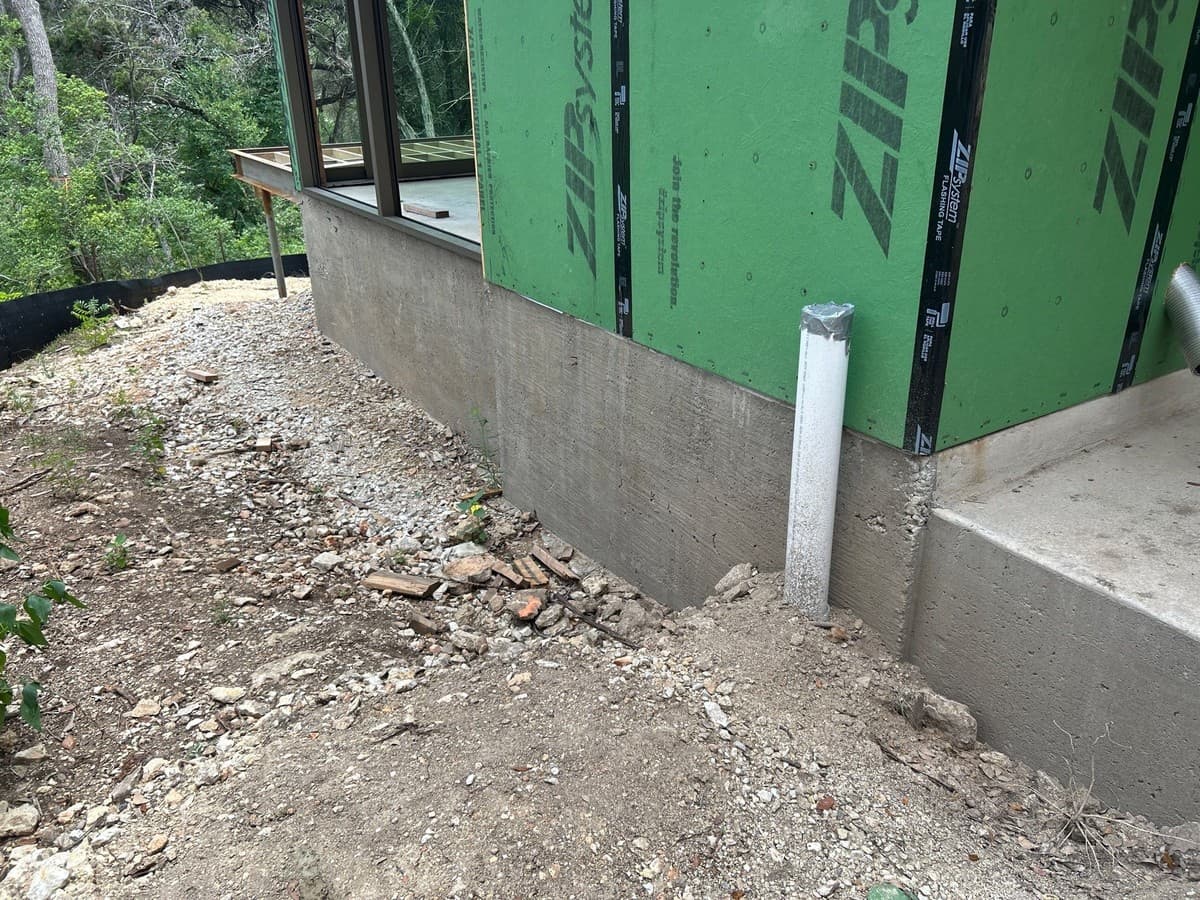
Slope Requirements and Site Challenges
Minimum slope for a downspout drain: 1% (1/8 inch per foot). At this slope, velocity is sufficient to self-clean minor debris. If you can achieve 2% or more, do it. Higher slope is always better in drainage pipe applications.
Flat sites are the challenge. A backyard with only 4 inches of grade change over 40 feet gives you a 0.83% slope — barely adequate. On these sites, you have two options: maximize every inch of available grade by carefully routing the pipe path, or accept that the pipe will flow slowly and ensure it is sized large enough to avoid clogging at low velocity.
Avoid situations where the pipe dips below the outlet elevation at any point in its run. Any low point in a drain pipe becomes a debris trap that eventually plugs the system. Use a laser level during trench excavation to confirm continuous slope from inlet to outlet before setting pipe. Finding a reverse grade after the pipe is in means redigging — which is expensive and avoidable.
"Underground downspout drainage is one of the most consistent upsells I make on patio and drainage jobs. Clients feel it, they see it working in the next storm, and they send referrals."
Outlet Types and Placement
The NDS pop-up emitter is the standard outlet for residential underground downspout drains. It installs flush at grade, opens under flow pressure to discharge water, and closes when dry to prevent animals from entering the pipe. Pop-up emitters are available in 4-inch diameter (matching your pipe) and come in green or black to blend into lawn areas. They cost about $8–$12 each — one of the most cost-effective components in the system.
Daylight outlets — where the pipe emerges above grade at a slope — work well when the topography allows it. The pipe end should be protected with a critter guard or a swing-check valve to prevent backflow and animal entry. Daylight outlets on slopes or at property edges are low-maintenance and self-cleaning when slope is adequate.
Connecting to municipal storm drainage is allowed in some Texas municipalities but requires approval and, in many cases, a permit. Some cities require a certain distance of underground drain before allowing connection to the curb. Connecting to sanitary sewer is never acceptable for stormwater discharge. Confirm outlet options with local code before specifying a system that connects to anything other than daylight or a pop-up emitter.
Installation Process
Dig your trench a minimum of 12 inches deep from the inlet to the outlet, maintaining consistent slope. Use a laser level on a tripod to set grade stakes before digging — do not rely on eyeballing the slope. Remove the downspout extension and install a downspout adapter (NDS makes 2x3 and 3x4 downspout adapter fittings that transition from rectangular downspout to 4-inch round pipe).
Lay the 4-inch PVC with cemented fittings at all connections. Avoid the trap of just slipping pipes together without cement — ground movement and thermal cycling will separate slip-fit joints within a few seasons. Use PVC primer and cement on every joint. At 90-degree direction changes, use a sweep elbow (1/4 bend with a long radius), not a tight elbow — sweep elbows flow debris through; tight elbows create a trap point.
Backfill with native soil in 6-inch lifts, tamping each lift by hand or with a lightweight compactor. Avoid heavy compaction directly over the pipe — even Schedule 40 PVC can deform under significant point load. Mark your outlet location clearly so the client knows where it is for future maintenance. A brief written note describing the system layout and maintenance (flushing with a hose annually) keeps the system working long after you are off the job.
Add downspout drainage to your patio and hardscape estimates
Ledge makes it easy to include downspout underground drain systems as a line item on any hardscape proposal. Upsell drainage and win jobs that last.
Frequently Asked Questions
Can I use corrugated ADS pipe instead of PVC for downspout drainage?
ADS corrugated pipe (solid, non-perforated) is acceptable for downspout underground runs in non-traffic areas. It is less rigid than Schedule 40 PVC and is more susceptible to kinking on sharp radius bends. For runs under driveways or areas with vehicular loads, use Schedule 40 PVC. For lawn areas without traffic, solid ADS corrugated works fine and is easier to route around obstacles.
How far from the foundation should the outlet be?
At least 10 feet from the foundation, preferably more. The goal is to discharge water far enough from the structure that it cannot pool back toward the foundation before it drains away from the property. On small lots, 10–15 feet may be the maximum available distance. On larger properties, 20–30 feet is a better target.
Can I connect a downspout drain to an existing French drain?
With caution. Downspout drainage produces high-velocity, high-volume flow during storm events. Connecting directly into a French drain system can overwhelm the aggregate and cause backflow into the French drain trench, which defeats the drainage system's purpose. If you need to combine systems, use a catch basin as the junction point so the downspout flow is collected in a sump before entering the combined outlet pipe.
Why do pop-up emitters stop popping up?
The most common reason is debris accumulation inside the emitter housing that jams the flap mechanism. Remove the emitter from the pipe (it typically twists off), clean out the interior, and reinstall. The second cause is root intrusion into the pipe upstream of the emitter that creates enough backpressure to prevent the flap from opening. Flush the pipe with a garden hose to check for blockages before blaming the emitter.
Edgar Galindo
Co-founder, Ledge
Edgar built Ledge while running a landscape construction company in Central Texas. He writes about installation techniques, estimating, and building a profitable field operation.