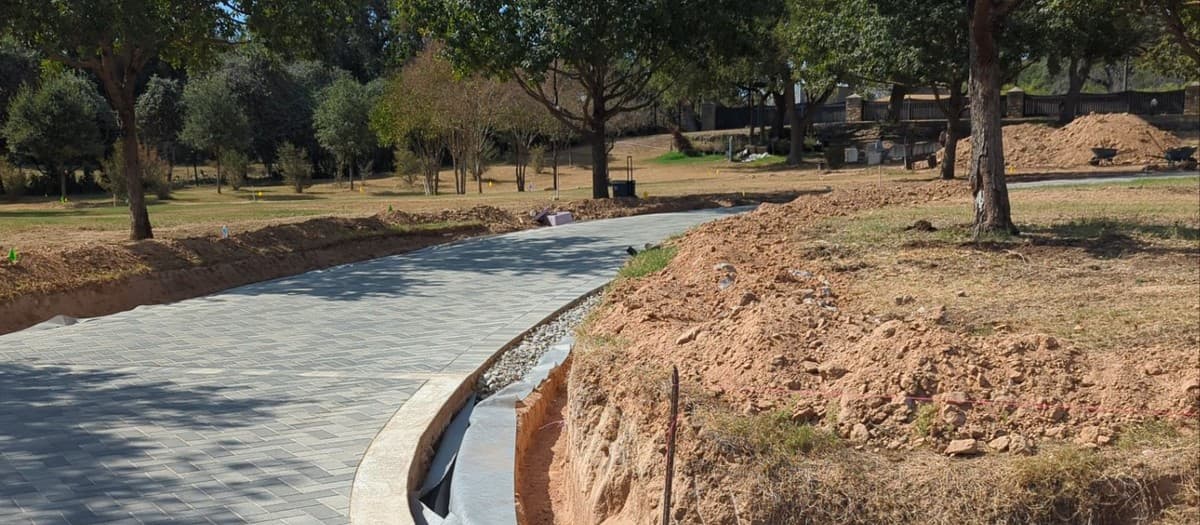
A French drain installed without adequate slope, proper aggregate, or a real outlet just creates a new problem underground. Here is the process that actually moves water where it needs to go.
The most common reason French drains fail is that the contractor installed one without understanding where the water is supposed to go. A French drain is a collection and conveyance system — it collects groundwater and shallow surface infiltration and conveys it somewhere. Without a real outlet, all you have done is move the water problem 20 feet down the trench.
What a French Drain Is and Is Not
A French drain is a perforated pipe in a gravel-filled trench, designed to collect groundwater and subsurface drainage from the surrounding soil. It handles water that is in or near the soil, not surface runoff that has not yet infiltrated. For surface water — sheet flow from rain, water coming off a roof, or runoff that never soaks into the ground — you need surface drainage solutions: swales, channel drains, or catch basins with dedicated outlet pipes.
In practice, many residential drainage jobs need both. A wet area against a house foundation is typically a combination of: surface runoff pooling against the foundation, groundwater in the soil near the foundation, and possibly roof runoff from gutters. Diagnosing which problem is dominant determines whether a French drain, a surface drain, or a combined approach is the right answer.
Planning the Outlet First
Before you plan the trench route, establish where the water will exit. Options include: daylighting to a lower area of the property, connecting to a dry creek bed or bioswale, tying into a street curb or municipal storm drain (requires permit and approval in most Texas jurisdictions), or discharging into a detention area at the low point of the lot.
Do not discharge toward a neighbor's property — this creates liability and may violate local ordinances. Do not dead-end the drain in a drywell unless soil percolation tests confirm the soil can absorb the volume. In heavy clay soil (most of Austin and the surrounding Hill Country), drywells fill and overflow within a few storms. They are rarely the right solution in Central Texas.
Trench Dimensions and Slope
Standard residential French drain trench: 12 inches wide, 18–24 inches deep. Deeper trenches intercept more of the groundwater column; shallower trenches handle near-surface drainage only. For foundation drainage applications, the trench bottom should be below the footing level of any adjacent structure. This typically means 24–36 inches deep in residential construction.
Slope is the variable most often cut short. Minimum 0.5% grade (1/2 inch per 10 feet) is the floor for pipe drainage. At that slope, debris accumulates and clogs pipes within a few years in clay soil. A 1% grade (1 inch per 10 feet) is a better target. If you have enough elevation change, 1.5–2% produces excellent flow velocity that self-clears minor debris.
Check slope continuously during excavation with a laser level or transit. Clay soil in Austin is notorious for underground surprises — roots, old fill, caliche layers — that can force you to adjust your trench route mid-dig. Having a level in hand during excavation prevents discovering a reverse slope after the pipe is in.
"A French drain is only as good as its outlet. Before I dig a foot of trench, I confirm where the water is going."
Pipe, Aggregate, and Filter Fabric
Use 4-inch perforated pipe — ADS N-12 corrugated or NDS rigid PVC. ADS corrugated is flexible and easier to route around obstacles. NDS rigid PVC maintains slope more precisely and is less susceptible to crushing under vehicular loads. If the drain runs under a driveway, use rigid Schedule 40 PVC rather than corrugated pipe. Corrugated pipe can deform under heavy loads.
Aggregate should be clean 3/4-inch washed river gravel — not crushed aggregate. For French drains, round washed gravel flows water through more efficiently than angular crushed material. Place 4–6 inches of gravel in the trench before setting the pipe, set the pipe with perforations facing down (at 4 o'clock and 8 o'clock positions), and cover with a minimum of 12 inches of gravel above the pipe top.
Wrap the entire aggregate column (not just the pipe) in non-woven geotextile filter fabric, overlapping seams by at least 12 inches at the top. The fabric separates the clean aggregate from the surrounding native soil. Without it, clay particles migrate into the gravel over 3–5 years, reducing the drain's permeability to near zero. This is the most common reason French drains stop working after a few seasons.
Outlet and Cleanout Installation
At the outlet end of the system, install a NDS pop-up emitter or a straight outlet end cap with a critter guard. Pop-up emitters open under flow pressure and close when dry, preventing rodent or insect entry into the pipe. They work well for outlets that daylight in landscaped areas or lawn.
Install cleanout access at the head of the drain (highest elevation) and at every direction change. A 4-inch cleanout tee with a riser to grade allows you to flush the drain with a hose or snake if it slows down. Without cleanouts, a clogged French drain means excavating the whole system. Cleanouts cost almost nothing to add during installation and save a significant amount of money if the drain ever needs maintenance.
Estimate drainage projects with confidence
Ledge handles drainage estimates with pipe quantities, aggregate tonnage, and outlet hardware as line items. No more guessing on material costs for French drain jobs.
Frequently Asked Questions
How deep should a French drain be next to a foundation?
The pipe invert (bottom of the pipe) should be at or below the bottom of the adjacent foundation footing. For standard residential slab foundations in Texas, this typically means 24–36 inches of total trench depth. Shallow French drains next to foundations primarily capture surface drainage, not the groundwater pressure that causes foundation movement.
Can I use pea gravel instead of river rock in a French drain?
Pea gravel works but is smaller and more prone to migrating into the pipe perforations over time. River rock (3/4-inch washed round gravel) is the preferred material. Do not use crushed angular aggregate in the perforated aggregate zone — the angular pieces reduce void space and slow drainage compared to round gravel.
Which way do the perforations face in the pipe?
Perforations face down — at approximately 4 o'clock and 8 o'clock positions. Water in the aggregate column rises through gravity to the pipe; water does not fall into the pipe from above. Orienting perforations upward creates a situation where the holes fill with aggregate and fine particles from above, reducing flow over time.
How long does a properly installed French drain last?
A French drain with good filter fabric, clean aggregate, and a solid outlet should function well for 15–25 years. The main degradation mechanisms are filter fabric clogging with fine particles (happens faster in clay soils) and root intrusion into the pipe. Annual cleanout flushing extends system life significantly.
Edgar Galindo
Co-founder, Ledge
Edgar built Ledge while running a landscape construction company in Central Texas. He writes about installation techniques, estimating, and building a profitable field operation.