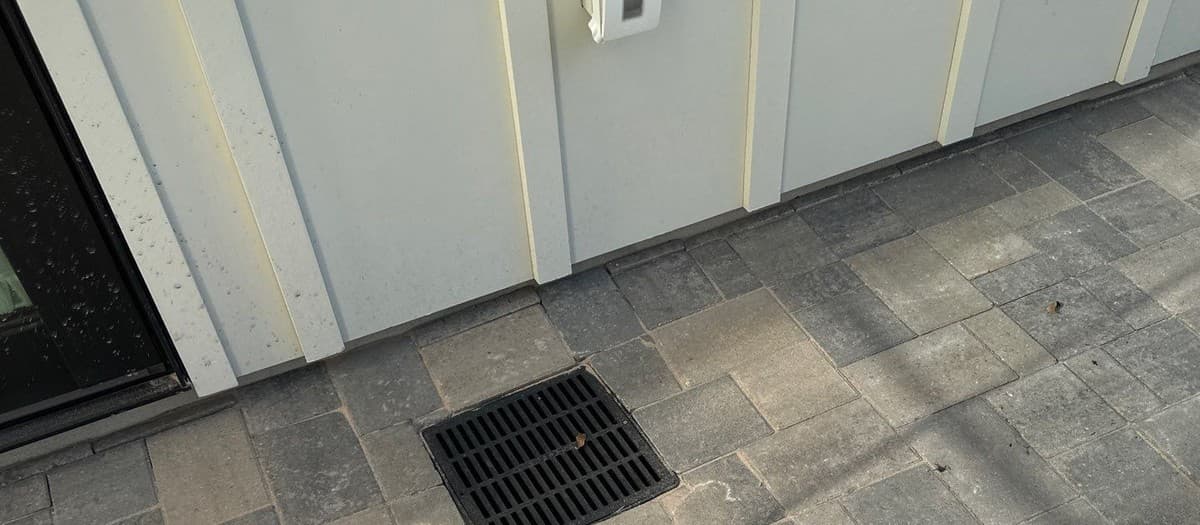
Specifying the wrong drainage system creates a client relationship problem six months after install. Each system solves a different problem — knowing which one fits the site condition is the job.
There is a widespread misconception in residential landscape work that any wet-yard problem gets solved by a French drain. It does not. French drains handle subsurface groundwater. Slot drains handle concentrated surface water along a linear boundary. Catch basins handle point accumulation of surface water in low spots. Installing a French drain where you need a catch basin is one of the most common diagnostic errors on drainage jobs.
Start with a Site Diagnosis
Before specifying any system, answer these questions: Is the water coming from above (rainfall runoff, roof drainage) or from below (groundwater, saturated soil)? Is the wet area linear (along a fence line, at a patio edge, at the base of a slope) or a point (a single low spot in the lawn)? How fast does the area drain after rain — immediately, within an hour, or still wet after two days?
Fast standing water that clears in under an hour is surface drainage — the water is moving too slowly across the surface. Water that lingers for days is likely a soil permeability issue or a subsurface groundwater problem. These require different solutions. Identifying which you are dealing with before bidding prevents the most expensive type of drainage callback: the wrong system installed in the wrong place.
French Drains: Subsurface Groundwater Collection
A French drain is the right call when the problem is water in the soil — saturated soil near a foundation, a hillside spring seeping toward a structure, or a low area where the water table sits close to the surface seasonally. The perforated pipe collects water from the surrounding aggregate and conveys it to the outlet.
French drains do not perform well when the primary problem is surface water that has not yet infiltrated. In a clay soil yard during a heavy rain, most of the water running across the surface will not penetrate into a French drain — it will sheet-flow over the ground and pool at the next low point. You need surface drainage to move it before it soaks in (or fails to soak in).
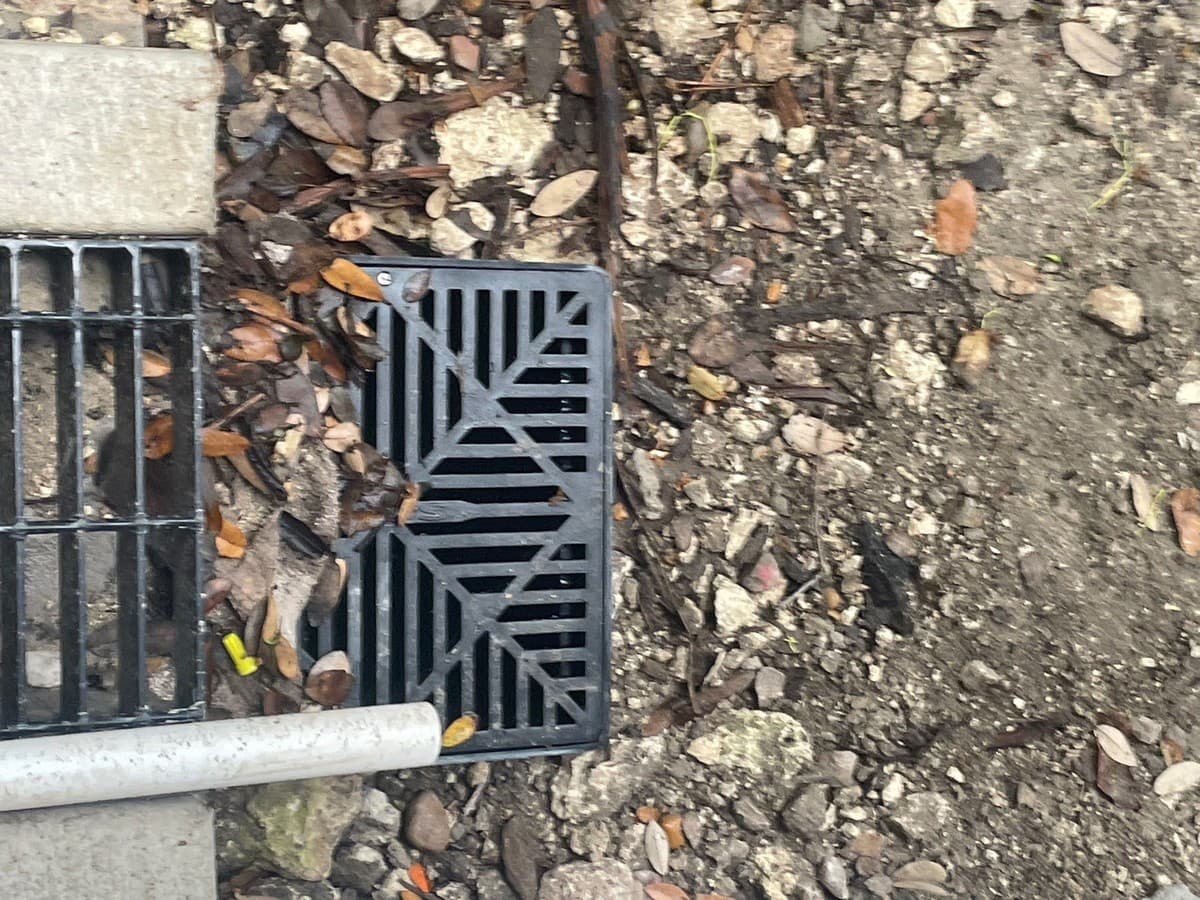
Channel and Slot Drains: Linear Surface Water Collection
Slot drains (also called channel drains or trench drains) are the right solution when surface water needs to be intercepted along a linear edge — at the base of a driveway, along the low side of a patio, between a hardscape surface and a lawn. NDS Spee-D Channel systems, ACO Drain, and similar products provide pre-made channel bodies in 12-inch sections with various grate options.
The grate type matters for both function and aesthetics. A driveway installation needs a grate rated for vehicle loads — Class B minimum (H-10 loading). A pool deck installation might use a narrow slot grate that is nearly invisible at surface level. NDS offers polymer grates, ductile iron grates, and stainless steel grates in various slot widths to match different applications.
Channel drains connect to 4-inch outlet pipe at the end of each run. They must have adequate slope toward the outlet — minimum 0.5%, same as any drainage pipe. If site grade does not provide adequate slope, you can use a pre-sloped channel body (NDS makes these for exactly this situation) that has slope built into the channel bottom rather than relying on the installed slope alone.
"I spend five minutes diagnosing before I specify anything. Is the water in the soil or on top of it? The answer determines everything that follows."
Catch Basins: Point Collection for Low Spots
A catch basin collects surface water at a single low point and connects to underground pipe that conveys the water to an outlet. Use catch basins where water accumulates in a concentrated area — a lawn bowl, a low corner in a hardscape, an area where multiple surface flow paths converge.
NDS makes a widely available 9-inch and 12-inch square catch basin that works well for most residential applications. The basin installs flush with grade, has a grate top (available in multiple sizes and load ratings), and connects to 4-inch pipe via a knockout fitting in the side or bottom. Install the basin in a bed of 3/4-inch gravel for stability and to allow drainage around the outside of the basin body.
Catch basins accumulate debris — leaves, sediment, grass clippings. The sump at the bottom catches debris before it enters the pipe. Clean the basin seasonally (pull the grate, remove accumulated debris) to prevent the sump from overflowing into the pipe and eventually causing a blockage. Include this maintenance recommendation in your project documentation to clients.
Combined Systems: When One Solution Is Not Enough
Many residential drainage problems require a combination of systems. A patio that sits below grade might need: a slot drain at the patio edge to capture surface runoff, a catch basin at the patio low point for rain events, and a French drain under the patio to handle groundwater infiltration through the paver joints. Tie all three into a common outlet pipe. This approach adds complexity and cost but addresses all three failure modes simultaneously — which is why those calls from wet patios stop after it is done right.
Build drainage estimates as fast as you diagnose the problem
Ledge lets you estimate French drains, channel drains, and catch basin systems with pipe quantities and outlet hardware as line items — then send the proposal before you leave the site.
Frequently Asked Questions
Can I connect a French drain, catch basin, and channel drain to the same outlet pipe?
Yes. Multiple drainage components can share a common outlet pipe as long as the pipe is sized to handle the combined peak flow. For most residential applications, a 4-inch outlet pipe handles 2–3 combined drainage inputs. On larger sites or sites with heavy rainfall concentration, consult a drainage engineer about pipe sizing and whether a larger diameter outlet is needed.
What is the difference between a catch basin and a sump?
In residential landscape work, the terms are often used interchangeably. Technically, a sump is any low collection point; a catch basin is a pre-manufactured collection unit with a grate and outlet fitting. NDS and similar manufacturers' products are properly called catch basins. The term "sump" in landscape drainage usually refers to the debris-collection volume at the bottom of a catch basin below the outlet pipe invert.
Why do slot drains clog at the end of every season?
Slot drains accumulate fine debris — soil particles, organic matter, small gravel — inside the channel body. If the channel has inadequate slope, this debris accumulates rather than washing to the outlet with each rain. Clean slot drains by pulling the grate and flushing with a hose. If a channel drain consistently backs up, it likely needs a steeper slope or more frequent cleaning intervals than typical.
What is the most common drainage mistake landscape contractors make?
Installing the wrong system for the problem type — usually a French drain where a surface drain was needed. The second most common mistake is inadequate outlet: installing a drain system that terminates in an area without sufficient grade to carry water away, or dead-ending the pipe without a legitimate discharge point. Both are diagnostic failures that happen before a shovel goes in the ground.
Edgar Galindo
Co-founder, Ledge
Edgar built Ledge while running a landscape construction company in Central Texas. He writes about installation techniques, estimating, and building a profitable field operation.