Standing water in a yard is a solvable problem — but the fix depends entirely on why the water is there. Grading, soil compaction, low spots, and drainage system failures each call for a different approach.
When a homeowner calls about standing water in their yard, the conversation often starts with them asking for a French drain. That might be the right answer. It might also be completely wrong for their specific situation. Before you propose a solution, you need to understand what is actually causing the water to accumulate — and in most residential yards, the answer is one of four things.
Cause 1: Poor Surface Grade
The most common cause of standing water in residential yards is inadequate surface grade. Water on a flat or reverse-sloped yard has nowhere to go, so it sits until it evaporates or slowly percolates through the soil. In Texas clay soil, that can mean days of standing water after a significant rain event.
The fix is regrading. Finished lawn grade should slope away from the house at a minimum of 2% (about 2.4 inches per 10 feet). The entire yard should have a positive grade toward a logical drainage point — the street, a side yard outlet, or a drainage easement. Regrading involves bringing in topsoil or cutting high spots and filling low spots to create that continuous downhill slope.
In established yards, regrading means temporary disruption of existing lawn. Use a transit or laser level to establish existing grades before proposing the fix. Telling a client "we need to add 8 inches of soil in the northwest corner and cut 4 inches off the back corner" gives them clarity on scope and cost. Vague drainage proposals lose bids.
Cause 2: Compacted Soil
Compacted soil — common in new construction where heavy equipment has driven repeatedly over the yard — has very low permeability. Rain hits the surface and runs off rather than infiltrating, pooling at the first low spot it finds. The yard may appear flat with adequate grade but still holds water because the soil itself cannot accept it.
Test for compaction: try pushing a screwdriver into the soil by hand. In healthy, non-compacted soil, it should go in easily 6 inches. If it stops at 2–3 inches, you have compaction. Aeration (core aerating with a tow-behind or walk-behind aerator) removes plugs of soil and improves infiltration significantly. For severe compaction, deep-tine aeration followed by sand/compost top-dressing addresses the problem more aggressively.
In Central Texas clay soils, the clay itself limits infiltration even when not compacted. Texas Ag Extension soil data shows many Austin-area clay soils have natural permeability below 0.2 inches per hour. This is not a fixable condition — it is the native soil character. For these sites, moving water off the surface quickly (through grade and swales) is more effective than trying to improve soil permeability.
Cause 3: A Low Spot with No Outlet
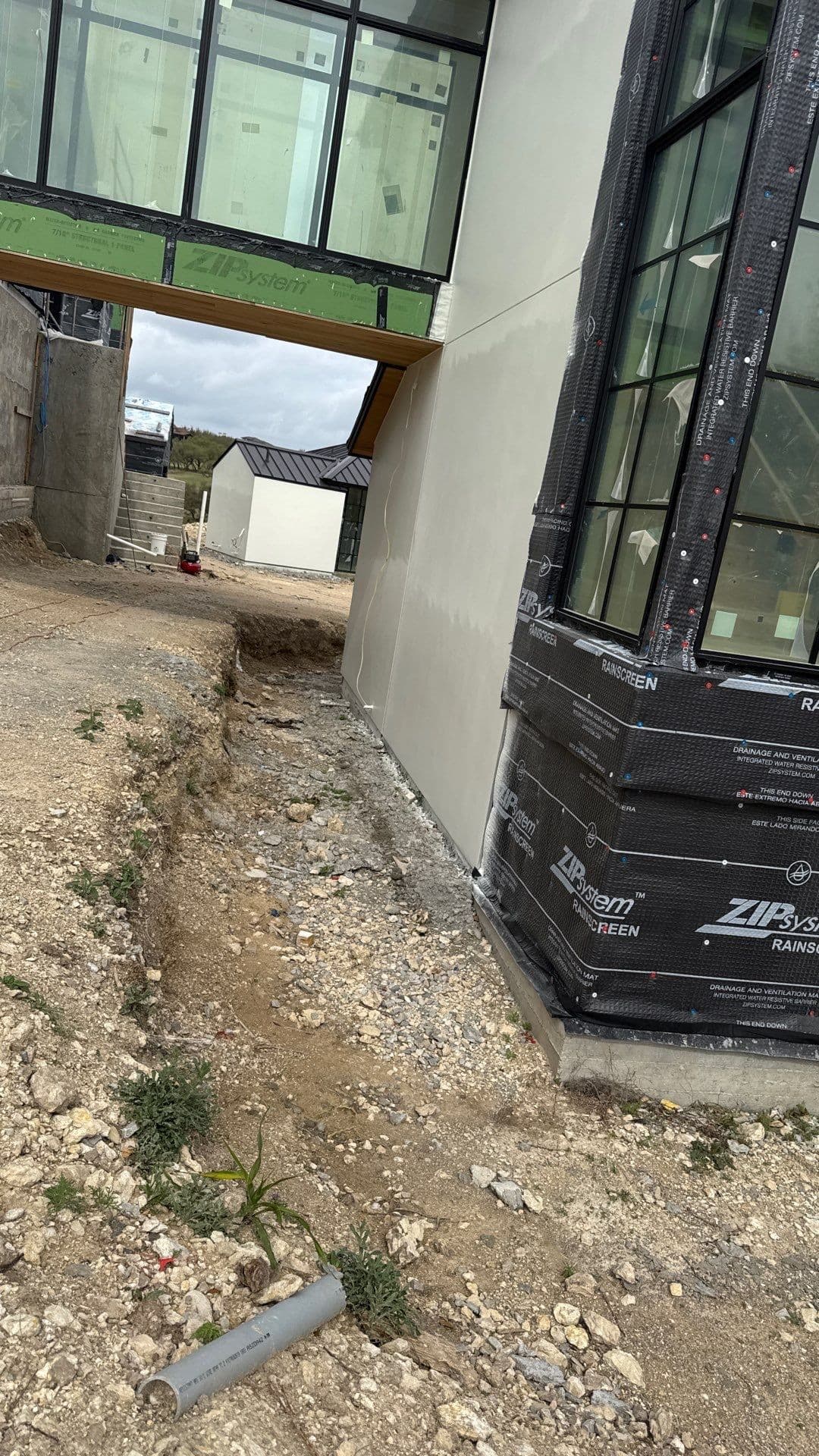
Some yards have physical low spots — depressions that collect water from surrounding areas and have no outfall. Water flows toward the low spot from all directions and stays there. Grade improvements elsewhere in the yard make this worse, not better, because they collect water more efficiently to the same low point.
The fix is creating an outlet for the low spot. Options include: filling the low spot to eliminate the depression (if you have a place to move the grade), installing a catch basin at the low point connected to an outlet pipe that carries water to a discharge location, or creating a swale that routes water from the low spot to a legal outfall.
A catch basin solution is often the most practical for established yards. A 12-inch NDS catch basin in the low spot, connected to 4-inch PVC pipe that daylights at the property edge or connects to a street inlet, handles most residential low-spot problems cleanly and with minimal disruption to existing lawn areas.
"Most drainage proposals I see from other contractors skip the diagnosis. They write 'French drain' before they figure out whether the water is in the soil or on top of it."
Cause 4: Roof Runoff and Downspout Discharge
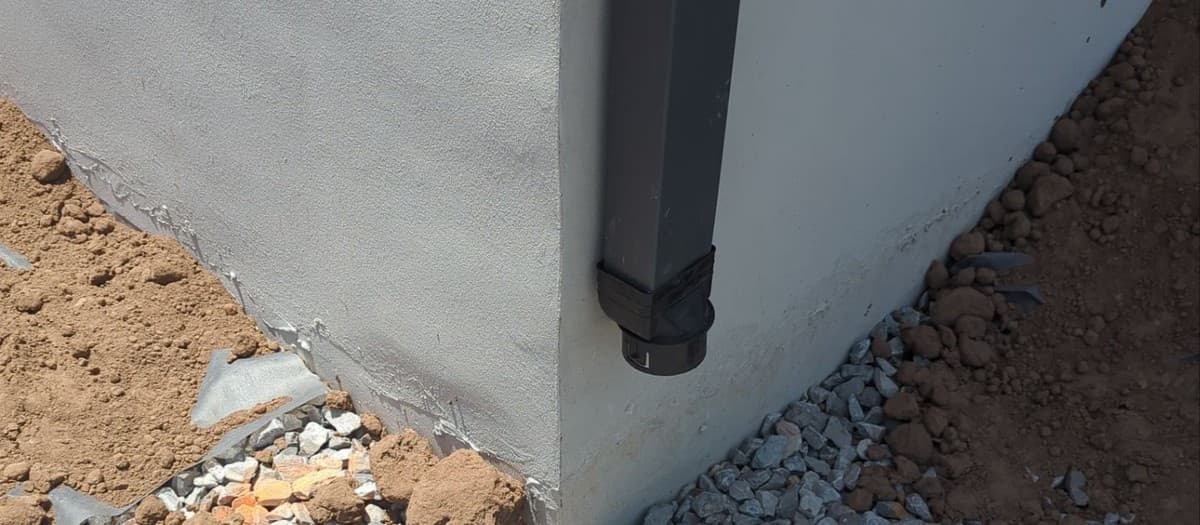
A significant percentage of residential wet-yard calls are caused by downspouts discharging directly at the foundation or into a splash block that fails to move water far enough from the house. A standard residential roof in Austin might have 2,000–3,000 square feet of collection area. A one-inch rain event on a 2,500 SF roof produces roughly 1,500 gallons of runoff, all concentrated at four to six downspout locations.
The solution is underground downspout drainage — connecting each downspout to a 4-inch underground pipe that carries the water away from the foundation to a pop-up emitter or outlet that discharges at a safe distance. This is one of the highest-value, most cost-effective drainage improvements available to residential clients. A complete downspout underground drainage system on an average Austin home runs $2,000–$4,500 installed and solves foundation-proximity wet spots definitively.
Swales: The Underrated Surface Drainage Tool
A swale is a shallow, broad channel in the lawn that carries surface water from one area to another. Properly graded swales (minimum 1% longitudinal slope, 3:1 to 4:1 side slopes) move a large volume of surface water efficiently without any pipe. They blend into the lawn, are maintenance-free, and work with the natural topography rather than against it. On sites where underground drainage is expensive or impractical, a series of connected swales can solve complex drainage problems at a fraction of the cost.
Estimate yard drainage projects in minutes
Ledge handles regrading, catch basin, swale, and French drain estimates with real material quantities. Send a professional proposal the same day you diagnose the problem.
Frequently Asked Questions
How do I know if I need regrading or drainage pipe?
Watch the water move during or right after a rain event. If it pools immediately and stays for an hour or more — the problem is likely grade or soil. If it arrives from somewhere else and accumulates in a specific spot — the problem is a drainage path that ends without an outlet. Grade problems need grade correction. Collection points need catch basins or pipe. Often you need both.
Can I fix standing water myself as a homeowner?
Minor grading corrections — adding topsoil to low spots and seeding — are DIY-accessible. Installing catch basins and underground pipe requires excavation, proper slope, and outlet management that benefits from professional experience. Homeowners who attempt French drains without understanding outlet requirements frequently create new problems rather than solving the existing one.
How much topsoil do I need to regrade a 1,000 SF yard area?
To raise 1,000 SF by an average of 2 inches (a common regrading depth), you need roughly 6.2 cubic yards of topsoil. For 4 inches average fill, approximately 12.4 cubic yards. These calculations change significantly based on how much of the area needs fill versus cut. A laser level survey before the job confirms actual quantities and prevents over-ordering.
Will planting trees or shrubs help with standing water?
Mature trees with extensive root systems do improve soil permeability and water uptake over time. But planting is a years-long solution, not a fix for an existing water problem. Rain gardens — planted depressions designed to capture and hold runoff temporarily while it infiltrates — are an effective design tool on sites with moderate drainage issues and adequate soil permeability.
Edgar Galindo
Co-founder, Ledge
Edgar built Ledge while running a landscape construction company in Central Texas. He writes about installation techniques, estimating, and building a profitable field operation.