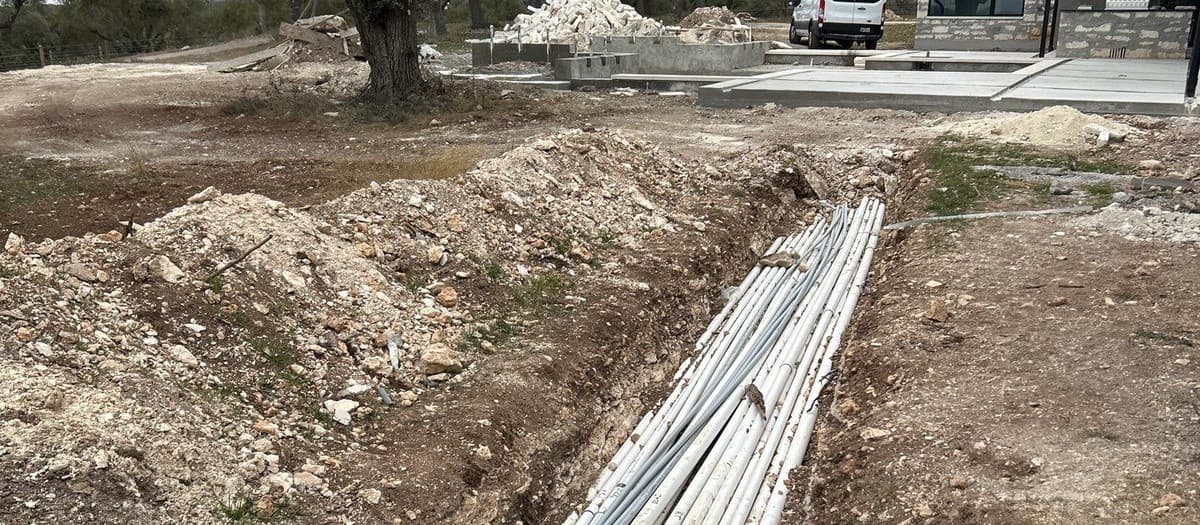
Outdoor kitchens, fire pits, water features, and lighting systems all require licensed trades at specific points in the build sequence. Miss the window and you are re-trenching through finished work.
The project scope looks great on paper: paver patio, outdoor kitchen with gas and electrical, landscape lighting on a separate circuit, and a water feature with a pump. You have priced it, the client signed, and you are two weeks from the start date. Then you call your electrician and find out he is booked four weeks out.
Licensed trades operate on their own schedules. They do not hold dates for landscapers unless you book them early and confirm. When your project includes electrical, gas, or plumbing work — and more landscape projects do every year — licensed trades must be part of your scheduling process from day one, not an afterthought.
Which Landscape Scopes Require Licensed Trades
Licensed electrician: Any 120V or 240V outlet, GFCI circuit, sub-panel, or hardwired fixture in an outdoor kitchen or entertainment area. Low-voltage landscape lighting (12V) typically does not require a licensed electrician in most jurisdictions, but the main circuit it connects to does. Confirm your local requirements before signing a scope that includes any electrical work.
Licensed plumber: Water supply connections for outdoor sinks, ice makers, or misters. Gas lines for outdoor kitchens, fire pits, or fire bowls. In Texas and most states, connecting to the gas line requires a licensed plumber with a gas endorsement. Do not have your crew do it. The liability exposure is not worth it.
Mechanical/HVAC: Outdoor misting systems that connect to a pressurized supply sometimes require an HVAC or plumbing license depending on system type and local code. Confirm before scoping.
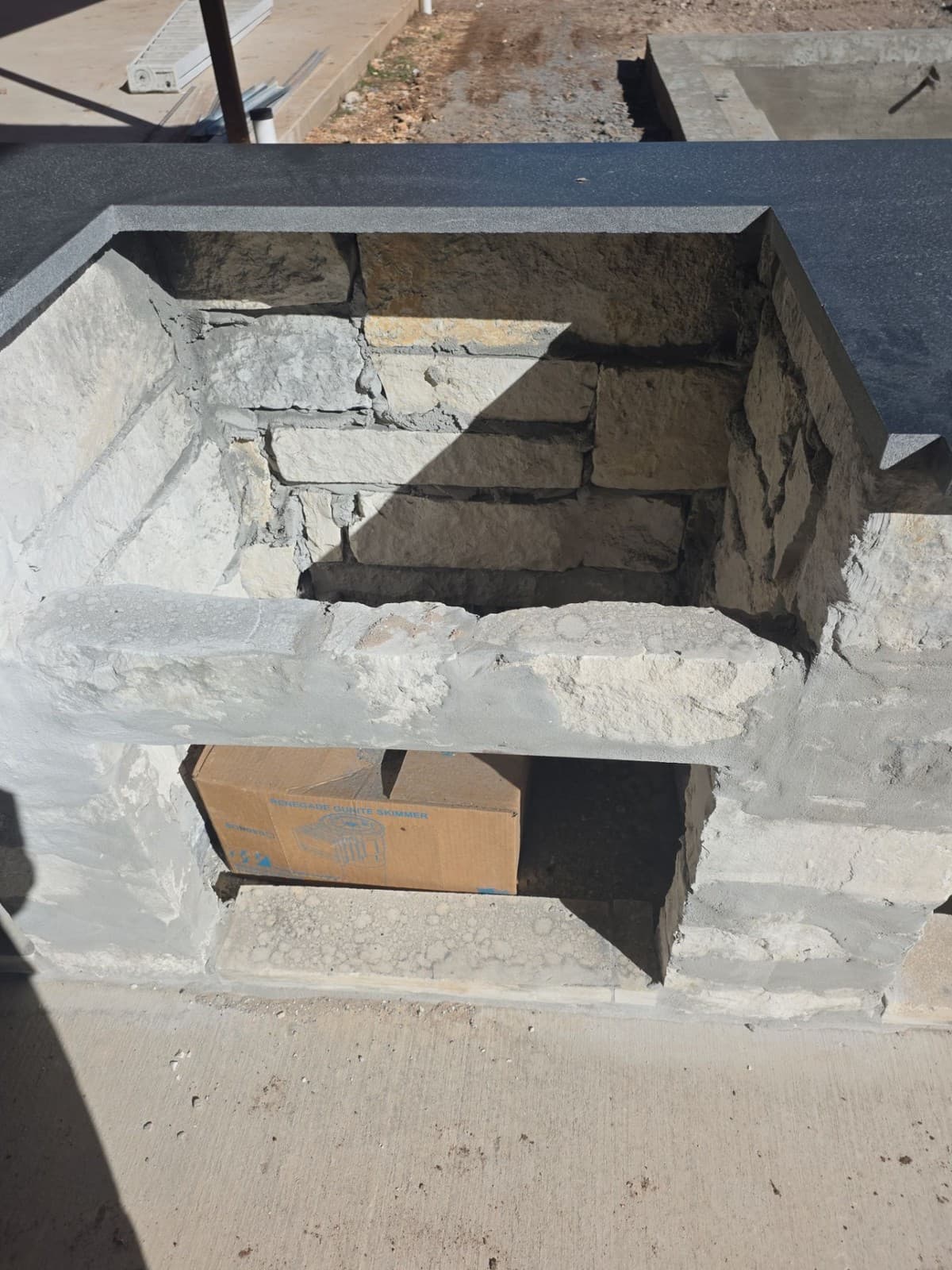
When Licensed Trades Must Be On-Site
Most licensed trade work on landscape projects happens in two windows: rough-in and finish.
Rough-in happens during the underground utility phase, before any hardscape base is laid. This is when the electrician runs conduit, the plumber runs gas line stub-outs, and the rough-in inspection is scheduled. Everything gets buried after inspection passes — so the inspection must happen before backfill.
Finish happens after hardscape and structures are complete. The electrician returns to set boxes, connect fixtures, and make the panel connections. The plumber connects appliances and makes final supply tie-ins. Finish inspections follow.
The gap between rough-in and finish can be weeks depending on your project timeline. The trades need to be aware of both windows and committed to both. Book them for both visits at the start of the project, not when you get close to each phase.
Permits and Inspection Timing
Electrical and gas permits are almost always required, and inspections must be scheduled through the building department — not through the trade contractor. Submit permit applications at least 2 to 3 weeks before the scheduled rough-in phase. Some jurisdictions take longer.
Inspections cannot be buried. If the inspector needs to see rough-in electrical or gas before it is covered, your crew must stop and hold that phase until the inspection passes. Build inspection hold days into your schedule — they are predictable, not surprises.
How to Structure Your Subcontractor Relationship
You are the general contractor on these jobs. The licensed trades work under your project schedule, not their own. That means you define the window (rough-in week of the 15th, finish week of the 30th), they commit to being on-site during that window, and they pull their own permits under their license.
Mark up subcontractor costs appropriately in your proposal — typically 15 to 20 percent. You are managing the schedule, absorbing the coordination risk, and holding the client relationship. That is worth a margin on the trade work.
"Licensed trades have their own schedules. If you do not book them before the job starts, they will not be available when the job needs them."
Schedule smarter
Ledge keeps your crew on track across every active job.
See every job at a glance, assign crews, track milestones, and stop managing schedules from memory or a whiteboard.
Book a Demo →Frequently Asked Questions
Can a landscape contractor do electrical or gas work without a license?
No. In Texas and virtually every other state, connecting to a gas line or running 120V or 240V circuits requires a licensed trade contractor. Doing this work without a license exposes you to fines, voided homeowner insurance, and personal liability if something goes wrong. It is not a gray area — sub it out to licensed trades, always.
How do I find reliable licensed trade subs for landscape projects?
Start with referrals from other local contractors. Licensed trades who have done outdoor work before — outdoor kitchens, pool electrical, gas fire features — understand the exposure and access conditions. A residential electrician who has only done interior work will slow down significantly on a landscape job. Look for trades with documented outdoor scope experience.
How long in advance should licensed trades be booked?
Book both rough-in and finish windows at contract signing — not when you get close to the phase. Good electricians and plumbers in most Texas markets book 2 to 4 weeks out. If you wait until two weeks before rough-in, you will likely be working around their availability rather than yours, which usually means your project timeline slips.
Edgar Galindo
Co-founder, Ledge
Edgar built Ledge while running a landscape design-build company in Central Texas. Managing licensed trade subs on outdoor projects is one of the skills that separates full design-build firms from basic install crews.