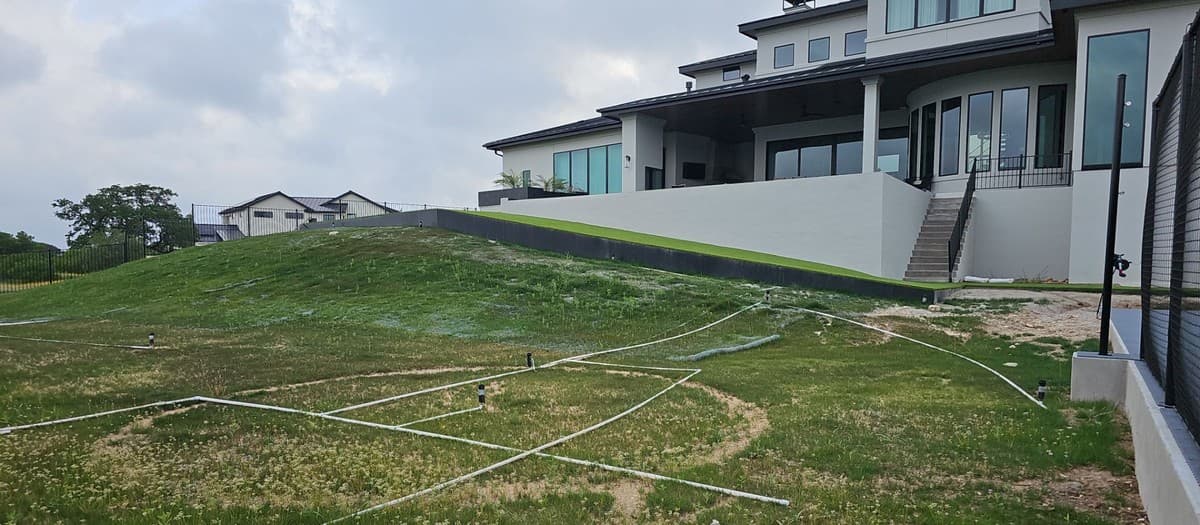
Irrigation is a two-phase install — rough-in and finish. Getting the timing wrong on either one means re-trenching, damaged heads, or zone layouts that do not match the finished landscape. Here is the correct sequence.
Irrigation is not a one-day install on a full landscape project. It is two separate phases: rough-in and finish. Each phase has a specific place in the project sequence. Run them both at the wrong time and you end up re-trenching through finished areas, repositioning heads that do not clear hardscape edges, or discovering that zone boundaries do not match where the plants actually landed.
Rough-In Phase: After Grading, Before Hardscape Base
Irrigation rough-in happens during the underground utility phase — after rough grading is complete and before any hardscape base material goes down. This is when you trench mainline and zone supply lines, install the backflow preventer, run conduit for controller wiring, and set any valve boxes.
You are not placing heads yet — just the infrastructure. Zone lines need to be laid out based on the design, but head locations cannot be finalized until hardscape and planting areas are confirmed. Trying to place heads before the patio is set means guessing on clearance, and those guesses usually require moving heads during finish work.
The critical task during rough-in is running sleeves under any planned hardscape areas. A 2-inch or 3-inch PVC sleeve under a paver patio lets you thread irrigation laterals through without cutting pavers later. If you skip the sleeves during rough-in, crossing a finished patio with zone laterals costs you a full day of paver removal — and a client relationship.
What Gets Done During Rough-In
- Mainline from water source to valve manifold location
- Backflow preventer installation (confirm local code requirements for type and height)
- Zone supply lines to approximate head locations (cap ends at rough-in, do not set heads)
- Sleeves under all planned hardscape areas
- Valve box locations set at correct depth relative to planned finish grade
- Controller conduit and wire runs (or wireless system prep)
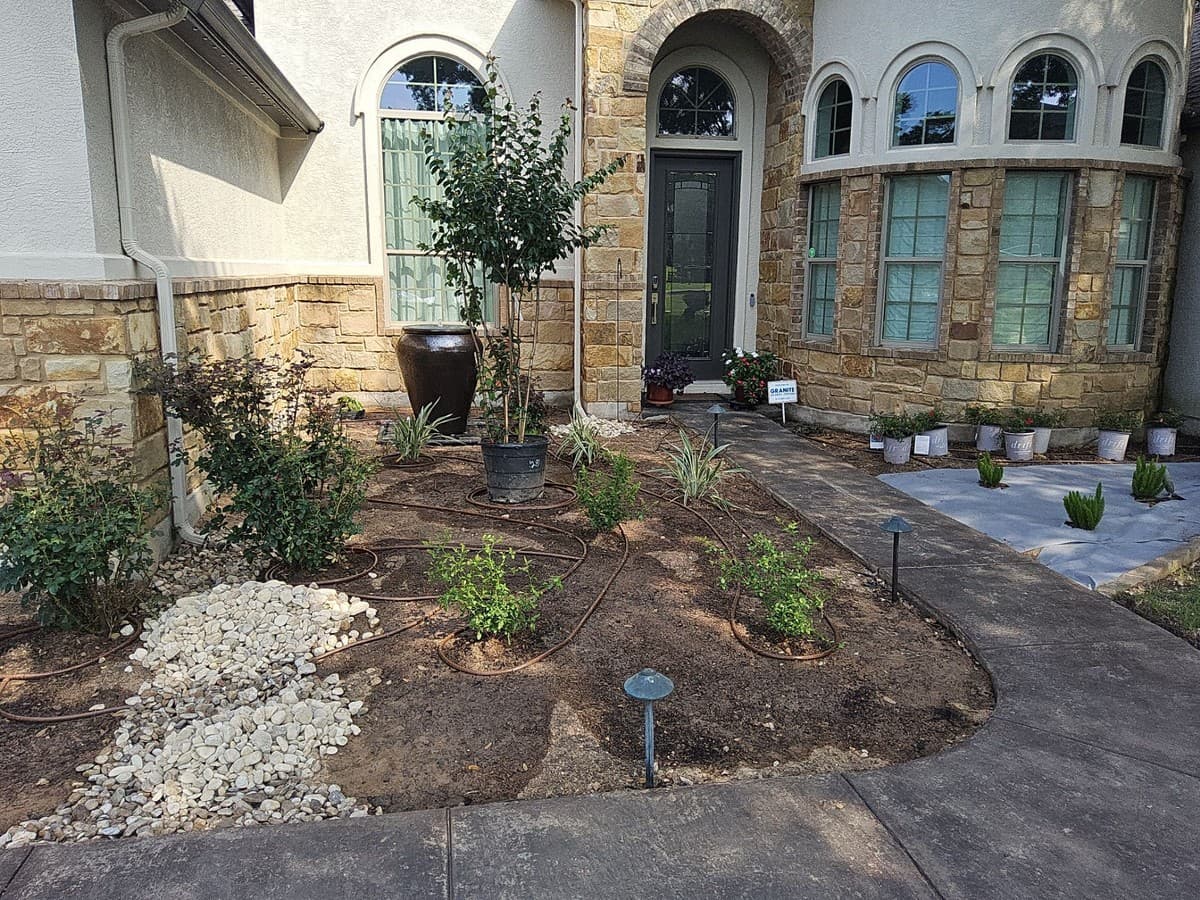
Finish Phase: After Hardscape, Before Sod and Mulch
Irrigation finish work happens after hardscape is complete and before sod or planting goes in. Now you know exactly where bed boundaries are, where the patio edge sits, and where heads need to be placed to achieve correct coverage without hitting hardscape surfaces.
Set heads at the correct elevation for the zone type — pop-up spray heads for lawn areas need to sit at finish grade, rotary heads need slightly different positioning for arc adjustment. Install all heads, connect to zone supply lines, pressure test the system, and program the controller before any sod or mulch goes down.
Why before sod? Because sod installation and the first 30 days of establishment require the irrigation system to be fully operational. If you finish irrigation after sod, you lose the critical early watering window and risk losing sod — which is an expensive problem to fix.
Permit Timing for Irrigation
Many jurisdictions require irrigation permits, especially for backflow preventer installation. Check your local requirements before scheduling rough-in. If a permit is required, apply at least 5 to 10 business days before you plan to start. An inspection may also be required after rough-in and before backfill — confirm the inspection trigger points so you do not bury work that needs to be seen.
"Run the sleeves before the pavers. Retrofitting irrigation through finished hardscape is money you should not spend."
Schedule smarter
Ledge keeps your crew on track across every active job.
See every job at a glance, assign crews, track milestones, and stop managing schedules from memory or a whiteboard.
Book a Demo →Frequently Asked Questions
Can I install irrigation in one phase instead of two?
On simple landscape refreshes without hardscape — adding beds to an existing lawn, for example — single-phase irrigation is sometimes feasible. On any project that includes hardscape installation, two-phase is required. The hardscape defines too many variables that affect head placement and zone routing for a single-phase approach to work reliably.
How do I handle irrigation on a project where no hardscape is planned?
On planting-only projects, irrigation rough-in still happens after finish grading and before planting. You need final bed boundaries and lawn areas confirmed before placing heads. The two-phase structure compresses into a tighter window — rough-in and finish happen close together — but head placement still depends on knowing where planting zones fall.
What if the client adds hardscape after irrigation is already in?
This is a scope change — document it as a change order. Adding hardscape over existing irrigation will require moving heads, adding channel drains that integrate with existing pipe, and potentially re-routing zone lines. Price the irrigation rework as a separate line item. Doing this work at no charge because the scope changed is a margin loss that adds up fast.
Edgar Galindo
Co-founder, Ledge
Edgar built Ledge while running a landscape design-build company in Central Texas. Irrigation sequencing is one of those details that looks small on paper and costs big when it goes wrong.