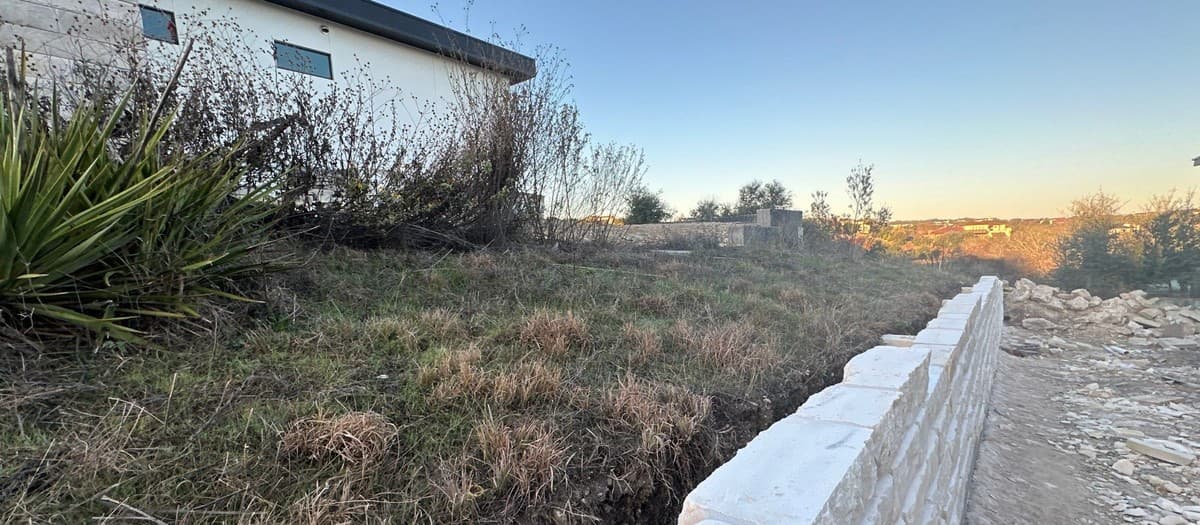
Geogrid is not just extra material on tall walls — it changes the structural system entirely. Without it in the right places, tall walls fail. Here is exactly how it works and how to place it.
A segmental block retaining wall without geogrid relies entirely on the weight and batter of the block to resist soil pressure. That works fine at 2–3 feet. Above that, the soil pressure exceeds what the block system alone can handle, and the wall becomes a question of when, not if, it will fail. Geogrid converts the wall from a simple gravity structure into a reinforced earth system — and that is an entirely different engineering category.
How Geogrid Actually Works
Geogrid is a high-density polyethylene (HDPE) or polyester mesh installed horizontally in the reinforced soil zone behind the wall. It works through two mechanisms: friction and interlock. The soil particles nest in the grid openings and grip the grid surface. Under lateral load, instead of the soil pushing against the wall face, it engages the grid — and the grid transfers that load back into the soil mass as tension.
The result is a reinforced soil mass that behaves almost like a gravity structure itself. The wall face blocks become a facing element for this reinforced mass rather than the primary structural element. The block anchors the grid at the face; the grid anchors the soil mass behind; the reinforced mass resists overturning, sliding, and internal failure simultaneously.
When Is Geogrid Required?
Most block manufacturers specify geogrid starting at wall heights between 3 and 4 feet, depending on block type and soil conditions. Allan Block's engineering guide, for example, begins requiring geogrid at 3.5–4 feet for most applications. Belgard's specifications vary by product line but follow similar thresholds.
Any wall over 4 feet requires an engineer's review — and the engineer will almost always specify geogrid for segmental block construction at that height. For clay soils, some engineers specify geogrid starting at 3 feet because clay generates higher lateral pressure than sandy soils at the same height.
Surcharge loads change the calculation. If there is a vehicle driveway behind the top of the wall, or a structure within the failure zone (typically equal to the wall height behind the wall), geogrid may be required at lower wall heights than standard. Specify based on the actual site condition, not a generic rule.
Selecting the Right Geogrid
Geogrid is specified by tensile strength — typically measured in kN/m (kilonewtons per meter) or lb/ft in North American specs. Common residential wall grids run from 20 kN/m to 60 kN/m. The engineer or block manufacturer's guide will specify the minimum tensile strength for your application.
Tensar BX1100, BX1200, and BX1500 are commonly specified geogrid products in residential retaining wall work. Mirafi HP series and Huesker Fortrac are alternatives. Match the product to the specification — do not substitute a lower-strength grid because it is cheaper or more available.
Grid aperture (the size of the mesh openings) also matters. The grid must have apertures large enough to allow the backfill aggregate to interlock into the grid. Most geogrid specifications for segmental wall applications account for this, but confirm the grid is compatible with your specified backfill material.
"People think geogrid is just for really tall walls. But the engineering starts applying at 3.5 feet on most block systems. Know the threshold before you start digging."
Step-by-Step Geogrid Installation
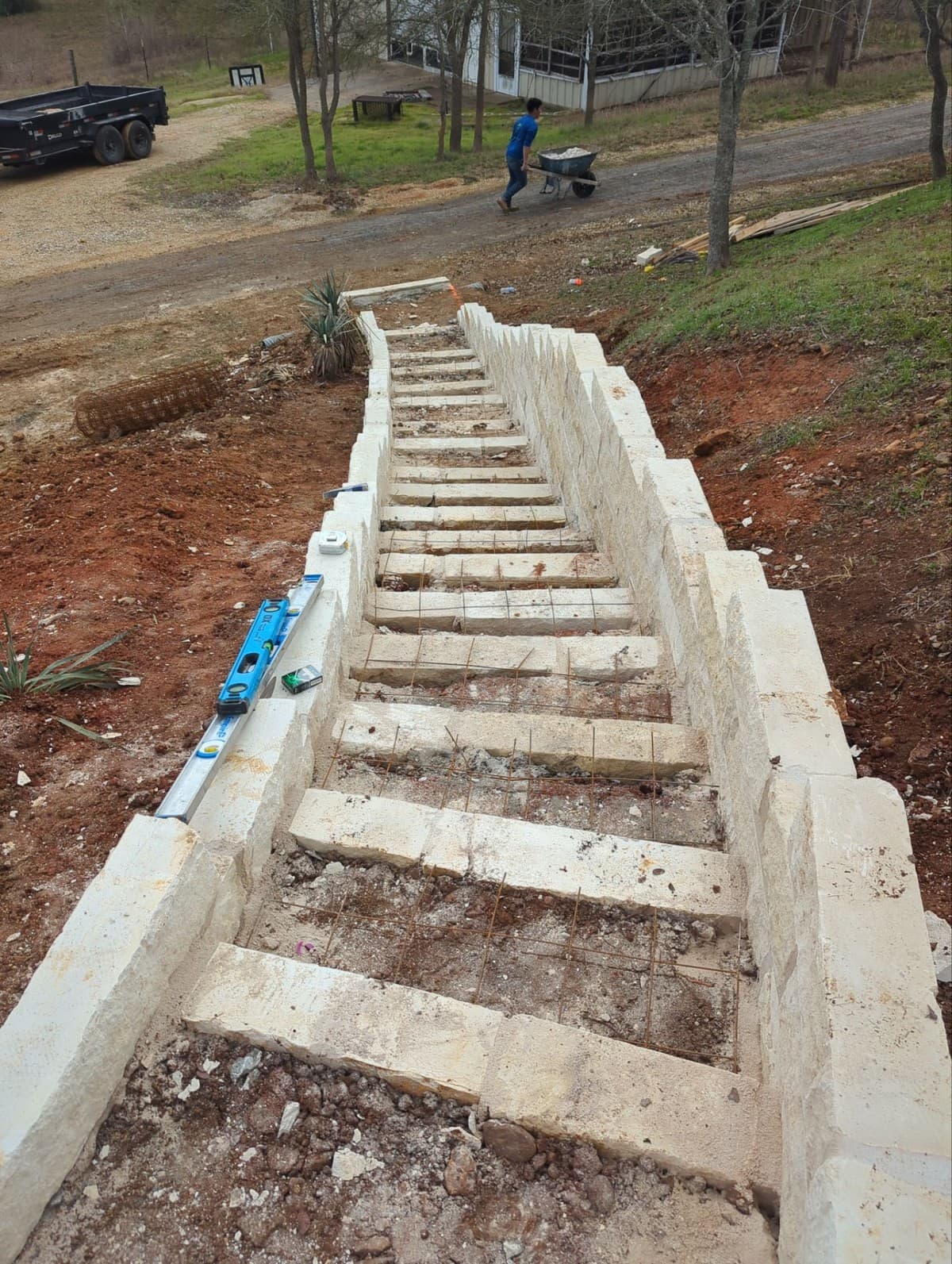
Build the wall up to the first geogrid elevation — typically 18–24 inches from the base for a 4–6 foot wall. The grid layer goes between courses of block, not on top of a completed course. Level the block course where the grid will attach, sweep it clean of debris, and position the grid so it extends from the back of the blocks toward the retained soil.
Place the next course of blocks on top of the grid at the wall face. The block weight and the mechanical connection of the block-to-block interface anchors the grid at the face. Do not use adhesive to anchor the grid — the block weight is the connection. Make sure the grid is taut and lying flat, not bunched or folded, before placing backfill.
Extend the grid back into the reinforced zone at the specified embedment length — this is almost always 4 feet minimum, and often 6–8 feet for taller walls. The engineer's drawing will specify the required length. Do not short-cut the embedment — the pullout resistance of the grid is a function of how much grid is embedded in compacted soil.
Place and compact backfill over the grid in 6-inch lifts. Compact with a plate compactor, but stay at least 3 feet away from the wall face. At the face, hand-tamp. Make sure all compaction passes are parallel to the wall — a compactor driving perpendicular to the wall face pushes directly into the block and can displace it. Continue wall construction and repeat the grid installation at the next specified elevation.
Include geogrid in your retaining wall estimates automatically
Ledge calculates geogrid area by wall height and embedment length. Stop underestimating reinforcement materials on tall wall projects.
Frequently Asked Questions
Can I splice geogrid to get the required embedment length?
No. Geogrid must be continuous from the wall face to the end of the specified embedment. Splices do not transfer load the same way continuous material does. Order rolls long enough to reach the required embedment without joining. Tensar and Mirafi sell rolls in various lengths — specify what you need when ordering.
What backfill material goes over the geogrid?
The reinforced zone (directly over the grid and within the embedment length) should use clean, angular, well-draining aggregate — not native clay. Clay in the reinforced zone retains water and may expand against the grid, reducing its effectiveness. The drainage aggregate you use behind the wall works well for the reinforced zone. Native fill can be used outside the reinforced zone, beyond the geogrid embedment length.
How far should the grid extend from the wall face?
Minimum embedment is typically 4 feet, but this increases with wall height. A general rule: embedment length should equal 50–70% of the total wall height. An engineer will calculate the exact required length based on soil conditions, surcharge, and grid tensile strength. Always follow the engineered design, not a rule of thumb, on permitted work.
Does geogrid affect how I calculate material quantities?
Yes. Geogrid is typically ordered by the roll and measured in square yards or square meters. Calculate the area of each grid layer (linear feet of wall times embedment length in feet, converted to square yards) and sum all layers. Add 10% for overlap at corners and waste. Include geogrid as a separate line item in your estimate — it is not a trivial cost on large walls.
Edgar Galindo
Co-founder, Ledge
Edgar built Ledge while running a landscape construction company in Central Texas. He writes about installation techniques, estimating, and building a profitable field operation.