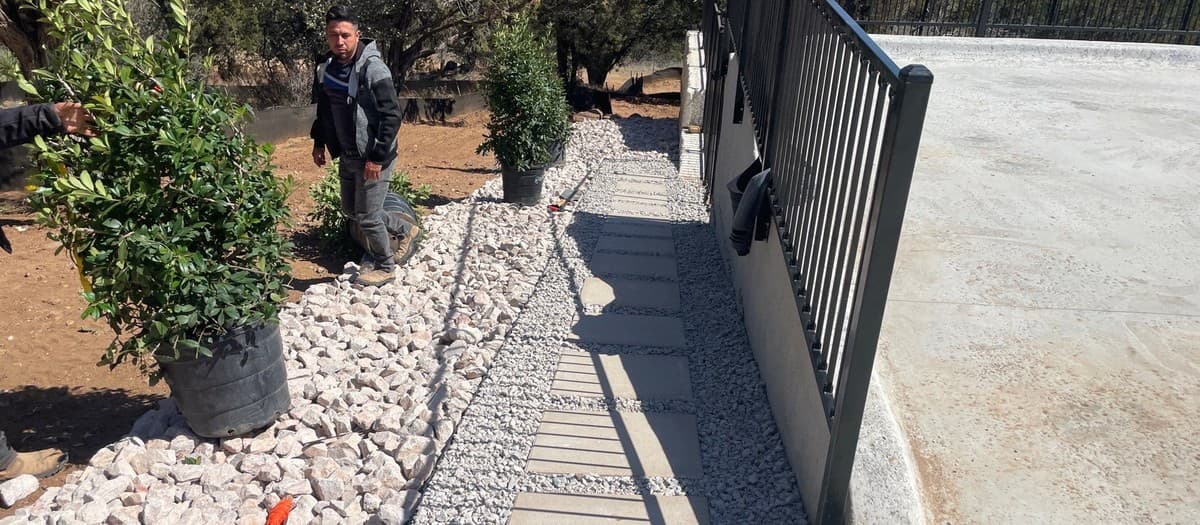
Stepping stones that rock underfoot or sink after the first rain are a base problem. Here's how to set them so they stay level, look natural, and pass the client's first walk-through.
Stepping stones look simple until you do them wrong. The two most common failures are stones that tip underfoot because they weren't set in a compacted base, and spacing that forces the client to walk with a weird shuffle because no one walked the path before digging. Get the stride right on paper, prep the base properly, and the actual setting goes fast.
Stone Selection: Size, Thickness, and Material
Minimum usable stepping stone size is 16 inches x 16 inches. Below that, the stone is too small for a confident step and looks like it belongs in a miniature garden, not a real path. For primary paths where two people might walk side-by-side, 18–24 inch stones provide comfortable footing. Irregular flagstone typically ranges 18–30 inches in its largest dimension.
Thickness matters for structural stability. Natural flagstone should be 2 inches minimum for stepping stone applications — thinner pieces crack under repeated loading, especially on clay soil that moves seasonally. Precast concrete stepping stones are typically 2–2.5 inches thick, which is adequate for most residential applications.
Stone options for Central Texas:
- Texas limestone: Local, affordable, natural look. Weathers well but can be slippery when wet and polished smooth. Sandblasted or rough-cut face preferred.
- Flagstone (Oklahoma sandstone or Arizona flagstone): Warm tan to rust tones, irregular shapes, non-slip texture. Popular for natural-looking paths.
- Granite cobble (large format): Dense, durable, excellent for modern or contemporary designs. More expensive per piece.
- Precast concrete: Uniform size and thickness, easiest to set level, lowest cost. Less character than natural stone but acceptable for budget-conscious installs.
Layout: Stride Spacing and Path Alignment
Before any digging, lay the stones on the surface in their planned positions and walk the path at a normal pace. The center of each stone should land where your foot naturally falls. A comfortable stride for an average adult is 24–26 inches center-to-center for leisurely walking, 20–22 inches for a tighter garden path. For a path where people carry items or move quickly, keep to 24 inches.
For straight paths in turf, offset the stones slightly — a subtle S-curve or alternating left-right placement — rather than a perfectly straight line. Dead-straight stepping stone paths look mechanical and stiff. A slight curve or offset reads as more natural and comfortable.
Between stones, leave a gap of 2–4 inches for ground cover, low grass, or creeping thyme. Gaps wider than 6 inches start to feel disconnected. Gaps of zero — stones butted tight — looks like a solid paver walkway, which may not be the intent.
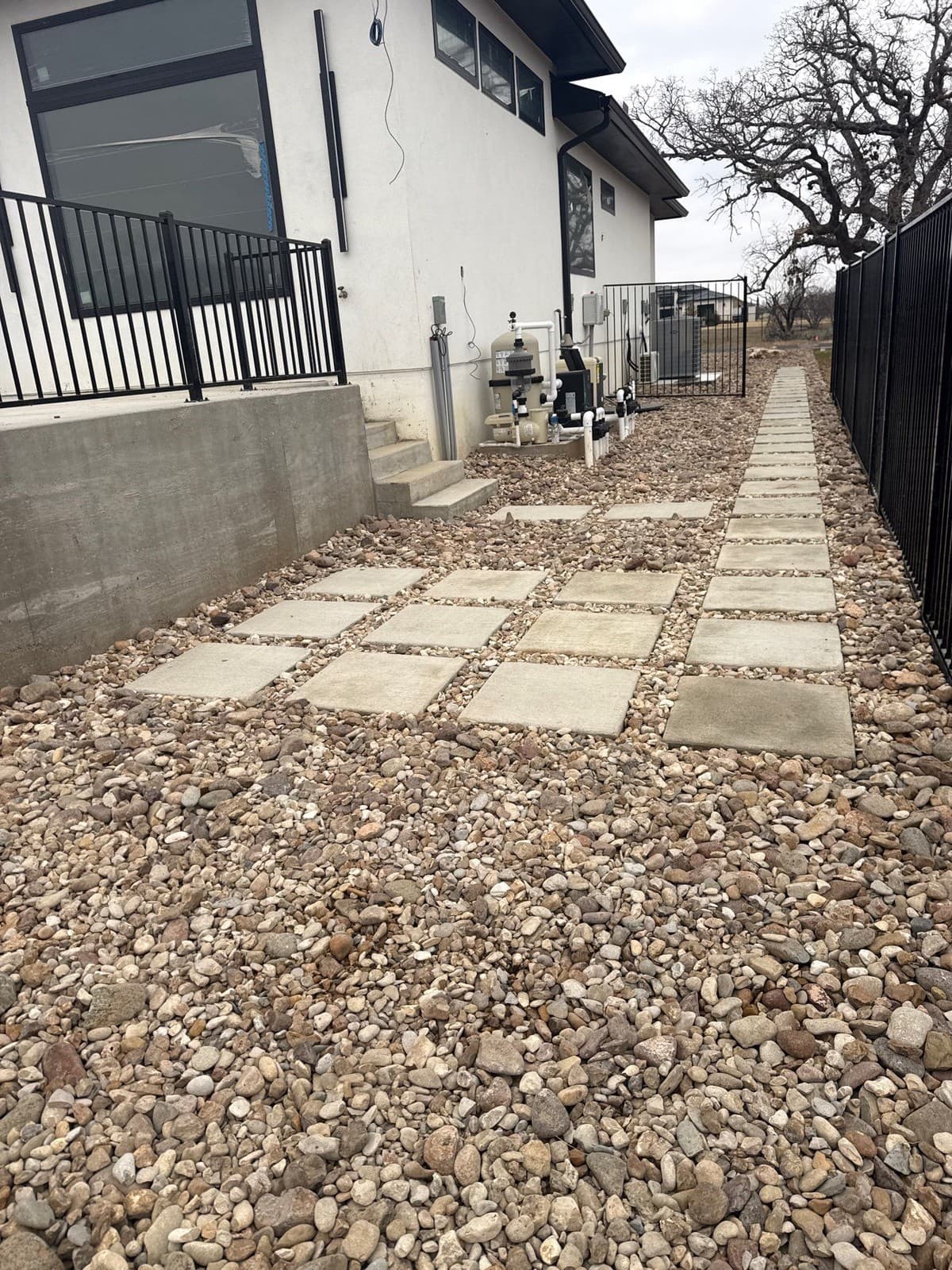
Base Preparation: Excavation and Setting Bed
Mark each stone's outline with marking paint or a spade cut around the perimeter. Remove the stone and excavate to a depth equal to the stone thickness plus 2–3 inches for the setting bed. For a 2-inch flagstone, excavate 4–5 inches deep. In clay soil, excavate an additional 1–2 inches and add a compacted gravel base layer.
For paths in turf: compact the bottom of the excavation with a hand tamper. Add 1 inch of coarse sand (concrete sand) as the setting bed. Level the sand with a small hand screed. This setting bed allows minor adjustment during placement and promotes drainage under the stone. Decomposed granite also works as a setting bed and binds well in Texas heat.
For paths in planting beds or areas with softer soils: add 2 inches of compacted Class II base material below the 1-inch sand setting bed. This prevents settling in loose amended soil that wouldn't otherwise support stable footing.
"Walk the path before you mark it. Every stepping stone that's in the wrong place is a stone you have to re-set — and natural stone isn't forgiving on handling."
Setting Stones: Height, Stability, and Final Grade
Set each stone so the finished surface is 1/2 to 1 inch above the surrounding turf grade. This keeps the stone visible, prevents water from collecting on top of the stone, and allows mower wheels to roll over the edge without getting stuck. Stones set flush with grade look invisible at a distance, which defeats the purpose, and they collect soil and grass at the edges until they're fully buried within a season.
Set each stone, then test stability by stepping on each corner and the center. It should not rock or tip. If it rocks, remove the stone, add or remove setting bed material at the low point, and re-test. Do not try to shim a stone with a small rock fragment underneath — the shim will shift and the problem comes back.
Once all stones are set and stable, fill the gaps between stones with a jointing material. Options:
- Decomposed granite: Natural look, easy to apply, drains well. Some migration over time in heavy rain.
- Polymeric sand: Locks in place when wet and cured. Best for paths in full sun without ground cover planting.
- Ground cover plants (creeping thyme, buffalo grass, mondo grass): Best aesthetic result. Plant plugs between stones and allow to fill in over one season.
Frequently Asked Questions
How far apart should stepping stones be spaced?
20–26 inches center-to-center depending on walking pace. Always walk the path layout before digging — your natural stride is the correct measurement. Gaps between stone edges should be 2–4 inches for ground cover, up to 6 inches maximum.
How deep should stepping stones be set?
Excavate to stone thickness plus 2–3 inches for the setting bed. For a 2-inch stone, dig 4–5 inches deep. Finish height should be 1/2 to 1 inch above surrounding grade to keep stones visible and prevent water pooling.
What goes under stepping stones?
1 inch of coarse concrete sand as the setting bed, on top of compacted native soil. In soft or amended soils, add 2 inches of compacted Class II base material below the sand. This prevents settling and rocking under repeated foot traffic.
What is the minimum size for a stepping stone?
16 inches x 16 inches as a practical minimum for comfortable single-foot stepping. 18–24 inches is better for primary paths. Thickness should be at least 2 inches for natural flagstone — thinner pieces crack under load on clay soil.
Quote Hardscape Path Projects Without the Guesswork
Ledge helps you build stepping stone estimates with stone count, base material, and labor all as separate line items. Get the proposal out the same day you scope the job.
Edgar Galindo
Co-founder, Ledge
Edgar built Ledge while running a landscape construction company in Central Texas. He writes about installation techniques, estimating, and building a profitable field operation.