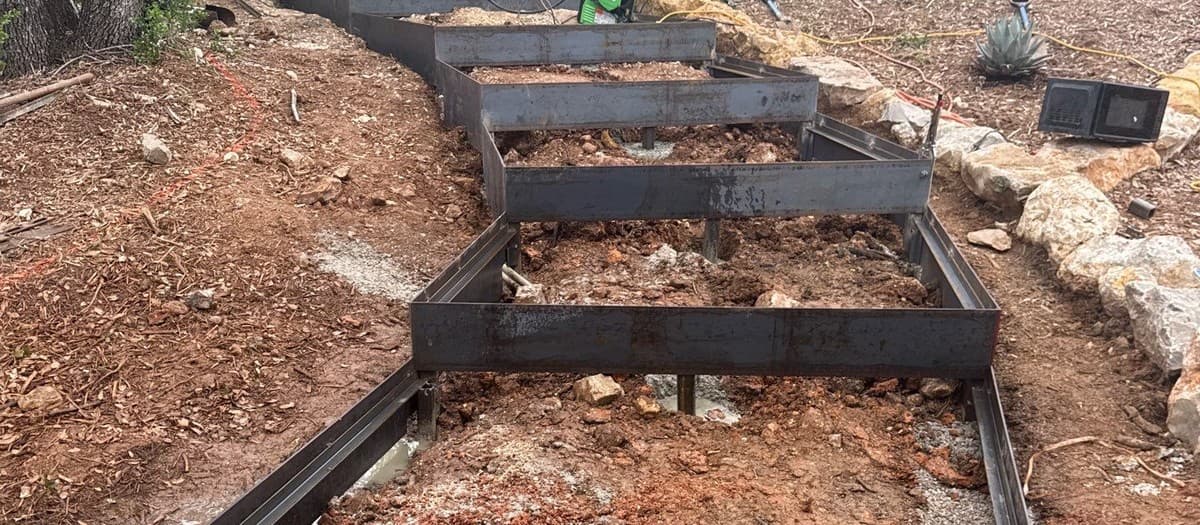
The material you choose for outdoor stairs affects cost, lead time, and what the client can actually use the space for. Here's how concrete, wood, and steel each perform in the field.
Outdoor stairs connect grade changes and define how a client actually uses their outdoor space. A poorly built stair feels wrong every time someone walks it — risers that are inconsistent, treads that are too shallow, or a stair that settles because the footing wasn't adequate. Get the dimensions right and pick the material that matches the project budget, maintenance expectations, and design context.
Stair Geometry: Riser Height, Tread Depth, and Width
The most comfortable outdoor stair geometry uses a 7–7.5 inch riser and an 11–12 inch tread. The rule-of-thumb formula: 2 × riser + tread = 26 inches. A 7-inch riser with an 11-inch tread = 25 inches — close enough. A 7.5-inch riser with a 12-inch tread = 27 inches — also comfortable. Outdoor stairs can be slightly more generous than interior stairs because there's no headroom constraint.
Never vary riser height within a flight by more than 3/8 inch. An inconsistent riser is a trip hazard. People subconsciously calibrate their stride after the first step — an unexpected height change on step 4 or 5 catches people mid-movement.
Minimum width for residential outdoor stairs is 36 inches. Two people passing is comfortable at 48 inches. For primary entry stairs or stairs adjacent to outdoor dining, 60 inches allows people to walk side-by-side with ease and avoids the awkward single-file entry that feels cramped.
Concrete Stairs: Durability, Cost, and Forming
Concrete stairs are the most durable option for outdoor use. They don't rot, don't rust, and properly built concrete stairs last 50+ years. They're also the heaviest upfront investment in time and forming labor.
For concrete stairs that connect to a patio or home foundation, attach to the structure to prevent differential settlement. Pour on a compacted base: 4 inches of Class II aggregate, compacted. Concrete should be 4,000 PSI minimum for exterior exposed concrete. Use 3/8-inch rebar at 12-inch on-center in both directions for stairs with more than 3 risers. Broom-finish or expose aggregate the tread surface for slip resistance — a smooth troweled tread is a liability.
Cost range for concrete stairs: $150–$300 per lineal foot for the stair width, depending on height and complexity. A 5-step, 4-foot-wide stair typically runs $1,500–$2,500 including forming, pour, and finish.
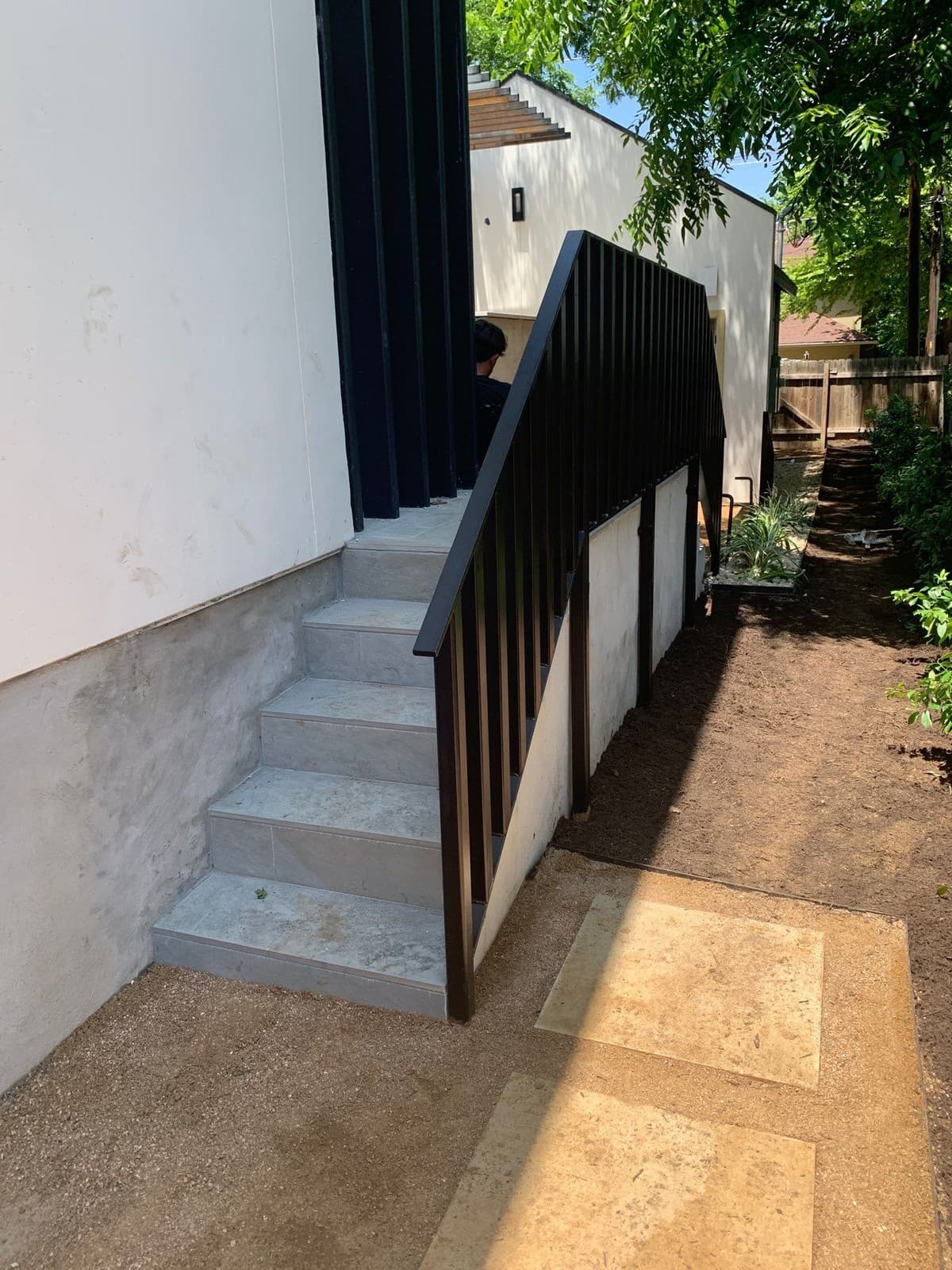
Wood Stairs: Framing, Species, and Longevity
Wood stairs are faster to build than concrete and integrate naturally with deck construction. They're also the most maintenance-prone — they require sealing, staining, or painting every 2–3 years and will eventually rot in consistently wet climates or where drainage is poor.
For wood stair stringers, use pressure-treated (PT) lumber rated for ground contact — .40 PCF minimum. Use PT 2x12 for stringers on stairs up to 8 feet wide. Three stringers for stairs wider than 36 inches, four for stairs wider than 60 inches. Notch stringers at 7-inch riser/11-inch tread geometry using a framing square, then install treads on top of the notches.
Tread options:
- Pressure-treated 5/4 x 6 decking: Economical, functional, requires sealing. Best for budget-conscious projects.
- Composite decking (Trex, TimberTech): Low maintenance, doesn't rot, consistent appearance. 25% more cost than PT but significantly less maintenance over the life of the stair.
- Ipe or cumaru hardwood: Premium look, extremely durable, expensive. For high-end residential projects where the client wants lasting quality and is willing to pay for it.
Support wood stairs on concrete footings, not directly on soil. Even PT lumber in direct contact with grade will fail faster than a well-founded concrete footing. Use adjustable post bases at each stringer bottom, set in concrete footings poured below frost depth (or 18 inches minimum in Central Texas).
"The stair is the transition point in every outdoor project. If it doesn't feel solid underfoot, nothing else about the space feels right — no matter how good the rest of the work is."
Steel Stairs: Modern Aesthetic, Maximum Durability
Steel stairs are the premium option for modern and contemporary residential design. They're typically fabricated off-site by a steel shop to custom dimensions, then delivered and anchored on-site. This means accurate layout is critical before fabrication begins — measure your total rise carefully and confirm before the shop order goes in.
Steel stair types in residential landscape:
- Welded steel stringers with concrete or wood treads: Most common for landscape use. The steel provides structural support; treads add warmth or can match adjacent decking material.
- Plate steel stairs with grating tread: Industrial look, excellent for modern design. Grating allows water to drain through. Hot-dip galvanize or use weathering (Cor-Ten) steel for outdoor durability without painting.
- Floating steel stair: Cantilevered steel stringers with wood treads, no visible side support. High-end residential. Requires welded steel anchors into a concrete base wall. Not a DIY project — requires structural engineering if more than 4 treads.
Cost range for steel stairs: $300–$600+ per lineal foot including fabrication, delivery, and installation. A 4-step, 4-foot-wide steel stair typically runs $2,500–$4,500. Position this correctly in your proposal — steel stairs are a design element, not just a functional connection, and price accordingly.
Footing Requirements for All Stair Types
All outdoor stairs need footings. Stairs built on compacted soil without footings settle, heave, and pull away from adjacent structures. In Central Texas:
- Minimum footing depth: 18 inches below grade
- Minimum footing diameter: 12 inches for a post; 18 inches for a concrete stair base
- Concrete spec: 3,500 PSI minimum for footings
- Connect stairs to adjacent structures with anchor bolts or Simpson Strong-Tie hardware, not just gravity or mortar
For concrete stairs over 3 steps, a monolithic concrete landing at grade is typically poured first, then the stair flight poured against it or formed separately. Don't try to form a 6-step concrete stair as a single pour without significant formwork engineering — the form pressure on the lower steps is substantial.
Frequently Asked Questions
What are the correct dimensions for outdoor stairs?
7–7.5 inch riser height and 11–12 inch tread depth are the residential standard. Minimum width is 36 inches. Never vary riser height within a flight by more than 3/8 inch — inconsistent risers are a trip hazard.
Which outdoor stair material lasts the longest?
Concrete for longevity at lower cost. Properly poured concrete stairs can last 50+ years with minimal maintenance. Steel stairs are equally durable but cost more. Wood requires the most ongoing maintenance and has the shortest lifespan in wet climates.
Do outdoor stairs need footings?
Yes. All outdoor stairs need footings regardless of material. In Central Texas, minimum 18-inch depth below grade. Stairs built on compacted soil without footings will settle and separate from adjacent structures within a few seasons.
How do I prevent concrete stair treads from being slippery?
Broom finish or exposed aggregate the tread surface immediately after the pour. Never smooth trowel an exterior concrete tread. Alternatively, apply a non-slip coating or install aluminum tread nosing inserts on existing stairs.
Estimate Stair Projects the Right Way
Ledge lets you build stair estimates by step count, material, and labor rate — so every bid reflects your actual costs and you never leave money on the table.
Edgar Galindo
Co-founder, Ledge
Edgar built Ledge while running a landscape construction company in Central Texas. He writes about installation techniques, estimating, and building a profitable field operation.