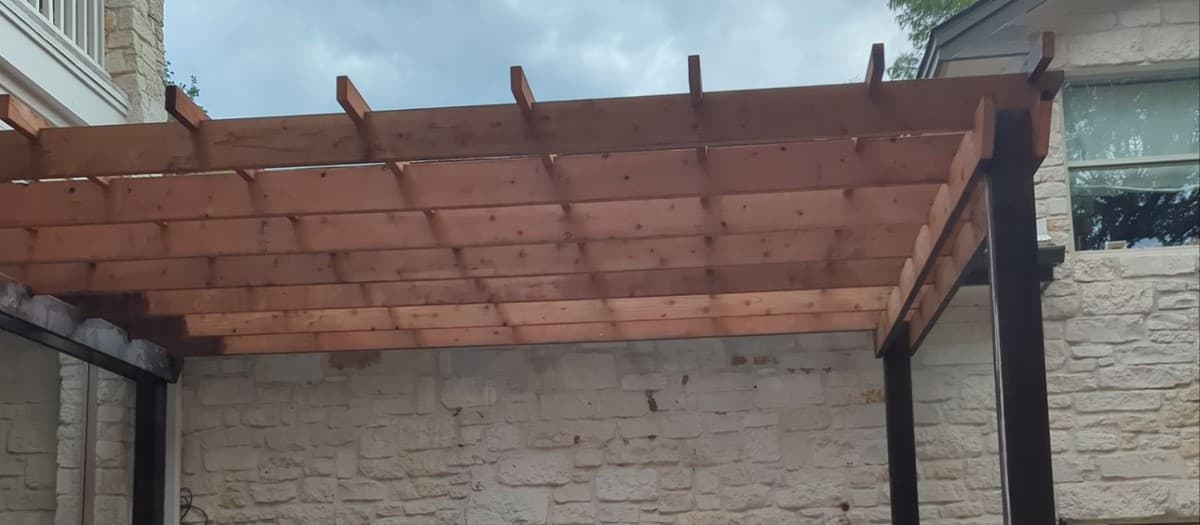
Texas sun, drought cycles, and triple-digit summers are harder on outdoor structures than most climates. The pergola material you specify will determine whether your client calls you satisfied or calls you for a warranty repair.
The Central Texas climate puts outdoor structures through a gauntlet that most of the country never experiences: sustained 100+ degree days, intense UV, drought periods that crack and shrink materials, followed by heavy rain events that cause rapid expansion. The material that looks great at install and still looks great at year five earns you referrals. The one that fades, cracks, or rusts earns you callbacks.
Wood Pergolas: Natural Appeal, Real Maintenance
Wood is what most clients picture when they say "pergola." The warmth of grain, the ability to stain or paint any color, the craftsman-built feel — wood delivers aesthetics that no other material fully matches. Cedar, redwood, and pressure-treated pine are the three most common species in Texas residential work.
Cedar is the premium choice — naturally rot-resistant, dimensionally stable, and holds stain beautifully. In Central Texas, cedar will last 15–20 years with regular maintenance. Redwood is similar in character and performance but less locally available and more expensive. Pressure-treated pine is the economical option — it handles ground contact, resists insects, and is structurally strong, but it requires paint or solid-body stain to look finished, and the preservative chemicals rule out food contact surfaces.
The maintenance reality of wood in Texas is significant. Untreated or unstained wood will grey and check within 2–3 seasons in this climate. Cedar needs cleaning and resealing every 2–3 years. Paint on treated pine needs repainting every 5–7 years. Clients who love the look of wood need to understand what they are committing to. Set this expectation at the sale, in writing.
Steel Pergolas: Maximum Durability, Custom Fabrication
Structural steel (rectangular HSS tube, typically 11 or 7 gauge) does not rot, warp, or check. A properly powder-coated steel pergola in Central Texas will hold its finish for 15–20 years before it needs touch-up. Steel handles the thermal cycling of Texas climate better than wood over the long term.
The tradeoffs with steel: higher upfront cost, welding or bolted connection requirements (which means either a welder on staff or a fabrication sub), and the need for high-quality powder coating. Cheap powder coating will fail within 3–5 years in Texas UV. Specify a Tgic polyester powder coat at minimum 2.5 mil dry film thickness. Kynar or PVDF finishes are the top tier for UV resistance and carry longer warranties.
Steel expands and contracts more than wood with temperature changes. Standard expansion joint gaps around Texas are relevant here — connections that allow slight movement prevent paint cracking at weld points. Well-designed steel pergolas in Central Texas have 20–30-year life expectancies with minimal maintenance beyond occasional cleaning.
Aluminum Pergola Systems: Low Maintenance, System Limitations
Aluminum pergola kit systems (Struxure, Louvered Roof, StruXure Pergola Pro) have exploded in the Texas market. The appeal is real: anodized aluminum does not rust, holds color well, and the louvered roof systems offer motorized shade and rain protection that wood and steel cannot match. Installation is faster than custom fabrication.
The limitations are design rigidity and cost. Aluminum kit systems are modular — you buy the sizes they offer, in the configurations they support. Custom curves, non-standard spans, or unusual site conditions may not be achievable within a given kit system. And the premium louvered systems carry premium prices: a 16x20-foot motorized louvered pergola system can run $18,000–$30,000 in material cost alone before installation.
Standard aluminum extrusion pergolas (non-louvered) are lighter-duty systems appropriate for clients who want low-maintenance shade structure at a middle price point. These systems handle Texas UV well — anodized aluminum is essentially immune to UV degradation — but they are not as structurally robust as steel and will flex more in high-wind events.
"In Austin, the clients who call me back to ask about their pergola are usually the ones who chose the cheapest wood option. Cedar costs more. It lasts twice as long."
Material Selection by Project Type
Budget-conscious clients who want the natural wood aesthetic: pressure-treated pine with a quality solid-body stain. Plan for repainting every 5–7 years. Entry-level price point, genuine wood feel.
Mid-range clients who want low maintenance and clean design: powder-coated steel with a standard open-rafter design. 20-year expectation with minimal upkeep. Works with any architectural style.
Premium clients who want motorized shade, rain protection, or smart-home integration: aluminum louvered system. Highest cost, highest functionality, minimal maintenance. Best for outdoor living spaces where weather usability is the primary driver.
Quote pergola projects at the right price every time
Ledge keeps your material costs and labor rates so wood, steel, and aluminum pergola estimates are consistent — no more underpricing on custom builds.
Frequently Asked Questions
What wood species last longest in Texas without painting?
Western red cedar is the most durable wood for unpainted or unstained applications in Texas. It contains natural oils that resist rot and insects. Left untreated, it weathers to a silver-grey that many clients find attractive. With a penetrating oil finish reapplied every 2–3 years, cedar maintains its original color and lasts 20+ years in Central Texas.
Does steel get too hot to touch in Texas summers?
Steel in direct sun will get hot — but overhead pergola members are typically shaded by the rafters above them and are not at hand-contact height. The posts may be warm to the touch in afternoon sun. Lighter powder coat colors (white, light grey) reflect more heat than dark colors. This is a real consideration for clients with children. Dark steel in full Texas sun can get very hot — specify accordingly.
Are louvered aluminum systems worth the price premium?
For clients who want to use their outdoor space during rain or want automated sun control, yes — the functionality difference is substantial. An open pergola in Central Texas is unusable in direct summer afternoon sun; a louvered system that closes on demand converts an afternoon patio into a usable space. For clients who primarily use their patio in the morning or evening, the premium may not be justified.
Can I mix materials — say, steel posts with wood rafters?
Yes. Mixed-material pergolas (steel post and beam structure with wood rafters or cedar shade slats) are a popular design approach that gives clients the durability of steel at the post connections — where structural integrity matters most — with the warmth of wood in the visible rafter elements. The connection detail between steel and wood needs to account for differential thermal expansion; use slotted bolt holes at these connections to allow slight movement.
Edgar Galindo
Co-founder, Ledge
Edgar built Ledge while running a landscape construction company in Central Texas. He writes about installation techniques, estimating, and building a profitable field operation.