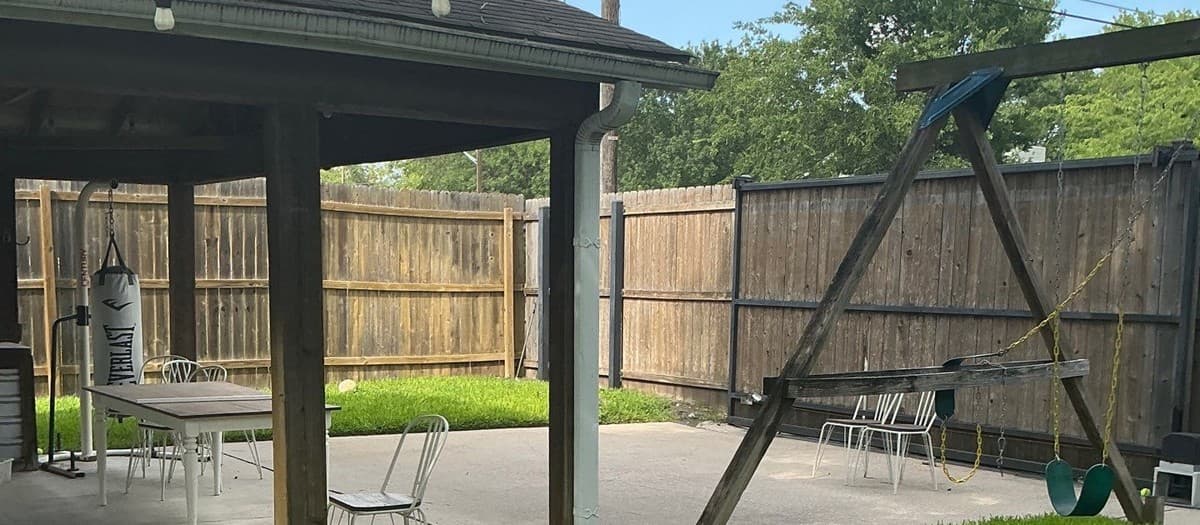
Most residential pergola jobs go onto existing patios. Getting the post attachment right — so the structure is solid and the slab does not crack — is the technical challenge most contractors get wrong.
The structural case for new footings is straightforward — they give you the most solid connection. But new footings mean breaking up an existing patio, and clients do not want that. In practice, there are three legitimate approaches to mounting a pergola on an existing slab: surface-mounted post bases anchored into the slab, core drilling through the slab with buried post footings at the perimeter, and ledger attachment to the house with perimeter posts on new adjacent footings. Each has tradeoffs worth understanding.
Assess the Existing Slab First
Before committing to any attachment method, assess the slab. You need to know approximate thickness (standard residential slabs are 4 inches; pool decks are sometimes 3 inches), rebar or mesh presence, and overall condition. A cracked, settled, or poorly cured slab is a bad foundation for any pergola attachment method.
A simple hammer tap test reveals delaminated or hollow concrete. Any section that sounds hollow rather than solid has a sub-base problem. Concrete anchors into a hollow section will not hold rated load. If the slab is in poor condition, recommend new perimeter footings outside the slab edge rather than trying to anchor into compromised concrete.
Option 1: Surface-Mounted Post Bases
Simpson Strong-Tie makes a range of code-listed post bases designed for concrete attachment — the ABU series (ABU44, ABU46, ABU66) for wood posts, and equivalent bases for steel posts. These bases attach to the slab with 1/2-inch or 5/8-inch wedge or epoxy anchors and provide rated uplift and lateral load connections for the post.
For a wedge anchor connection into a standard 4-inch slab, you need at least 3 inches of embedment depth — which leaves you only 1 inch of clearance at the bottom of the slab. That is marginal. This is why surface-mounted bases work better in slabs 5 inches or thicker. If the slab is 4 inches, use epoxy anchors with 3.5-inch embedment into the slab rather than wedge anchors, which need more concrete below them.
Surface-mounted bases raise the post 3–6 inches above slab level, which keeps the post end-grain out of standing water — a significant durability advantage for wood pergolas. The tradeoff is that the base hardware is visible. If aesthetics require the post to appear flush to the slab, another approach is needed.
Option 2: Core Drilling and Buried Footings at Slab Perimeter
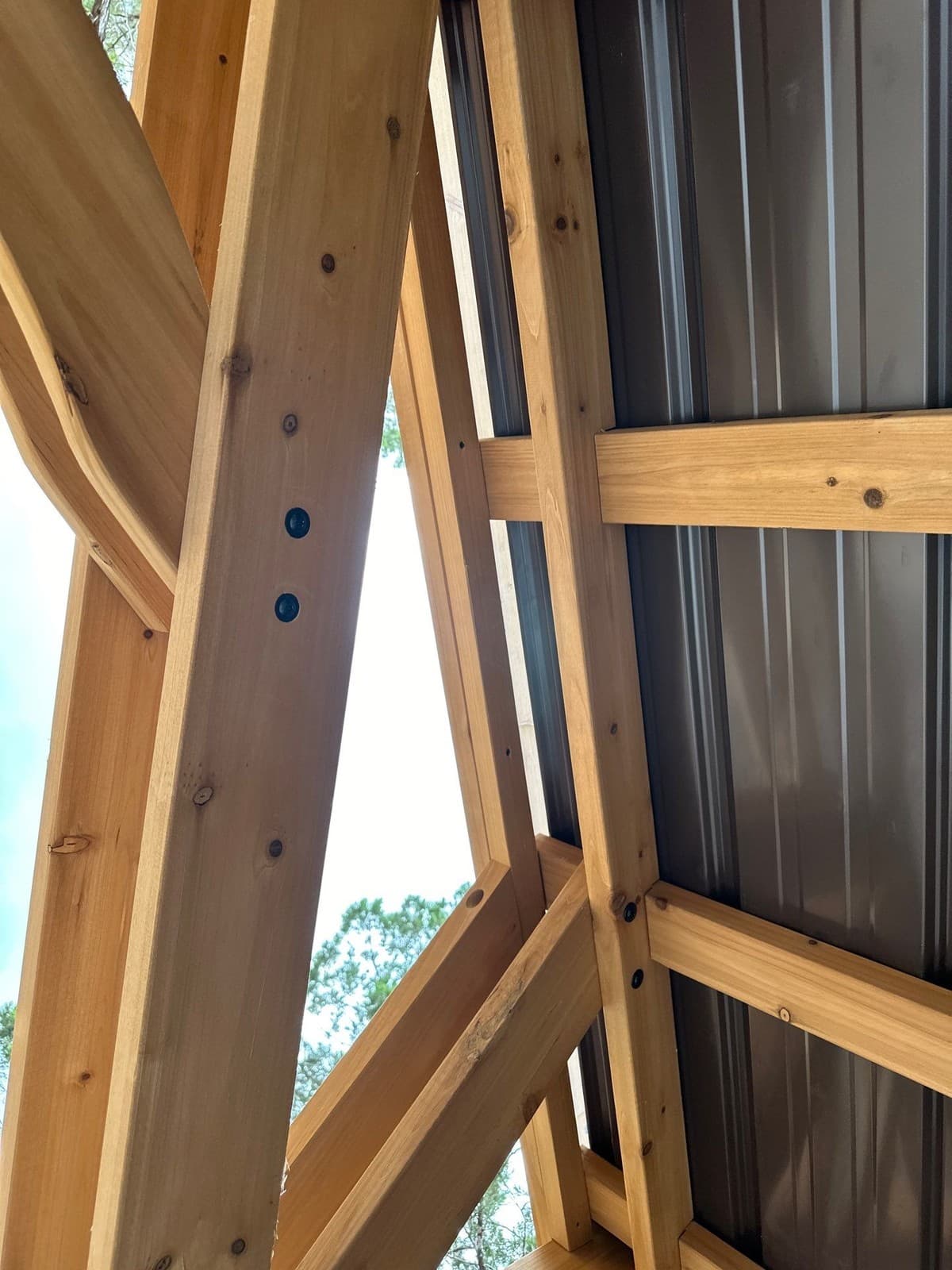
For pergolas where posts land at or near the slab edge, core drilling through the slab and pouring a new footing through and below the existing slab is the most structurally sound option. A 12-inch diameter core drill opens a hole through the slab. You then dig a footing hole below — minimum 18 inches deep in freeze-free Central Texas soil — pour concrete with a J-bolt or post base set in the top, and attach the post to the new footing.
This approach is more labor-intensive (core drill rental, concrete pour, finishing around the new footing) but produces the most durable result. The post is effectively on a proper footing that extends below the slab. For pergolas that will carry significant loads — roofing, ceiling fans, heavy timber — this is the right method. Patch around the new footing with color-matched concrete or a decorative cap.
"A wobbly pergola in year two is never an engineering mystery — it is almost always a bad post connection. Budget the right anchor system on the front end."
Post Sizing, Beam Spans, and Rafter Spacing
For typical residential pergolas in the 12–20 foot span range, 6x6 wood posts and 2x10 or 2x12 beams are standard in treated lumber. Steel pergola systems use rectangular tube steel (typically 3x3 or 4x4 at 11 gauge) with welded or bolted connections. Beam span tables govern how far you can span between posts — a doubled 2x10 spans roughly 12 feet for typical loads; a doubled 2x12 spans 14 feet.
Rafter spacing on a pergola is a design choice more than a structural one — 12 to 24 inches on center are both common. Tighter spacing gives more shade from oblique sun angles; wider spacing is lighter in appearance. Texas sun calls for tighter spacing (16 inches or less) when clients want meaningful shade from the structure itself without adding a shade cloth or roofing.
House-Attached Pergolas: Ledger Connections
When one side of the pergola attaches to the house, the ledger connection must be engineered to handle the load. A 2x10 or 2x12 ledger lags into the house rim joist with 1/2-inch lag screws — minimum 3-inch penetration into the rim joist, spaced at 16 inches on center per IRC table requirements. The ledger location needs to be above the house siding's weather barrier; improper ledger flashing is the leading cause of rot in house-attached structures.
In Texas, house-attached pergolas onto stucco or stone facades require more care. You need to penetrate the cladding, flash the penetration, and anchor into the underlying structure — not into the stucco or stone alone. Stucco anchor systems (like epoxy anchors set into the underlying CMU or wood framing) are required. Confirm the wall structure before bidding a house-attached pergola on a masonry exterior.
Price pergola projects and close them faster
Ledge helps contractors build clear, itemized estimates for pergolas, outdoor kitchens, and full hardscape projects — and send proposals that win jobs at the right margin.
Frequently Asked Questions
Do pergolas require a permit in Texas?
It depends on the municipality and the size of the structure. Most Texas cities require permits for attached structures or structures over a certain square footage (typically 200 SF). Freestanding pergolas under 200 SF may be exempt in some jurisdictions. Check local code before starting. Austin, Round Rock, and San Antonio all have specific requirements.
What is the best post material for Texas climate?
Cedar, redwood, and pressure-treated pine all perform well in Texas. Cedar and redwood are more naturally rot-resistant and look better unsealed. Pressure-treated pine is the most economical and handles ground contact well. Steel is increasingly popular because it never rots and holds paint well in dry Texas climate. See our full comparison in the steel vs. wood vs. aluminum article.
How long does a pergola installation take?
A standard 16x20-foot wood pergola on surface-mounted post bases takes a two-person crew 1–2 days to install, not counting the post anchor cure time if epoxy anchors are used. Steel pergola kits from manufacturers like Struxure or custom welded systems may take 3–4 days depending on complexity. Custom timber frames take longer due to the joinery complexity.
Can I use post bases rated for interior use on an outdoor pergola?
No. Exterior post bases must be hot-dip galvanized (ZMAX coated) or stainless steel to resist corrosion in outdoor exposure. Standard interior-rated Simpson connectors are not rated for continuous exterior exposure. Using the wrong hardware will result in corrosion-driven failure over time, often in the slab anchor holes where the hardware is hardest to inspect.
Edgar Galindo
Co-founder, Ledge
Edgar built Ledge while running a landscape construction company in Central Texas. He writes about installation techniques, estimating, and building a profitable field operation.