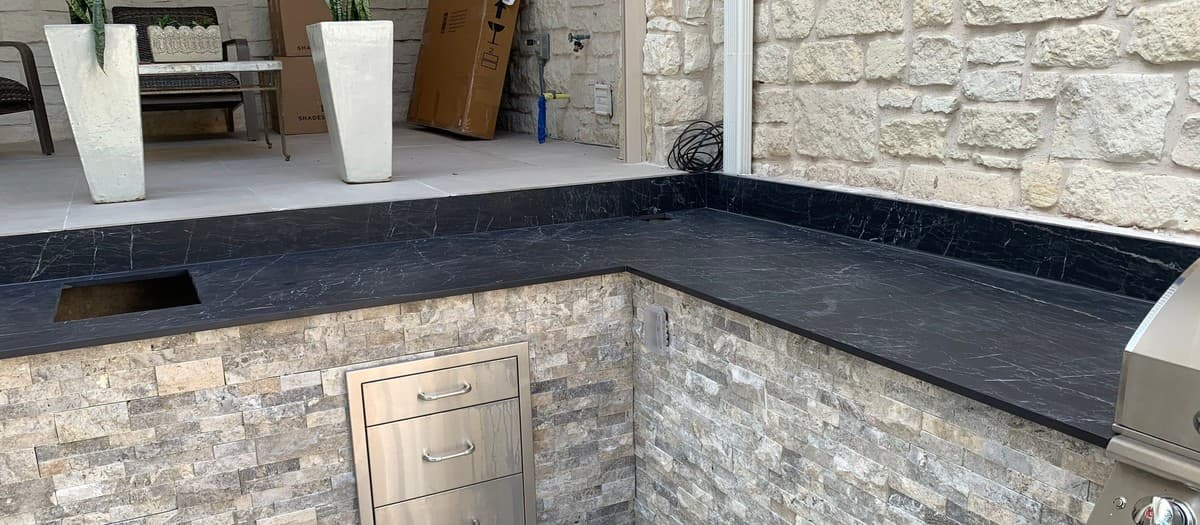
Outdoor kitchens are high-margin work when you know the scope. They are also where landscape contractors get into trouble if they do not understand structural framing, substrate requirements, and trade coordination.
An outdoor kitchen done right is one of the highest-value additions to a residential property. Done wrong — wrong substrate, bad gas rough-in placement, countertop that holds water — it becomes a callback that eats your margin and your reputation. This guide covers the critical decisions from framing through finish so you can deliver work that lasts and price it correctly.
Scope Definition: What Is Your Trade and What Gets Subbed
As a landscape contractor, your scope typically covers: site prep and patio base, structural framing (concrete block or steel stud), substrate installation, tile or stone cladding, countertop installation, and integration with the surrounding hardscape. What you sub out: gas line rough-in (plumber or gas fitter), electrical (licensed electrician), and refrigeration hookups if applicable.
Establish sub relationships before you price the first outdoor kitchen job. You need to know your plumber's lead time, rough-in cost, and scheduling flexibility. The kitchen framing needs to go up before the gas line is run, and the gas line needs to be in before you close up walls. Sequencing matters — and you are the general on this project whether you think of yourself that way or not.
Structural Framing: Concrete Block vs. Steel Stud
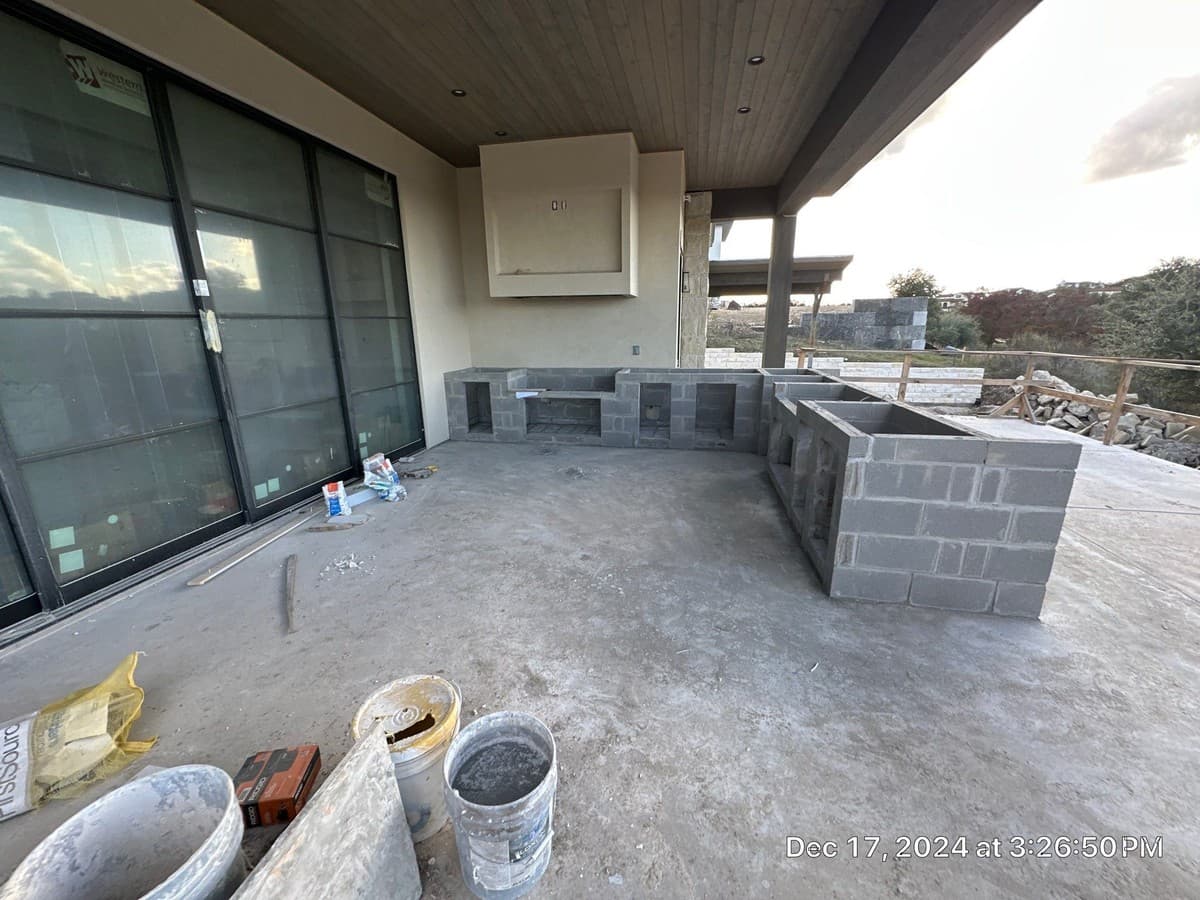
Concrete masonry block (CMU) is the most durable outdoor kitchen frame material. 8-inch CMU is standard. The mass handles Texas heat expansion well, supports heavy countertops without deflection, and is impervious to moisture. CMU kitchens are permanent structures — plan accordingly and confirm with local code if a permit is required.
Steel stud framing (16-gauge galvanized steel track and stud) is faster to build and allows more design flexibility for curves and angles. Cover steel stud frames with cement board (1/2-inch HardieBacker or similar) screwed to the studs at 6-inch intervals. Never use wood framing for outdoor kitchens — wood rots, swells, and provides a home for pests, especially in the Texas humidity that follows our dry spells.
On an existing patio slab, anchor your framing with Tapcon concrete anchors into the slab. Minimum 3-inch embedment. Space anchors at 16 inches on center on the track bottom. If the slab is cracked or in poor condition, assess whether it can support the kitchen weight before framing. A failed slab under an outdoor kitchen means rebuilding both.
Countertop Substrates and Materials
The countertop substrate determines everything else. For tile countertops, 3/4-inch cement board over a steel support frame is standard. The steel support (typically 16-gauge angle iron welded or bolted to the frame) carries the weight; the cement board gives the tile adhesive something to bond to. Do not use plywood as a substrate — it absorbs moisture and cycles enough to pop tiles within a couple of years.
Granite and quartzite countertops require a flat, continuous support — typically a steel frame with 3/4-inch cement board over it, or a poured concrete countertop (GFRC or standard concrete). Granite is a premium choice that clients value; it handles heat well (important near grills), resists staining with sealer, and looks excellent. Budget for a template and professional fabrication — outdoor granite cuts are rarely straight.
GFRC (glass fiber reinforced concrete) countertops are cast-in-place or precast and are an excellent outdoor option. They are lighter than poured concrete, resist cracking well, and can be color-matched to the surrounding hardscape. Some landscape contractors fabricate GFRC in-house as a profit center. Others source from a local precast supplier.
"Every outdoor kitchen callback I have seen in the last five years was either a substrate problem or a gas clearance problem. Get those two right and the rest is finishing."
Gas Rough-In and Appliance Clearances
Gas rough-in is the most critical coordination point in outdoor kitchen construction. Before your plumber runs the gas stub, you must know the exact locations of the grill, side burner, and any other gas appliances — including their BTU ratings. BTU rating determines line sizing. A 60,000 BTU grill and a 30,000 BTU side burner need adequately sized supply line from the meter; your plumber will calculate this.
Grill clearances are specified by the manufacturer and must be followed. Standard grills (like a 36-inch Bull, Blaze, or Lynx unit) typically require 2–3 inches of clearance on the sides, 24 inches above the cooking surface, and specific distances from combustible materials. Map these clearances on your shop drawing before framing. Changing a counter opening after framing is far more expensive than planning correctly.
Door and drawer access panels need to allow for appliance removal. Most outdoor kitchen drawers and access doors use a 3/16-inch gap on all sides and hinge mounts that are part of the door frame rather than attached to the substrate. Leave rough openings 1/4 inch larger than the appliance on all sides to allow for thermal expansion and installation wiggle room.
Waterproofing and Cladding
All cement board joints and corners need to be waterproofed before cladding. Use a liquid waterproofing membrane (Laticrete Hydro Ban or RedGard) applied over the joints and a 4-inch embedded fiber mesh tape at corners. This is not optional — water that gets behind cladding causes CMU efflorescence, steel stud corrosion, and substrate degradation. The membrane adds a few hundred dollars to a project and eliminates years of problems.
For exterior cladding, porcelain tile (1 cm or thicker for outdoor use), natural stone, stucco, and manufactured stone veneer all perform well in Texas. Use a polymer-modified thin-set rated for exterior applications. In Texas heat, use a rapid-setting thin-set to reduce open time and prevent skinning on hot days. Grout joints of at least 1/8 inch are recommended to accommodate thermal expansion.
Estimate outdoor kitchens with real line-item detail
Ledge lets you build multi-phase outdoor kitchen estimates with sub costs, material markups, and labor hours — then send a proposal that wins high-value jobs.
Frequently Asked Questions
Do outdoor kitchens need permits in Texas?
Gas work always requires a permit and inspection by a licensed plumber in Texas. The structural kitchen itself may or may not require a permit depending on your municipality — check local code. Austin and San Antonio both have specific outdoor structure ordinances. When in doubt, pull a permit. Unpermitted gas work is a significant liability.
What appliances should I include in a standard outdoor kitchen package?
A standard package typically includes a 30–36 inch grill, a side burner, a refrigerator, an access door for LP tank or storage, and a sink rough-in. Premium additions: pizza oven, pellet smoker, kegerator, power burner. Build tiered packages (Base / Build / Premium) so clients have a clear upgrade path and you can upsell at the proposal stage.
How do I handle the countertop overhang for bar seating?
Bar-height seating (28-inch stool height) works with a countertop at 36–42 inches. The overhang should be at least 12 inches to allow comfortable knee clearance. Support overhangs greater than 8 inches with corbels or steel angle supports — unsupported granite at 12+ inch overhang will crack under load over time.
What is typical pricing for an outdoor kitchen in Central Texas?
Entry-level outdoor kitchens (steel stud frame, tile counter, basic grill package) run $12,000–$18,000 installed. Mid-range builds with granite countertop, stainless appliances, and stone cladding run $20,000–$35,000. High-end projects with pizza ovens, premium appliances, pergola integration, and full AV systems can exceed $60,000. Margin is best at the mid and high end where material selection adds value without proportional labor increase.
Edgar Galindo
Co-founder, Ledge
Edgar built Ledge while running a landscape construction company in Central Texas. He writes about installation techniques, estimating, and building a profitable field operation.