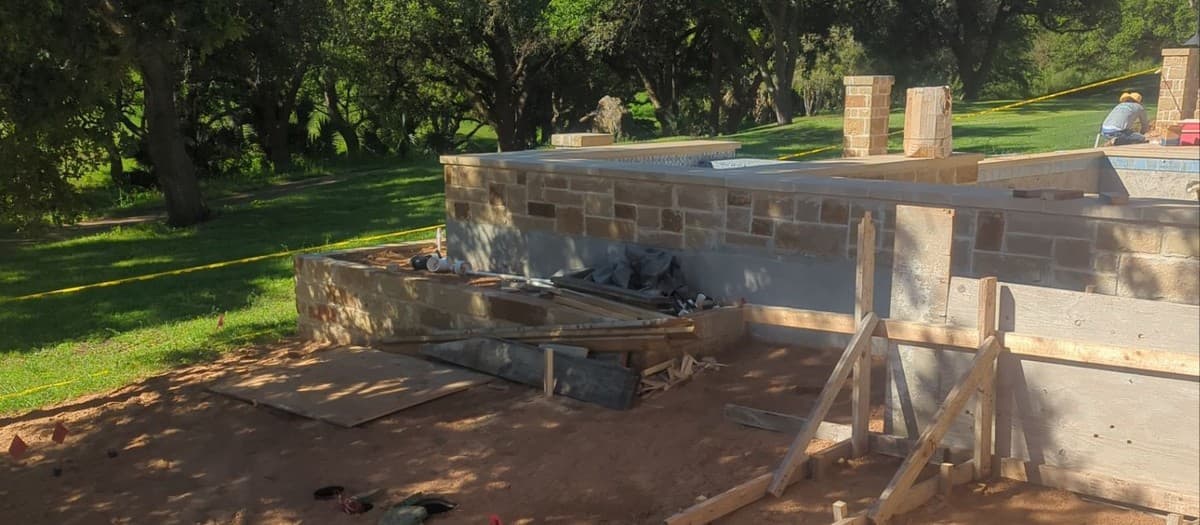
A patio and retaining wall in the same scope with one crew means one thing must go first. That is the wall. Everything else in the sequence follows from that decision.
A client wants a paver patio at the back of their yard and a retaining wall to create a level terrace above it. Same job, one crew. The question is not whether you can do both — it is which one comes first and how the sequence affects everything downstream.
Contractors sometimes try to work both at once to save time. That usually costs more time. The right sequence is linear: wall first, then patio. Here is why and how to run it.
Why the Wall Always Comes First
The retaining wall defines the grade at the back edge of the patio. Until the wall is built and backfilled, you do not know the exact finished elevation of the patio area. If you install patio base before the wall is complete, you are guessing on grade — and when the wall shifts elevation by even two or three inches during construction, you have to redo base work.
The wall also requires heavy equipment and significant earthwork behind it for drainage aggregate and backfill. That equipment cannot operate near a finished patio base without damaging it. Build the wall, complete all earthwork, confirm wall drainage is working, then start patio base.
Phase 1: Excavation and Wall Footing (Days 1–2)
Mark the wall location and excavate the wall base trench. For a segmental retaining wall, the base course buries at least 6 to 12 inches below finish grade depending on wall height — one inch of burial per foot of wall height is the standard rule. Set and compact the wall base material (typically 6 inches of compacted crushed limestone) before the first block course goes down.
Also excavate the patio area during this phase. Get the rough cut done while the equipment is already on-site. You will come back to fine-grade the patio area after the wall is complete — but getting the bulk of the patio excavation done now saves a return trip with the machine.
Phase 2: Wall Construction and Drainage (Days 3–5)
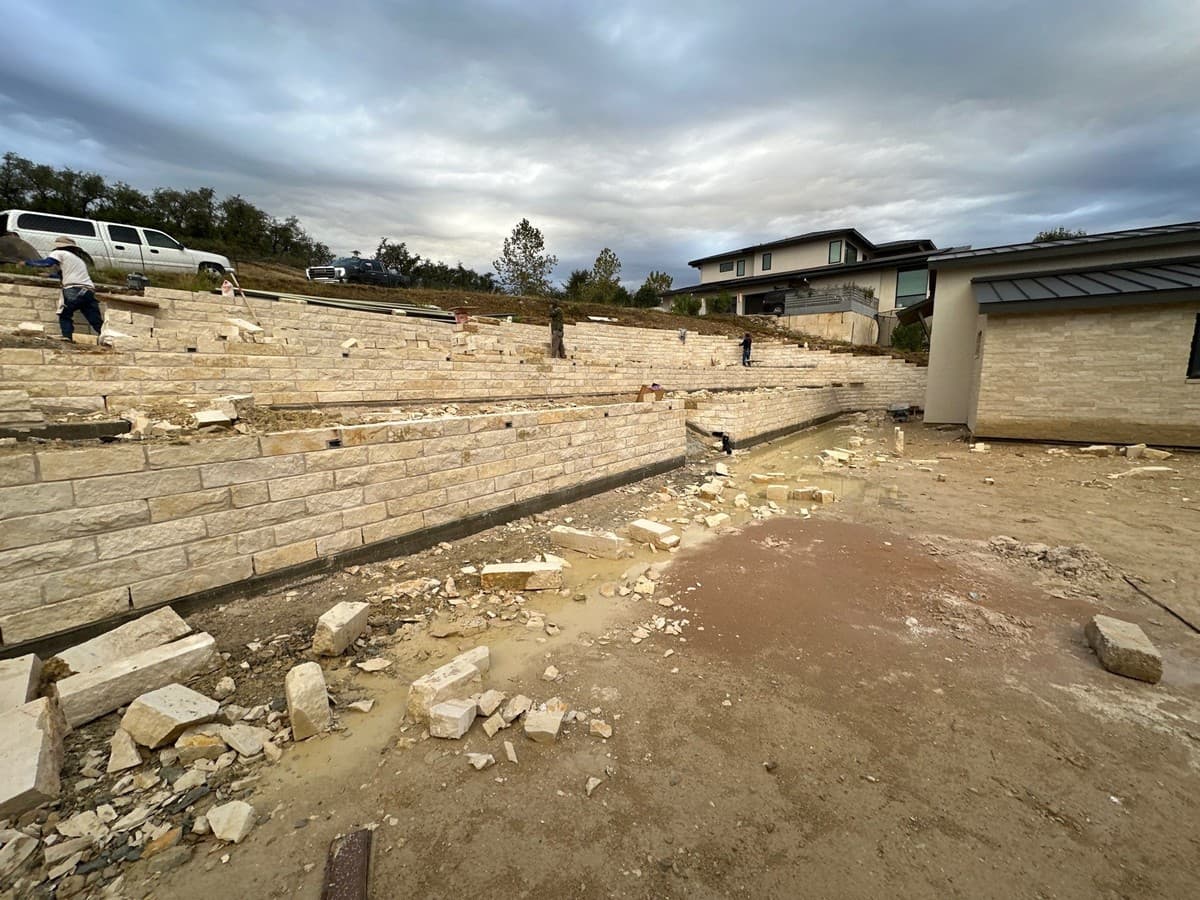
Build the wall from base to cap. After each course, backfill with drainage aggregate (clean crushed stone, no fines) and compact. Do not use native soil for backfill behind a retaining wall — it retains water and creates hydrostatic pressure. Clean stone drains freely and reduces wall load.
Install wall drainage pipe — typically a 4-inch perforated pipe at the base of the wall, wrapped in fabric, connected to a daylight outlet. This is not optional on any wall over 24 inches in height. Hydrostatic pressure from poor drainage behind a wall is the leading cause of wall failure.
Phase 3: Patio Base Prep (Days 6–7)
Once the wall is capped and the area behind it is fully backfilled and compacted, shift to patio base. Fine-grade the patio area to establish correct slope — 1 to 2 percent away from the house. Order base material delivery for the morning of Day 6. Install base in 2-inch compacted lifts.
Check grade at the wall face carefully. The patio surface needs to meet the wall at the correct elevation — if the patio runs too high, it buries the wall cap; too low and you have an awkward step-down that was not in the design. Confirm the relationship between finished patio grade and finished wall height before any pavers go down.
Phase 4: Paver Installation and Finish Work (Days 8–10)
Set bedding sand, install edge restraint, and lay pavers. Work from the wall face outward toward the house so cuts land at the perimeter edges where they are less visible. Install polymeric sand, compact, apply sealer if in scope. Walk the completed patio and wall with the client before final cleanup.
"The wall sets the grade. The grade sets the patio. Build them in that order."
Schedule smarter
Ledge keeps your crew on track across every active job.
See every job at a glance, assign crews, track milestones, and stop managing schedules from memory or a whiteboard.
Book a Demo →Frequently Asked Questions
How long does a combined patio and retaining wall job typically take?
A mid-size combined project — 400 SF patio plus a 40-linear-foot retaining wall under 36 inches tall — typically runs 8 to 12 crew days with a three-to-four person crew. Wall construction and drainage account for roughly 40 percent of total crew time. Adding complexity to either element (curved wall, multi-level patio, difficult site access) extends that baseline significantly.
Can part of the patio be installed while the wall is still under construction?
Only if the patio section is completely separated from the wall construction zone and equipment access area. In practice this rarely applies — most patio and wall combinations are too close together to safely work both simultaneously with one crew. The risk of damaging patio base with equipment or backfill operations is high enough that finishing the wall first is almost always the right call.
Does the retaining wall need a permit?
Most jurisdictions require a permit for retaining walls over 30 to 36 inches in height. Check local requirements before starting — requirements vary by city and county. If a permit is required, factor in review time (often 2 to 6 weeks) into your project schedule. Starting wall construction without a required permit exposes you to stop-work orders and fines.
Edgar Galindo
Co-founder, Ledge
Edgar built Ledge while running a landscape design-build company in Central Texas. Combined patio and wall projects are some of the most profitable jobs in the industry — when sequenced correctly.