Every time you drop your price to win a bid, you reinforce a market where contractors compete on price alone. Here is how to break that cycle with a better proposal.
When every contractor sends the same kind of proposal — a list of items and a total — the client's only tool for comparison is price. You built that race. The client did not invent it. If you want to compete on something other than who goes lowest, your proposal has to give the client other criteria to judge you on.
This is what a differentiated proposal does. It changes the conversation from "who is cheapest" to "who is worth paying more for."
The Problem With Generic Proposals
A proposal that says "paver patio installation — 400 SF — $16,500" tells a client almost nothing about what separates your $16,500 job from a competitor's $12,000 job. Maybe you use a deeper base. Maybe you install proper drainage. Maybe your crew has been doing this for ten years. None of that appears in a generic proposal.
The client fills in the blanks with assumptions. They assume both proposals are essentially the same job — because both proposals look the same. Then they go with the lower number.
What a Differentiated Proposal Includes
Specific materials with brand names: "Belgard Urbana concrete pavers, charcoal color" tells a client more than "concrete pavers." It signals that you know what you are ordering — not just filling in a line.
Engineering explanations: "8-inch crushed limestone base — specified for clay soil to prevent long-term settling" explains a cost that would otherwise look like overpricing. Clients who understand what they are getting rarely push back on it.
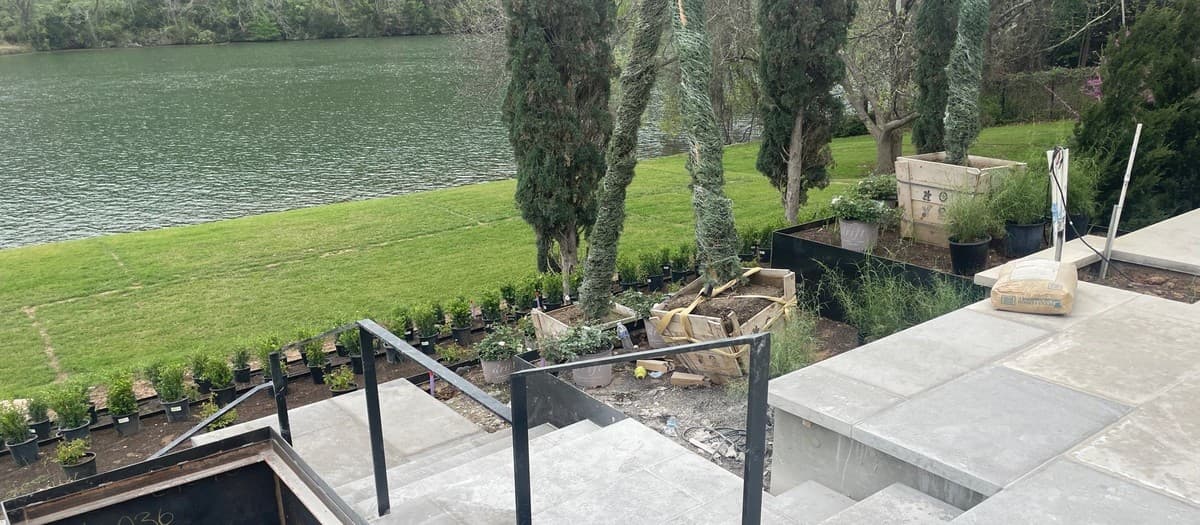
Site photos: Proposals with photos from the actual job site close at higher rates. The client sees that you documented their property and took notes. That is evidence of professionalism — something a lower bid cannot replicate without doing the same work.
Three pricing tiers: A client who sees Good/Better/Best is not comparing you to another contractor — they are comparing your options to each other. You own the conversation.
Stop Competing for the Wrong Clients
Some clients are going to hire the cheapest contractor. Those are not your clients. A better proposal does not win that bid — but it does filter those clients out faster, so you stop spending time estimating for projects you will never get at a margin that makes sense.
The clients you want are the ones who ask "why is your price higher?" when they read a differentiated proposal — not the ones who just say no and go elsewhere. That question is an invitation to close. Answer it with your scope description, your material specs, and your process. That client will often choose you even at $2,000–$5,000 more.
"You cannot charge more than a generic proposal supports. A better proposal is what earns a better price."
Your Proposal Is Your Sales Tool
Most contractors treat proposals as administrative tasks — something you have to produce before you can get paid. The contractors charging 20–30% more for the same scope have a different view: the proposal is the sale. Every dollar you invest in making the proposal clearer, more specific, and more professional translates directly into higher close rates and higher average job values.
What is an extra $500–$1,000 in average job value worth across 40 jobs a year? $20,000–$40,000 in additional revenue — from the same number of clients. That is the math of a better proposal.
Close more jobs
Ledge proposals get signed 3× faster than PDF quotes.
Good/Better/Best options, digital e-signature, job photos built in, and automatic follow-up reminders. Built for landscape contractors.
Book a Demo →Frequently Asked Questions
What if my market is very price-sensitive and clients expect the lowest bid?
Every market has a segment that buys on quality and a segment that buys on price. You are choosing which segment to compete in. A better proposal does not appeal to the price-first buyer — it attracts the quality-first buyer who exists in every market. That buyer is usually a smaller percentage of total leads, which means you need fewer of them to hit your revenue target.
How do I respond when a client says "I got a cheaper quote"?
Ask what that proposal included — specifically. "What base depth did they specify? What drainage did they plan for?" Most clients cannot answer because the cheaper proposal did not include those details. You are not attacking the competitor — you are pointing out that your proposal answered questions theirs did not. That conversation often closes the job.
Should I ever match a competitor's lower price?
Only if you can match their scope — meaning you reduce what you are delivering, not your margin. If a competitor is bidding $10,000 and you are bidding $14,000, the question is: what are they leaving out? If you can offer a $10,000 scope that is genuinely comparable to what they are pricing, that is a fair conversation. Matching their price on your scope is just giving away money.
How do I track whether my proposal improvements are actually working?
Track close rate and average job value month over month. If you improve your proposal structure and your close rate goes from 30% to 45%, that is a measurable outcome. If your average job value increases by $2,000, you can calculate exactly what that improvement is worth annually. Most contractors who track these numbers find that proposal quality is the highest-leverage variable in their entire sales process.
Edgar Galindo
Co-founder, Ledge
Edgar built Ledge while running a landscape design-build company in Central Texas. He stopped competing on price when he started tracking what differentiated proposals were actually worth to his close rate and job value.