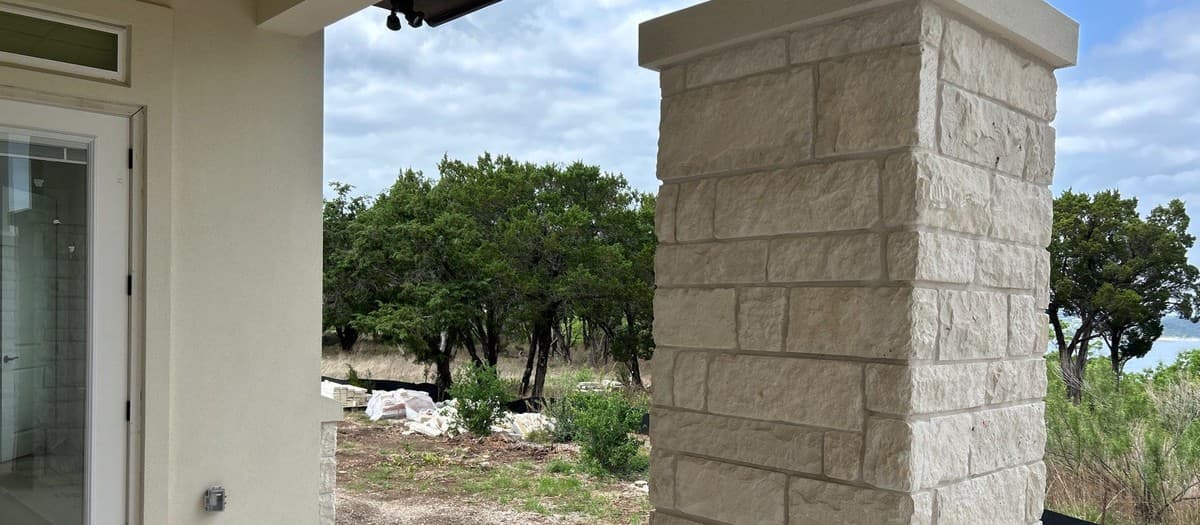
Most clients come in with a preference but not a reason. Your job is to assess the site and tell them which option actually makes sense for their situation.
A client who says "I want a deck" often doesn't know they want a deck — they want outdoor living space, and a deck is the word they know. When you walk the site and understand their yard, you might find that a paver patio is a better answer for their grade, their budget, and their long-term maintenance tolerance. Knowing when to redirect is a sales skill and a service skill at the same time.
Grade: The First Question That Decides Everything
Walk the site before you talk about either option. The grade of the yard relative to the back door or access point is the single biggest factor in the decision.
If the door is at or near grade and the yard is flat: a patio is usually faster, cheaper, and lower maintenance. Grade-level concrete or pavers require minimal framing, no elevated footings, and will last decades without inspection or painting.
If the door is elevated — a few steps to several feet above grade — a deck is often the most practical solution. Building up a patio to door height on a significantly elevated back door means excavating, filling, compacting, and retaining a large mass of soil. That's more expensive than building a deck on footings in most cases. Deck framing is the efficient answer to elevation differences of 18 inches or more.
For yards that slope significantly away from the house: both are possible but the cost calculus shifts. A deck on the elevated end requires tall posts and extensive underpinning as the grade drops. A terraced patio with retaining walls can achieve a similar flat usable area for comparable cost and much higher property value impact.
Cost Comparison: What Each Actually Costs Per Square Foot
Cost depends heavily on materials and site conditions. General ranges for Central Texas:
- Concrete patio: $8–$15/SF installed. Simple forms, one pour, broom finish. Lowest entry cost for flat-grade applications.
- Paver patio (concrete pavers): $18–$30/SF installed. More labor-intensive but higher-end finish, repairability, and curb appeal.
- Flagstone patio: $22–$40/SF installed depending on stone type. Natural look, premium cost.
- Pressure-treated wood deck: $20–$35/SF installed. Budget-friendly initial cost but requires regular maintenance.
- Composite deck (Trex, TimberTech): $30–$55/SF installed. Higher upfront, significantly lower maintenance over 20 years.
- Hardwood deck (Ipe, Mahogany): $40–$70/SF installed. Premium aesthetic, high durability, expensive material.
Maintenance Reality: Setting the Right Expectation
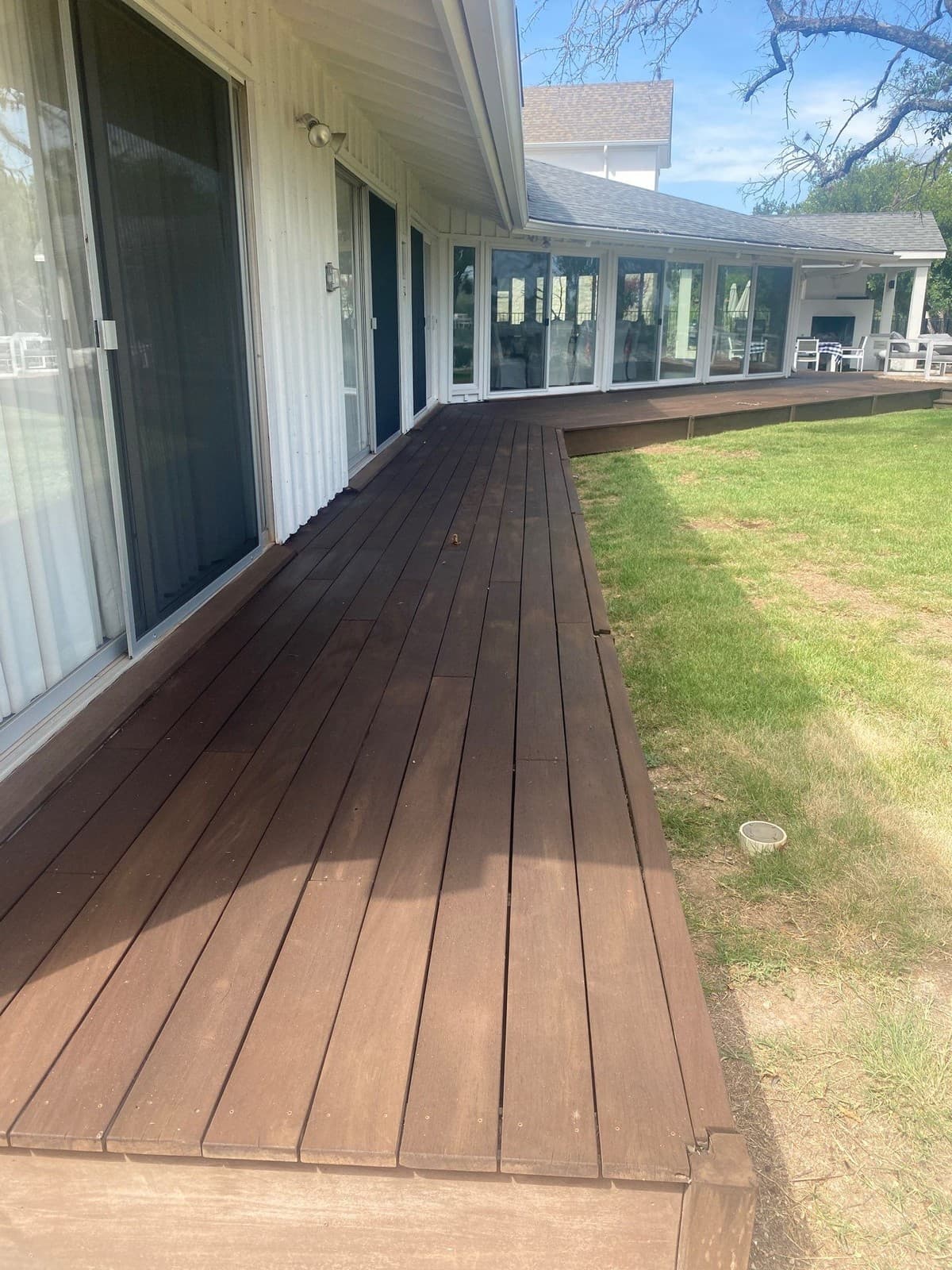
This conversation doesn't happen enough in the sales process, and it leads to dissatisfied clients who call you when their PT deck looks gray and weathered 3 years after installation.
Wood deck maintenance expectations:
- Clean annually and apply sealant or stain every 2–3 years
- Inspect and replace fasteners, boards, or posts every 5–7 years as needed
- Expect fading, checking (surface cracks), and graying without regular sealing
Composite deck maintenance:
- Annual cleaning with a deck cleaner — no staining or sealing required
- Won't rot, won't check, won't fade significantly
- Higher upfront cost is offset in 10 years by eliminated maintenance expense
Patio maintenance:
- Concrete: seal every 3–5 years to prevent staining and surface wear
- Pavers: re-sand joints every 3–5 years; individual pavers can be replaced without tearing up the whole surface
- Flagstone: minimal maintenance; occasional joint repair
"Tell the client what their backyard will look like in 5 years under each option. That conversation closes more jobs than any feature comparison ever will."
Permits and HOA: Know Before You Propose
Decks almost always require a building permit in most Texas municipalities. Patios at grade typically do not — unless they're over a certain size or in a floodplain. Elevated decks over 30 inches require permits and inspections in most jurisdictions, and some HOAs restrict deck materials, colors, or designs.
Before you finalize a proposal, confirm with the client what permits are required. Include permit costs in your estimate — clients shouldn't be surprised by $400–$800 in permit fees after signing. If you're pulling the permit, include your markup for the administrative time.
Patio projects are often the smarter choice when the client's timeline is tight and permits would add 2–4 weeks. A grade-level patio in most municipalities can go in without a permit and be done in 2–3 days. A permitted deck adds design submission, review time, and scheduled inspections.
The Upsell: Combining Both
The highest-value outdoor living projects combine a deck and a patio — a deck off the back door that transitions via stairs to a grade-level patio with fire pit, dining area, or outdoor kitchen. This multi-level layout creates outdoor zones for different uses, maximizes the square footage the client actually uses, and justifies a significantly higher project budget.
When you walk the site with the client, ask how they envision using the space. If they mention both dining close to the house and a seating area near the back of the yard, that's your opening to propose the multi-level approach. Show them a sketch on the spot — even a rough one — and the project scope almost always expands.
Frequently Asked Questions
Is a deck or patio cheaper to build?
At grade level, a concrete patio is typically the cheapest option at $8–$15/SF. A paver patio runs $18–$30/SF. A PT wood deck is $20–$35/SF and composite decking is $30–$55/SF. On elevated sites, decks may be cheaper than filling and retaining grade for a patio.
Which adds more home value: a deck or a patio?
Patios generally recover more of their cost at resale in Texas — 60–80% vs. 50–70% for decks — because of lower maintenance appeal for buyers and durability. High-quality composite decks can approach patio ROI in premium markets.
Do I need a permit for a patio or deck?
Grade-level patios typically don't require permits in most Texas cities. Decks elevated more than 30 inches above grade usually require a building permit and inspections. Check local municipality requirements before proposing — include permit costs in the estimate.
Which requires less maintenance: deck or patio?
Patios (especially pavers) require the least maintenance. Composite decks are close. Pressure-treated wood decks require the most — staining or sealing every 2–3 years plus periodic board and fastener replacement.
Proposal Both Options and Let the Client Choose
Ledge lets you send a proposal with two or three options side-by-side — base, mid-range, and premium — so clients see the full picture and you capture more project value on every bid.
Edgar Galindo
Co-founder, Ledge
Edgar built Ledge while running a landscape construction company in Central Texas. He writes about installation techniques, estimating, and building a profitable field operation.