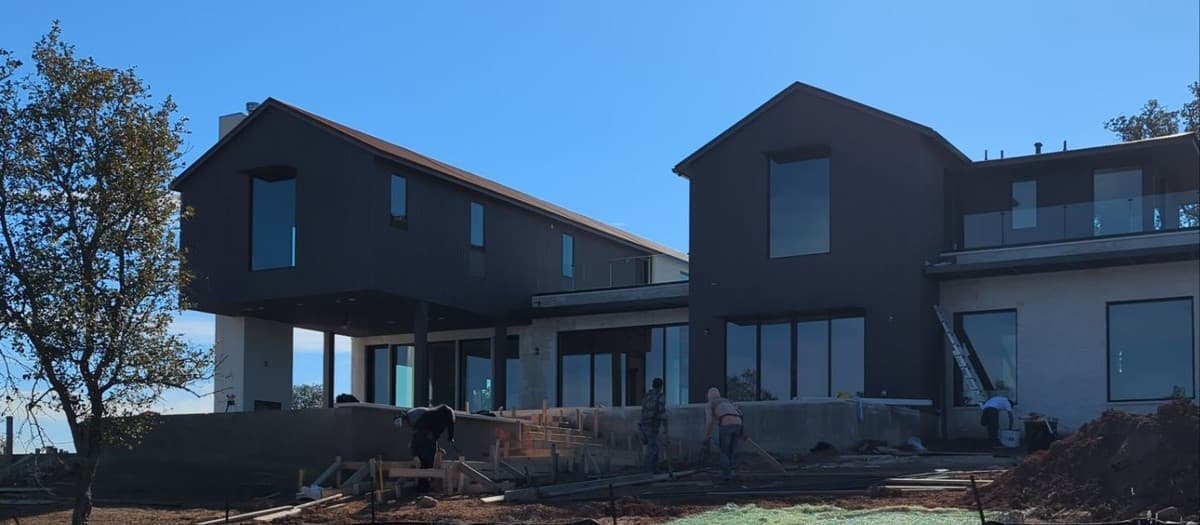
Hydroseeding costs 60-70% less per square foot, but in a Central Texas summer, timing and species choice determine whether it works at all. Here's the full breakdown.
The question comes up on almost every new lawn installation: "Can we do hydroseed instead of sod?" The honest answer is yes, with conditions. Hydroseeding can produce an excellent lawn at a fraction of the material cost. In Central Texas, those conditions are harder to meet than in most of the country.
The risk is real. A hydroseeded lawn installed in July in Austin — 100°F days, no rain for weeks — is a gamble that you lose as often as you win. Know the numbers, know the timing, and give clients an honest recommendation.
Cost Comparison: The Numbers Side by Side
Hydroseeding material cost: $0.08–$0.20 per square foot for the slurry (seed, mulch, tackifier, fertilizer). Total installed cost including site prep runs $0.15–$0.35/SF on most residential jobs. The range widens based on seed species, slope complexity, and minimum job charges from hydroseed subcontractors.
Sod cost: $0.35–$0.85 per square foot for Bermuda, St. Augustine, or Zoysia sod in the Austin/San Antonio market. Add installation labor and the installed price runs $0.55–$1.25/SF. On a 5,000 SF lawn, that's the difference between $1,750 and $6,250 — real money that shapes every conversation.
Why sod costs more: it's an established plant, not a seed. When you roll it down, it looks done and functions immediately. Hydroseeding looks like nothing for 3–4 weeks, then patchy, then (if establishment goes well) a full lawn at 8–12 weeks. Clients who want results this season often choose sod for that reason alone.
The Summer Establishment Problem in Central Texas
Grass seed needs consistent moisture to germinate. Germination takes 7–21 days depending on species. In a Central Texas June–August, soil surface temperatures can exceed 120°F in direct sun. Moisture evaporates from the seed bed within hours of irrigation. A client who isn't watering 2–3 times daily during this window will see poor germination and bare spots.
This is the honest conversation: "Hydroseeding in July works if you commit to twice-daily watering for the first 3–4 weeks. If your irrigation system can do that, great. If not, we should consider sod or wait until September when the temperatures drop and establishment is more reliable."
Best installation windows for hydroseeding in Central Texas: late September through October (warm soil, declining temperatures, fall rains) and March through mid-April (spring rains, mild temperatures before summer heat). These windows give seed the best shot at establishment with the least irrigation dependency.
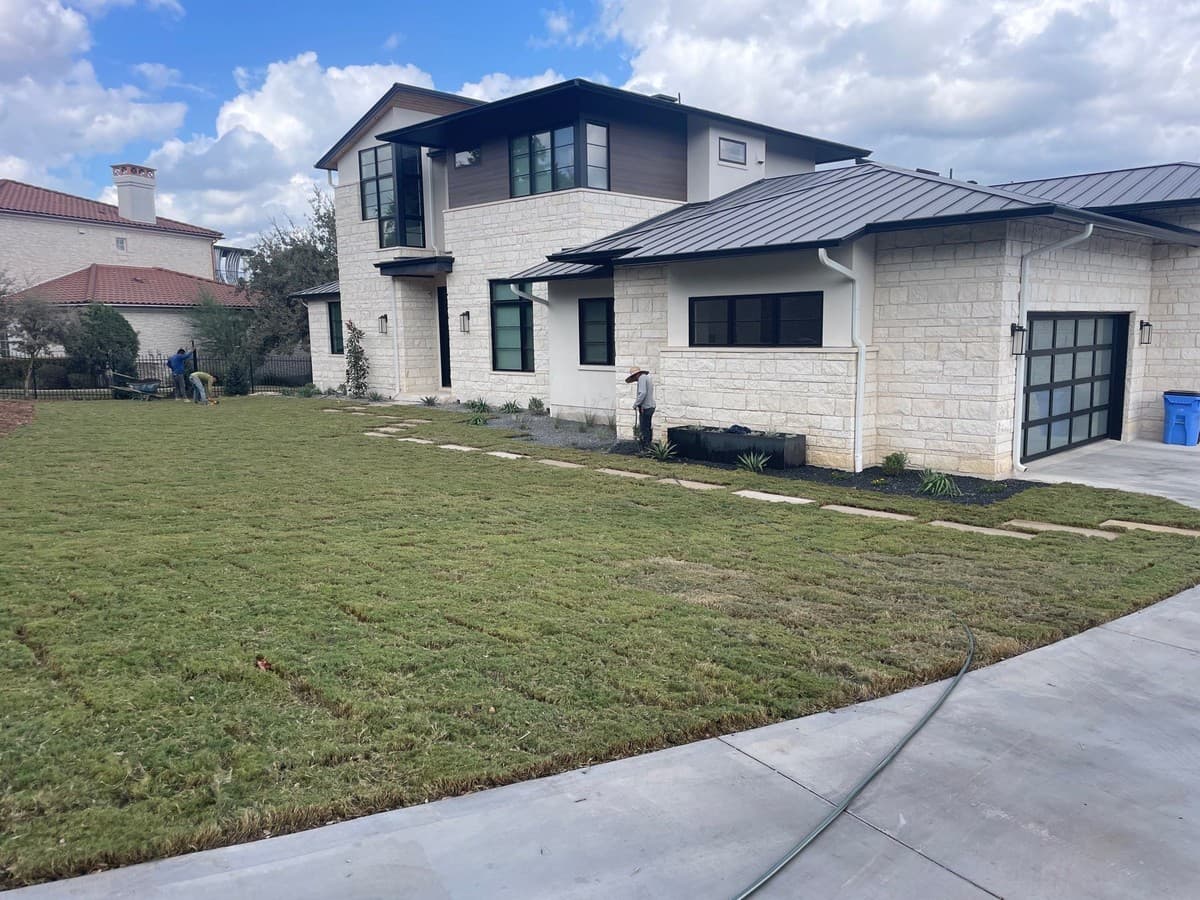
Grass Species Selection: What Works in Central Texas
Not every grass species works with hydroseeding. Bermuda grass is the primary choice for hydroseeding in Central Texas — it germinates reliably in warm soil, establishes quickly, and handles full sun and drought better than most turfgrasses.
- Common Bermuda (Cynodon dactylon): The standard hydroseed choice. Germinates in 7–14 days in warm soil. Full sun, drought tolerant once established. Goes dormant and browns in winter — clients need to understand that.
- Buffalo grass (Bouteloua dactyloides): Native to Texas, extremely drought tolerant, lower maintenance than Bermuda. Germinates slowly (21–30 days). Works best in central and west Texas. Lower density look than Bermuda — not ideal for clients who want a thick traditional lawn appearance.
- Tall Fescue: Cool-season grass that works in Central Texas with shade and irrigation. Available in hydroseeding mixes. Install in fall for best establishment — summer installation in Texas is high risk.
- Zoysia: Not available as hydroseed — zoysia must be installed as plugs, sprigs, or sod. If a client wants Zoysia, sod is the path.
- St. Augustine: Also not available as seed — sod or plugs only.
"We tell clients: if you want it to look done this summer, do sod. If you're okay with a 10-week establishment period and you'll water consistently, hydroseeding saves you real money. Most choose sod for the front yard and hydroseed the backyard."
Site Preparation: The Work Neither Method Skips
Both hydroseeding and sod require the same site preparation: grade the area to drain properly, remove debris, loosen the top 2–4" of soil, apply starter fertilizer, then install the grass. Skipping soil preparation for either method is a mistake clients often request to save money — it consistently produces poor results.
For hydroseeding: tilling or aerating before application significantly improves seed-to-soil contact, which is the primary factor in germination success. The tackifier in the hydroseed mix holds the slurry in place on slopes but doesn't substitute for good seed-to-soil contact on flat areas.
How to Present Both Options to Clients
Price both in your proposal. Show the cost difference clearly. Then add the timing and responsibility caveat: "Hydroseeding requires twice-daily watering for the first 4 weeks and monthly watering for 8–12 weeks after. No foot traffic until the lawn is mowed at least twice. If that works for your schedule and irrigation system, it's a strong option."
When clients understand the establishment requirements, they make better decisions. And when the lawn fails because they watered once a day instead of twice, the conversation is much easier if you documented the requirements in writing before the job started.
Estimate hydroseeding and sod jobs side by side in Ledge
Give clients both options in one professional proposal. They pick what fits — you close the job faster.
Frequently Asked Questions
How long does hydroseeding take to establish in Central Texas?
Bermuda hydroseed in optimal spring or fall conditions: visible germination in 7–14 days, established enough for light foot traffic in 6–8 weeks, full lawn appearance in 10–14 weeks. Summer installation extends all timelines and increases establishment failure risk significantly.
Can I hydroseed over existing grass?
No. Overseeding with hydroseed on existing turf produces poor results because the existing grass competes for resources and the seed doesn't achieve good soil contact. Kill existing vegetation, till the top 2", grade, then hydroseed. Skipping that step is the primary reason overseeded lawns look patchy.
Which sod type is best for Central Texas?
Bermuda sod for full-sun lawns with established irrigation — drought tolerant, repairs quickly, handles foot traffic well. St. Augustine (Palmetto or Raleigh variety) for shaded areas or where clients want a lush, thick appearance. Zoysia for low-maintenance clients who can accept slower establishment and less dense coverage than Bermuda.
Do I need to include hydroseeding in my contractor's license scope?
In Texas, landscape contractors can apply hydroseed as part of a landscaping scope. The hydroseeding equipment itself is typically operated by a subcontractor with a dedicated hydroseed truck — most landscape contractors sub the spray application and include it as a project cost. Verify your license scope covers the full scope of lawn installation work you're offering.
What's the minimum job size for hydroseeding to make economic sense?
Most hydroseed subcontractors have a minimum charge of $350–600 regardless of area. Below 2,000 SF, the minimum charge makes hydroseeding cost-competitive with or more expensive than sod on a per-SF basis. Hydroseeding's cost advantage becomes clear on jobs 3,000 SF and larger.
Edgar Galindo
Co-founder, Ledge
Edgar built Ledge while running a landscape construction company in Central Texas. He writes about installation techniques, estimating, and building a profitable field operation.