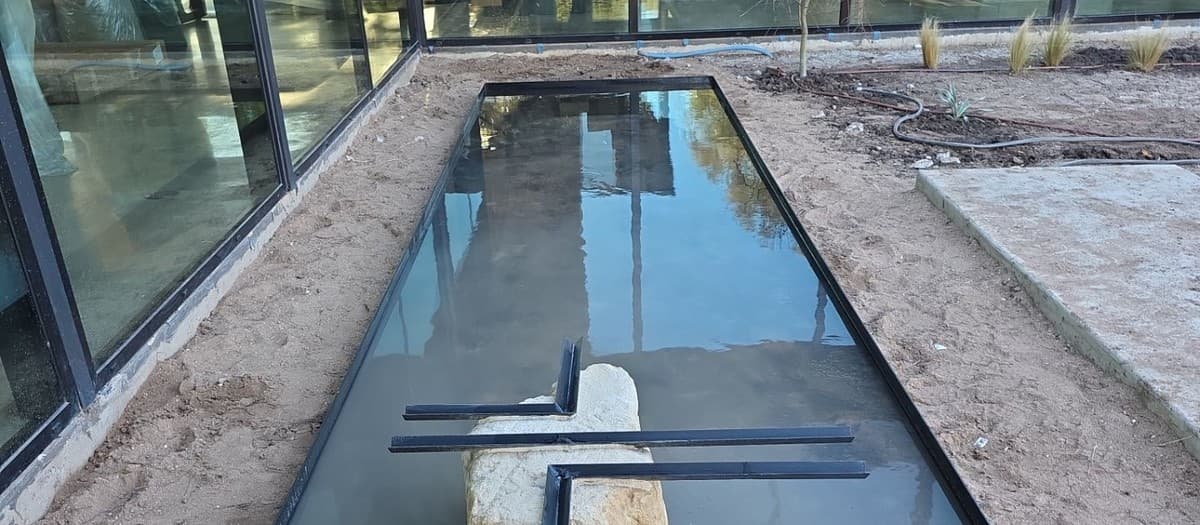
Water features fail at the estimate because contractors price the pretty part and forget the engineering underneath. Basin size, liner square footage, pump head pressure, plumbing, electrical, and boulders all need their own line items before you write a number.
Water features are one of the highest-margin jobs in residential landscaping — when priced correctly. They are also one of the easiest jobs to underbid. The boulder order alone can swing $1,500–$4,000 if you guess instead of specify. The pump can be the wrong size for the head pressure. The liner can be cut short by 18 inches on a curved stream. Price each component from a real list, not from memory.
Choosing the Right Feature Type Before You Estimate
The two most common residential water features for landscape contractors are pondless waterfalls and stream beds. These are different systems with different material costs and different labor profiles. Get this confirmed with the client before you price anything.
- Pondless waterfall: Water falls into a gravel-filled underground basin, recirculates via a submersible pump. No open water surface, minimal mosquito concern, lower maintenance. Most common residential choice.
- Stream bed: A liner-defined channel running downhill, fed by a pump at the head and draining to a basin or pond at the bottom. Can be built with or without a visible pond.
- Traditional koi pond: Open water surface, biological filtration required, more complex plumbing. Higher maintenance commitment for the client. Price as a separate scope from waterfall features.
Basin Sizing: Volume Determines Everything Downstream
The basin is the underground reservoir that holds all the system water when the pump is off. Underprice the basin and the whole system fails at its foundation. Aquascape and similar manufacturers publish sizing guides — use them. Improvising basin size is the most common reason pondless waterfalls run dry on a hot afternoon.
General rule: The basin volume should hold at least 1.5× the water volume in the stream and waterfall at any given time. For a 10-foot stream with a 20-inch width and 4-inch water depth: stream volume = 10 × 1.67 × 0.33 = 5.5 cubic feet = 41 gallons. Basin minimum = 1.5 × 41 = 62 gallons. In practice, residential pondless waterfalls use 300–700 gallon basin capacity depending on stream length and waterfall height.
- Aquascape Pondless Waterfall Vault: $180–$320 depending on size. Fastest basin installation — vault fits in excavated hole, backfills with gravel.
- Custom excavated basin with liner: $350–$700+ depending on volume. More flexible for large or unusually shaped features.
- Basin excavation labor: 2–4 hours for standard residential basin, additional for access or clay soil.
Liner: Measure Every Surface, Then Add 3 Feet
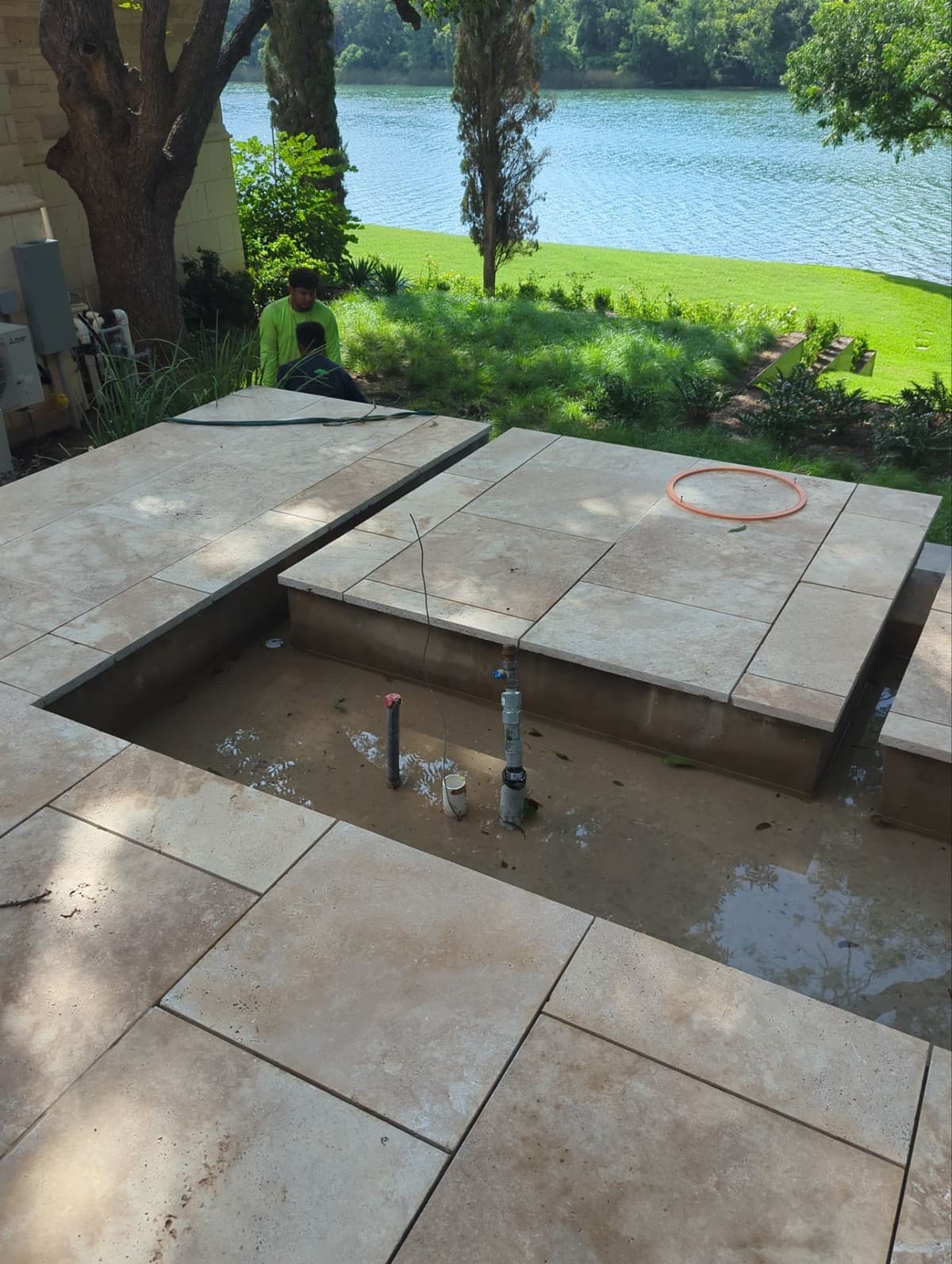
EPDM pond liner at 45 mil thickness is the standard for residential water features. It is sold by the square foot or in pre-cut rolls. The liner must cover the entire excavated area — basin, stream channel, and waterfall spillway — with overlap at all edges. You cannot piece liner together successfully without creating leak points.
Liner sizing formula: For a stream: (stream length + 2 × max depth) × (stream width + 2 × max depth) = minimum liner piece. For a 15-foot stream, 24 inches wide, 12 inches deep: (15 + 2) × (2 + 2) = 17 × 4 = 68 SF. Add 3 feet of overlap on all sides. For curves and an irregular waterfall face, order an additional 20% of calculated area.
45-mil EPDM liner costs $0.65–$1.10/SF depending on supplier and purchase quantity. For a mid-size feature using 120 SF of liner, that is $78–$132 in liner material. Do not short-order liner — a second piece of liner is a seam waiting to leak.
Pump Selection: Match GPH to Head Pressure
The pump is the heart of the system. An undersized pump produces a trickle instead of a waterfall. An oversized pump wastes electricity and can create turbulence that fights the natural look. Size the pump from two numbers: gallons per hour needed at the spillway, and total head pressure (vertical lift from basin to top of waterfall).
A rough rule: plan for 150 GPH per inch of spillway width at the waterfall crest. A 24-inch wide waterfall needs 3,600 GPH at the spillway. If the total head pressure (vertical height plus 10% per 10 feet of horizontal pipe run) is 8 feet, you need a pump rated at 3,600 GPH at 8 feet of head — not at zero head, which is the number typically listed on the box.
- Aquascape AquaSurge 2000-4000: $220–$380. Good for small-to-mid residential features up to 12-foot stream and 4-foot waterfall.
- Aquascape AquaSurge Pro 4000-8000: $380–$550. Variable flow, energy efficient. Right choice for features with 4–6 foot waterfall heights.
- High-capacity pump (10,000+ GPH): $600–$1,200. Required for large waterfalls over 6 feet tall or wide spillways over 36 inches.
Boulders: Price by Weight, Not by Piece
Boulders are priced by the ton at most landscape stone suppliers. Decorative boulders run $180–$400 per ton depending on rock type, availability, and delivery distance. A mid-size waterfall feature uses 3–6 tons of boulders for the waterfall face, stream edges, and accent placement. That is $540–$2,400 in material before delivery.
Fieldstone or river rock for stream bed fill runs $65–$120 per ton. A 15-foot stream with a 24-inch channel and 4-inch rock depth needs approximately 1.5–2 tons of 2–4 inch river rock. Know your rock types before you quote. "A bunch of rocks" is not a material quantity.
Can you place boulders by hand, or do you need a machine? Boulders over 200 lbs need mechanical placement — mini-excavator, skid steer with forks, or a boulder-placement attachment. If you need equipment for boulder setting, price it. A day of mini-excavator time for boulder placement is $400–$600 in rental cost plus operator labor.
"The client sees the waterfall. Your margin is built on the liner, the pump, and the boulders you priced correctly before the site visit ended."
Plumbing and Electrical: Two Line Items, Not Zero
Every pondless waterfall needs an electrical connection for the pump. Does power already run to the area? If not, a licensed electrician needs to run a GFCI-protected outdoor circuit from the nearest panel. Budget $400–$900 for a new outdoor circuit depending on run length and local electrician rates. That cost belongs in your estimate, not in your client's follow-up invoice.
Plumbing between the basin and the waterfall head: flexible corrugated tubing (1.5 inch or 2 inch) buried below the rock bed. Price by linear foot from basin to top of waterfall, plus fittings. 1.5-inch corrugated tubing runs $0.55–$0.80/LF. Add $35–$60 in fittings for a standard install. For features with autofill valves, float switches, or dedicated supply lines — price each component as its own line item.
Labor Hours: Water Features Take Longer Than You Think
A mid-size pondless waterfall — 4-foot drop, 15-foot stream, boulder work and plantings — runs 40–65 man-hours for a skilled two-man crew. That includes excavation, basin installation, liner placement, boulder work, plumbing, rock placement in the stream, and system startup. Do not estimate water feature labor from your general hardscape production rates — this is slower, more detail-oriented work.
System startup and testing adds 2–4 hours: filling the system, checking for liner leaks, adjusting flow, setting boulder positions, and walking the client through operation and maintenance. Price this time — do not give it away.
Stop guessing on estimates
Build accurate estimates in minutes, not hours.
Ledge has assembly-based estimating built in — material takeoffs, labor rates, and markup all in one place. No more spreadsheet math.
Book a Demo →Frequently Asked Questions
How much does a pondless waterfall cost installed?
A professionally installed pondless waterfall with a 3–4 foot drop and 10–15 foot stream runs $6,000–$14,000 in most markets, depending on boulder selection, pump size, and electrical work required. Simple features with small decorative boulders come in at the low end. Large waterfalls with premium boulders, autofill valves, and new electrical circuits push $18,000–$25,000+. Never quote below $4,000 for any professionally built pondless waterfall — the material cost alone floors it there.
What pump size do I need for a pondless waterfall?
Plan for 150 GPH per inch of spillway width at the waterfall crest. A 24-inch spillway needs 3,600 GPH at operating head pressure. Head pressure equals vertical lift plus 10% per 10 feet of horizontal pipe. Always select a pump based on its rated flow at your actual head pressure — not its zero-head rating. Aquascape and similar manufacturers publish performance curves for each pump model — use them.
How thick should pond liner be for a waterfall?
45-mil EPDM liner is the minimum for residential water features. 60-mil is better for features with heavy boulders sitting on the liner. HDPE liner is an alternative but is stiffer and harder to work into tight folds in rock work. Never use PVC pond liner for permanent features — it becomes brittle in UV exposure within 3–5 years. Budget liner cost as a separate line item from rock and equipment.
Do I need a permit for a pondless waterfall?
Most residential pondless waterfalls do not require a building permit as long as the basin depth stays within local limits (typically 18–24 inches) and the electrical work is handled by a licensed electrician who pulls their own permit. Features with formal ponds holding significant water volume may trigger additional review. Check the local jurisdiction for your specific situation — particularly for HOA-governed properties that may have separate approval requirements.
How long does it take to install a pondless waterfall?
A mid-size pondless waterfall (4-foot drop, 15-foot stream) takes 3–4 days for a skilled two-man crew, including excavation, basin installation, liner, boulder work, stream rock, plumbing, and system startup. Larger features with 6-foot waterfalls and 25-foot streams can run 5–7 days. Complex boulder placement — particularly large feature rocks over 500 lbs — adds significant time because each piece has to be set, evaluated for look, and sometimes repositioned.
Edgar Galindo
Co-founder, Ledge
Edgar built Ledge while running a landscape design-build company in Central Texas. Water features are some of the most satisfying jobs in the industry — and some of the easiest to underprice.