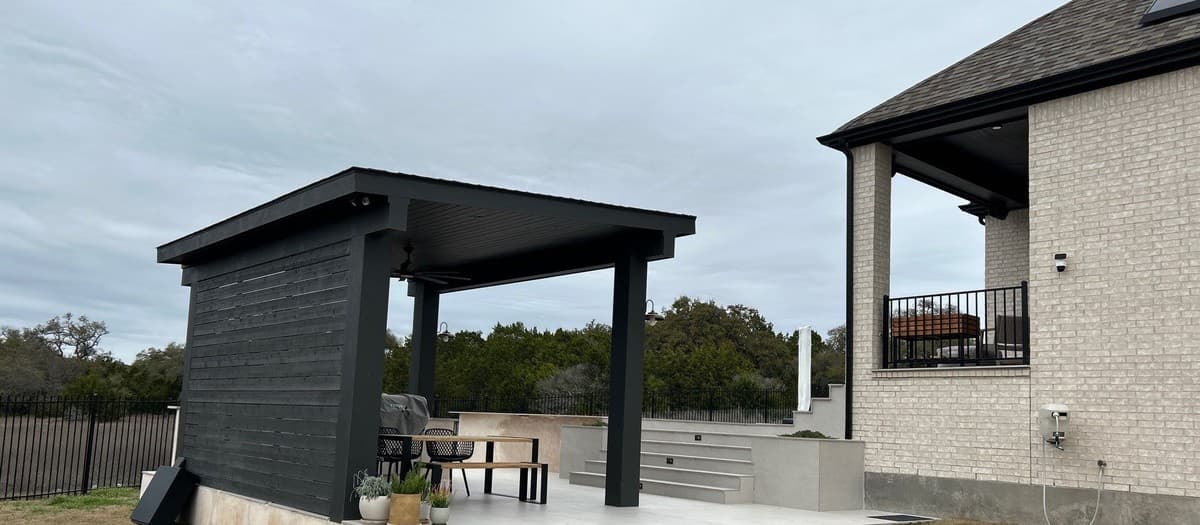
Pergola pricing fails at the footings and the permit, not the lumber. Most contractors under-dig, undersize concrete, and then find out the structure needs an engineer. Here is how to estimate before those surprises find you.
Pergolas look simple on a client's Pinterest board. Four posts, some beams, a few rafters. Then you start asking the right questions: What is the local wind speed requirement? Does the city require a permit for detached structures over a certain size? What soil bearing capacity are you sinking footings into? The structure itself is often the easy part.
Footings: Depth, Diameter, and Concrete Volume
Every pergola post needs a footing that goes below the frost line and meets local code requirements. In Central Texas where frost depth is minimal, a 24-inch deep, 12-inch diameter footing is common for residential pergolas. Northern climates may require 42–54 inches of depth.
Concrete volume for a 12-inch diameter, 24-inch deep tube footing: π × (0.5 ft)² × 2 ft = 1.57 cubic feet = 0.058 CY per footing. A standard 80-lb bag of Quikrete yields about 0.60 cubic feet. You need 3 bags per footing at this size. A 4-post pergola needs 12 bags minimum. Larger structures with 6-inch or 8-inch posts on deeper footings use more — always calculate from actual dimensions.
- Auger rental (hand-held): $80–$120/day. Works for footings in non-rocky soil.
- Gas-powered post hole digger: $150–$220/day for 2-man machines. Faster in clay or harder soil.
- Sono tube forms: $8–$14 each. Required for footings that use concrete in the tube rather than direct pour.
- Post bases (Simpson Strong-Tie): $18–$35 each depending on post size. These lift the post off concrete and prevent rot. Do not set wood posts directly in concrete.
Lumber: Wood vs. Composite vs. Aluminum
Wood pergolas most commonly use cedar, redwood, or pressure-treated lumber. Cedar is the residential standard for landscape contractors in most markets — it accepts stain well, resists decay, and looks premium without the cost of redwood. Pressure-treated works structurally but requires special hardware and is harder to finish.
For a 12×14 foot cedar pergola with 6×6 posts, 4×8 beams, and 2×6 rafters at 16 inches on center:
- 4 posts (6×6×10): 4 pieces. Cedar 6×6 runs $4.50–$6.50/LF — $45–$65 per post.
- 2 main beams (4×8×14): Cedar 4×8 runs $5.50–$7.50/LF — $77–$105 per beam.
- Rafters (2×6×14 @ 16 OC): Approximately 11 rafters. Cedar 2×6 runs $2.20–$3.40/LF — $31–$48 each.
- Decorative top slats (1×4×12): 20–24 pieces at 6-inch spacing. $1.10–$1.80/LF each.
Aluminum pergolas from manufacturers like Struxure or Renson are a different product category. Kit prices for residential-grade aluminum pergolas run $8,000–$25,000 wholesale depending on size and features (louvered vs. fixed). Your labor to install is separate and typically runs 8–16 hours for a two-man crew. Know whether you are pricing a wood build or an aluminum kit — they are completely different estimates.
Hardware: The Line Item That Disappears Into the Build
Hardware is not a rounding error — it is $300–$800 on a typical pergola and needs to be in the estimate. Price it by category, not as a percentage guess.
- Post bases (Simpson Strong-Tie ABA66): $22–$32 each × 4 posts = $88–$128
- Beam-to-post connectors: $15–$25 each × 4 connections = $60–$100
- Structural screws and lag bolts: $80–$150 for a 4-post structure
- Rafter ties: $4–$7 each × 22 rafters = $88–$154
- Galvanized hardware only — standard zinc screws will fail outdoors within 2–3 years in humid climates
Permits: What Triggers One and What It Costs
Most jurisdictions require a permit for pergolas over 200 SF or attached to the house structure. A freestanding 12×14 (168 SF) may fall below the threshold in some cities but not in others. The only way to know is to call the city building department before you price the job.
Permit cost: $150–$500 for a standard residential structure permit. If the jurisdiction requires structural drawings, budget $600–$1,500 for a licensed engineer's stamp. Pass through permit and engineering costs to the client at cost — do not absorb them. They are direct expenses on this specific project.
"The permit call takes five minutes. Discovering you needed one after the structure is built takes five months."
Labor Hours for a Standard Wood Pergola
A two-man crew building a standard 12×14 cedar pergola with 4 posts, 2 beams, and 11 rafters should budget:
- Footing excavation and pour: 3–4 hours
- Layout, post setting, and plumbing: 2–3 hours
- Beam installation: 2–3 hours
- Rafter installation: 3–4 hours
- Top slats and detail trim: 2–4 hours
- Total: 12–18 man-hours for a simple 4-post structure
Complex structures — hip roofs, integrated lighting, multiple bays — add hours. Attached pergolas require more structural work and typically more permit scrutiny. Price those separately from your freestanding unit rate.
Stop guessing on estimates
Build accurate estimates in minutes, not hours.
Ledge has assembly-based estimating built in — material takeoffs, labor rates, and markup all in one place. No more spreadsheet math.
Book a Demo →Frequently Asked Questions
How much does a pergola cost installed?
A professionally installed cedar wood pergola runs $6,000–$15,000 for a standard 12×14 to 16×20 foot structure, depending on post size, roof complexity, and market. Aluminum louvered pergolas from manufacturers like Struxure run $18,000–$40,000+ installed. Cost per square foot ranges from $35–$85 for wood builds and $80–$180 for aluminum systems.
Do I need a permit for a pergola?
It depends on the jurisdiction and structure size. Most municipalities require permits for pergolas over 200 SF or any structure attached to the house. Freestanding structures under 200 SF often fall below the permit threshold but not always. Call the local building department with the structure dimensions before you quote — never assume.
What wood is best for an outdoor pergola?
Cedar is the standard choice for landscape contractors building residential pergolas — naturally rot-resistant, accepts stain well, and widely available in structural dimensions. Western red cedar outperforms eastern cedar for rot resistance. Redwood is superior but costs significantly more. Pressure-treated lumber is cheaper and structurally sound but requires special galvanized hardware and is harder to achieve a premium finish.
How deep should pergola footings be?
Footings must extend below the local frost line. In Texas, 18–24 inches is typical. In the Midwest and Northeast, expect 42–54 inches. Beyond frost depth, your footing diameter and depth need to match the structure's load — a 6-post heavy timber pergola needs larger footings than a 4-post standard cedar build. When in doubt, consult the local building department or an engineer. Undersized footings lead to settling and structural failure.
Edgar Galindo
Co-founder, Ledge
Edgar built Ledge while running a landscape design-build company in Central Texas. Pergola jobs taught him that the pretty part is always the easiest to price.