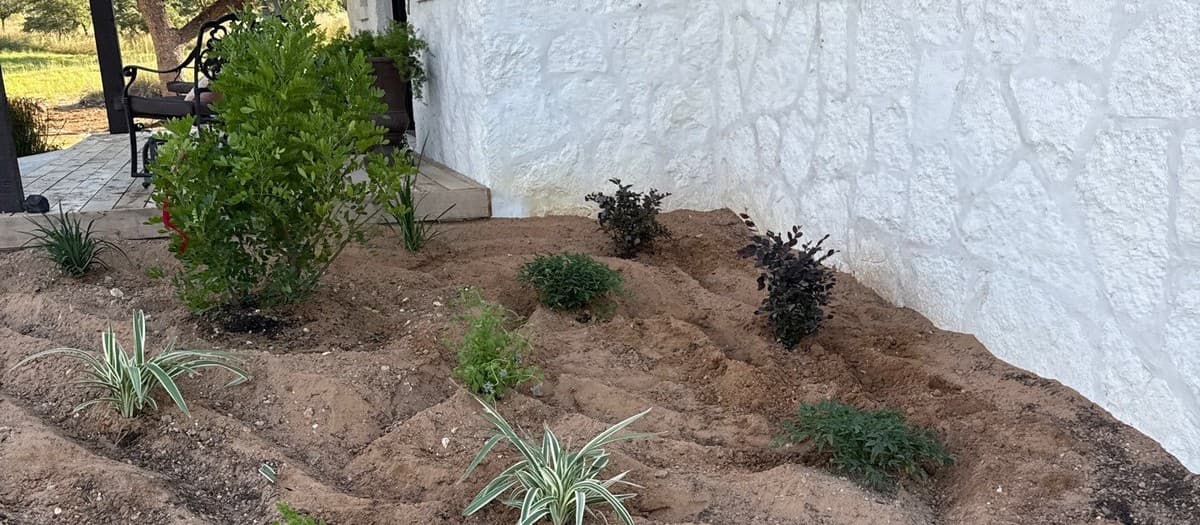
Picking the wrong system for the application wastes water and kills plants. The decision between drip and spray comes down to plant type, soil, slope, and wind exposure.
Clients often ask for one or the other without knowing the difference. Your job is to recommend the right system for the conditions — not just install what's easiest to bid. Getting this wrong means stressed plants, high water bills, and a client who blames the irrigation when the real problem was the spec.
How Spray Systems Work and Where They Excel
Spray systems use fixed spray heads or rotors that distribute water over a defined area. They apply water at high precipitation rates — typically 0.4–2.0 inches per hour depending on head type. That rate is great for turf, which can absorb water quickly across a large, uniform surface.
Fixed spray heads (Rain Bird 1800 series, Hunter Pro-Spray) work best on turf areas and uniform ground covers where full surface coverage is needed. They're available in 4-foot, 8-foot, 10-foot, 12-foot, and 15-foot radius options. Rotary heads (Rain Bird 5000, Hunter PGP) cover larger areas — 15–45 foot radius — at lower precipitation rates, making them better for large open turf zones.
Spray is also the right call for areas where the client wants the visual assurance of seeing the system run. Some homeowners like watching the heads pop up — it confirms in their mind the system is working. Drip gives them no visible confirmation and they sometimes call to ask if the system is broken.
Where Spray Systems Fail
High precipitation rates become a problem in three situations: heavy clay soils, slopes, and high-wind areas. Clay soils absorb water slowly — 0.1–0.3 inches per hour in many cases. A spray head dumping 1.5 inches per hour onto clay creates runoff before infiltration can occur. You water the sidewalk more than the plants.
Slopes compound the problem. Water runs off before it soaks in, ends up at the bottom of the slope, and the top of the hill stays dry. This is the most common cause of dry spots in sloped bed installations with spray heads.
Wind distortion is significant in open Texas landscapes. A 15 MPH wind deflects spray from a 12-foot head far enough to create coverage gaps. Uniformity drops from 85% to 60% or lower. For bed areas in windy microclimates, drip is more effective regardless of soil type.
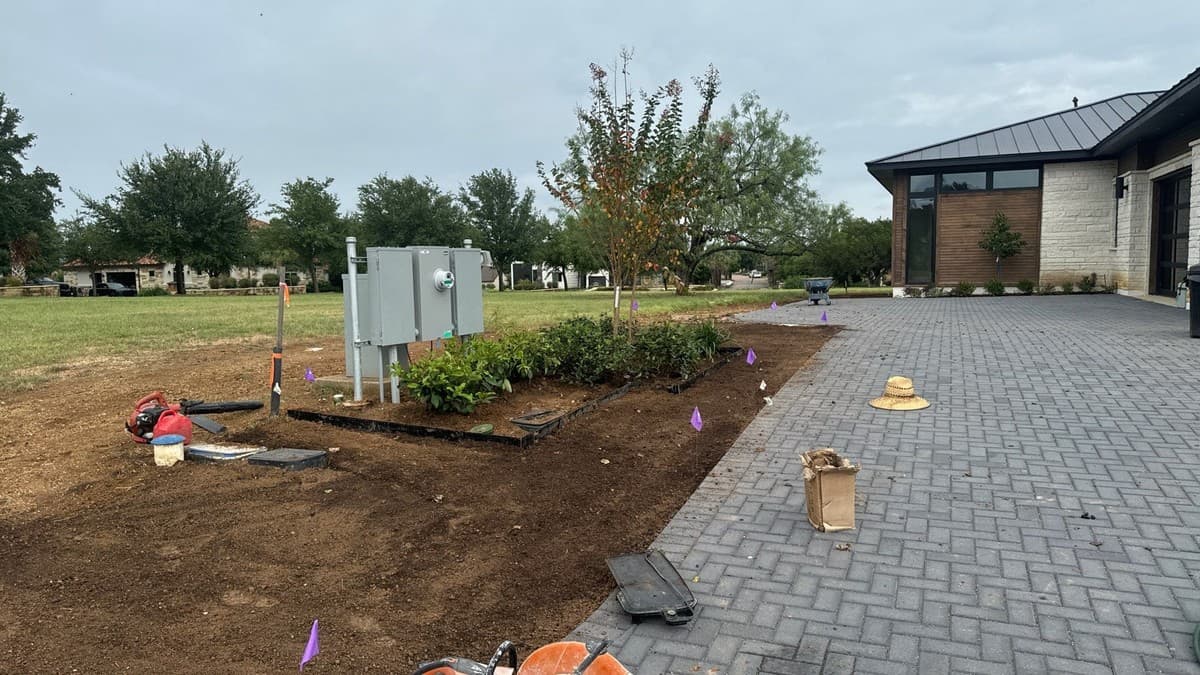
How Drip Systems Work and Where They Excel
Drip systems deliver water directly to the root zone at low flow rates — typically 0.5–2.0 GPH per emitter. This slow delivery allows soil to absorb water as fast as it's applied, eliminating runoff entirely. Drip is 90–95% efficient compared to spray's 65–75%.
Best applications for drip:
- Planting beds with individual shrubs and trees: Place 1–2 emitters per plant, sized to the plant's water demand. A 3-gallon shrub gets a 0.5 GPH emitter. A 15-gallon shrub needs a 1.0–2.0 GPH emitter or multiple 0.5 GPH emitters spaced around the root zone.
- Slopes: Drip applies water so slowly that even steep grades absorb it before it runs off. This eliminates the cycle-and-soak gymnastics you need with spray on slopes.
- Vegetable gardens and raised beds: Drip tape (Netafim, Rain Bird T-Tape) runs at 12- or 18-inch emitter spacing for row crops and raised beds. Water goes exactly where you want it, no foliar wetting that invites disease.
- Clay soils: Low application rate matches what the soil can absorb. You get deep infiltration instead of surface runoff.
"Drip saves water, keeps foliage dry, and eliminates runoff on slopes. The only thing it can't do is cover turf. Know which tool fits the job and spec accordingly."
Drip System Components and Installation Basics
A drip system requires a pressure regulator (typically 25–30 PSI for drip) because standard line pressure (40–80 PSI) blows out drip emitters. Install a Y-filter ahead of the pressure regulator to catch debris. Without filtration, emitters clog within a season.
Run 1/2-inch poly tubing as the mainline along the bed. Branch off with 1/4-inch micro-tubing to individual emitters at each plant. Stake the main line every 12–18 inches to keep it from moving. Bury the main line 2–3 inches under mulch if aesthetics matter — clients don't like seeing black tubing snaking through the bed.
For ground cover beds, drip tape with 12-inch emitter spacing works better than individual emitters at every plant. Lay tape in parallel lines 12–18 inches apart across the bed. Cover with 2–3 inches of mulch. Run time per cycle is typically 45–90 minutes — longer than spray because the flow rate per emitter is so low.
Decision Guide: When to Use Each System
| Condition | Use Spray | Use Drip |
|---|---|---|
| Turf areas | Yes | No |
| Planting beds with shrubs | No | Yes |
| Clay soil | With cycle-and-soak only | Yes — preferred |
| Slopes >10% | With cycle-and-soak | Yes — preferred |
| High-wind areas | No | Yes |
| Vegetable gardens | No | Yes |
Frequently Asked Questions
Is drip irrigation better than spray for planting beds?
Yes, for beds with shrubs and trees. Drip delivers water directly to root zones at low rates, eliminates runoff on slopes, and doesn't wet foliage — reducing fungal disease risk. Spray is better for ground cover beds with dense, uniform planting.
Can I mix drip and spray on the same zone?
No. Drip requires a pressure regulator (25–30 PSI) and a filter that spray heads don't. They also apply water at incompatible rates — the zone run time that's right for drip will be wildly wrong for spray heads on the same valve.
How efficient is drip irrigation compared to spray?
Drip is 90–95% efficient — nearly all applied water reaches the root zone. Spray systems run 65–75% efficient under good conditions, lower in wind or on slopes. For water-restricted areas or clients conscious about water bills, drip is the clear choice for beds.
How many emitters does a shrub need?
1–2 emitters per plant for small to medium shrubs. Size by plant water demand: 0.5 GPH for small shrubs, 1.0–2.0 GPH for larger specimens. Trees typically need 2–4 emitters placed around the outer edge of the root ball.
Spec Irrigation Systems and Win More Bids
Ledge helps you build detailed irrigation estimates by zone, including head counts, pipe, controller specs, and labor. Clients see exactly what they're getting — and they approve faster.
Edgar Galindo
Co-founder, Ledge
Edgar built Ledge while running a landscape construction company in Central Texas. He writes about installation techniques, estimating, and building a profitable field operation.