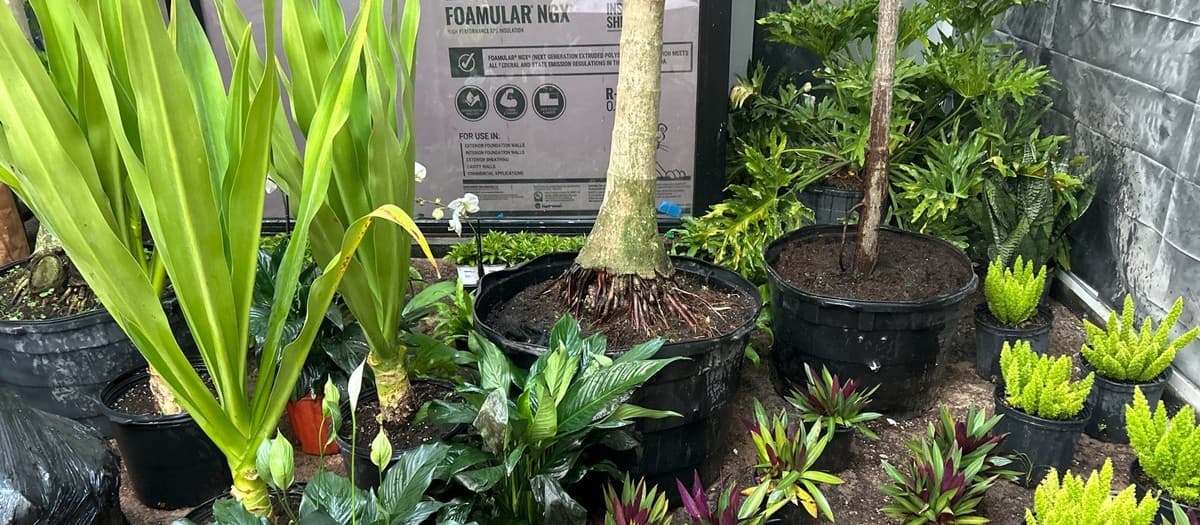
A planting bed that looks good the day you finish and falls apart in a season is a function problem, not an aesthetic one. Here's how to build beds that hold their edge, drain right, and stay planted.
Planting beds are where most residential landscape dollars get spent — and where most of the callbacks happen. Mulch that washes into the lawn, grass that invades from the turf edge, plants that drown after a rain. Almost every one of these problems is preventable with correct construction at the start. Get the edging in right, amend to the right depth, and solve drainage before you plant anything.
Defining the Bed Edge: Cut vs. Hard Edge
Every bed needs a defined edge. Your two options are a cut edge (using a bed edger or spade to create a physical trench between turf and bed) or a hard edge (steel, aluminum, concrete, or stone that physically separates the two zones).
Cut edges look clean but require maintenance. Grass rhizomes grow across a cut edge within 4–6 weeks in active growing season. For maintenance clients this is fine — it gets re-edged at service visits. For installation-only clients who maintain their own beds, a hard edge is the better call. It holds the line without maintenance.
Steel edging (3/16-inch thick, 4–6 inches deep) is the professional standard for curved bed edges. Aluminum bender board works for gentle curves but buckles on tight radii. Concrete mow strip (4 inches wide, 4 inches deep) is the most permanent solution and works well along driveways and straight property lines. Natural stone borders look great but require more labor and more material cost per linear foot.
Soil Depth and Amendment
Shrub beds need a minimum of 12 inches of amended soil. Annual flower beds can get away with 8 inches. Perennial beds and mixed shrub plantings benefit from 18 inches where budget allows. Below that depth, root penetration into native clay is limited.
In Central Texas clay, the standard amendment approach is to till the native soil 6–8 inches deep and incorporate a 3-inch layer of expanded shale plus a 2-inch layer of compost, rototilled together. This creates a blended amended layer on top of loosened native soil. Do not create a sharp interface between amended bed soil and native clay — the interface point acts like the edge of a container and water pools there.
If the bed is a raised bed built on top of existing grade — common for areas with poor drainage — use a blend of 60% native soil, 30% compost, and 10% expanded shale as your growing medium. Fill to the finished grade height accounting for 3 inches of mulch on top.
Drainage: Slope, French Drains, and Perforated Pipe
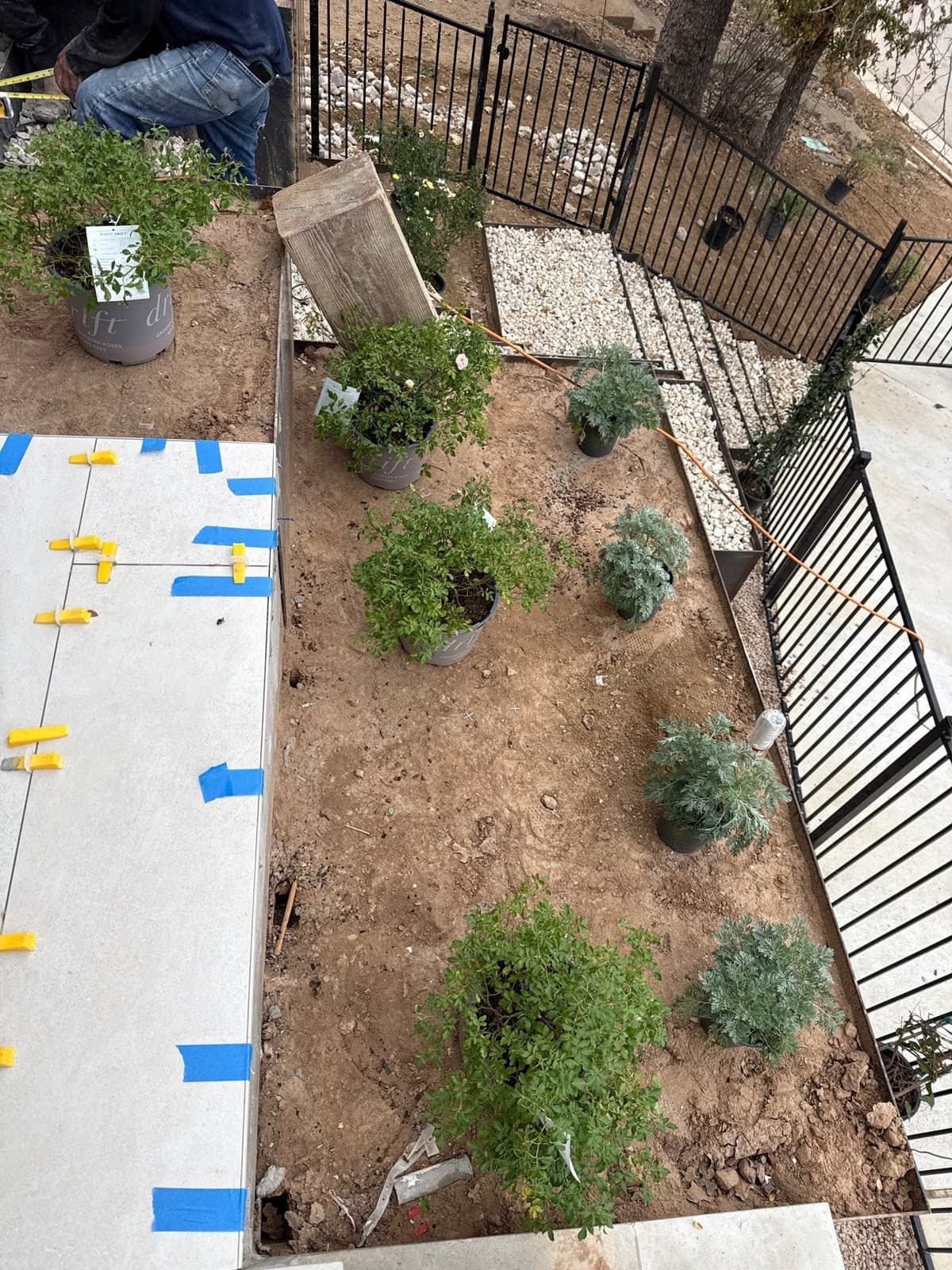
Beds that collect and hold water kill plants. Grade the bed surface at 1–2% slope away from structures. Water should move through the amended soil, drain through the native soil below, and have an exit point — either natural slope or an engineered drainage outlet.
If the native soil drainage is poor (water sits for more than 30 minutes after heavy rain), install a perforated 4-inch drain pipe at the bottom of the bed, wrapped in geotextile fabric, running to a daylight outlet at the perimeter. Slope the drain pipe at 1% minimum — that's 1 inch of fall per 8 linear feet.
Test drainage before you plant. Fill the bed with a garden hose for 5 minutes and observe. Water should be absorbed and gone within 20–30 minutes in amended soil with good drainage. If it sits longer, solve the drainage issue before any plants go in. A plant sitting in wet soil for 48 hours after rain is a plant that's on its way to root rot.
"Solve drainage before you plant. You can't fix it after the fact without digging everything up, and no plant species survives standing water in Central Texas summer heat."
Weed Barrier: When to Use It and When to Skip It
Weed barrier fabric has one legitimate use: under rock mulch or decomposed granite where you need to prevent soil from mixing with the aggregate over time. In standard mulched beds, skip it. Here's why:
Weed barrier decomposes over 3–5 years. As it breaks down, organic matter builds up on top of it, creating the perfect weed substrate on the surface — exactly the soil layer the barrier was supposed to prevent. Meanwhile, the barrier blocks water infiltration, restricts root growth of desirable plants into the soil below, and makes bed renovation nearly impossible without tearing out all the fabric.
For weed control in mulched beds, use a pre-emergent herbicide (Snapshot 2.5 TG or Preen Landscape) applied to the soil surface before mulching. Reapply every 4–6 months. Combined with 3 inches of mulch, this approach controls 90%+ of weed germination with no long-term fabric problems.
Mulch Depth and Selection
Apply 3 inches of mulch across the bed. This is the minimum depth for effective weed suppression and moisture retention. Less than 2 inches has minimal effect. More than 4 inches can hold too much moisture at the soil surface and create fungal issues.
Mulch types for Central Texas residential:
- Hardwood shredded mulch: Best for most residential beds. Decomposes slowly, interlocks so it doesn't blow or wash easily, improves soil over time. Use double-shredded for a finer texture.
- Cedar mulch: Natural insect repellent properties, slower decomposition than hardwood. Higher cost but popular in premium residential installs.
- Pine bark mini nuggets: Good drainage, attractive in shade beds. Blows in high wind — not ideal for open exposed areas.
- Decomposed granite (DG): Use only in full-sun, drought-tolerant beds where heat retention is acceptable. Not suitable for beds with moisture-loving plants.
Keep mulch 3 inches away from all trunk and stem bases. Mulch piled against plant bases causes bark rot and crown rot — two of the most common reasons plants in professionally installed beds die within 2 years.
Frequently Asked Questions
How deep should a planting bed be?
Minimum 12 inches of amended soil for shrub beds. Annual flower beds can work with 8 inches. Perennial and mixed beds benefit from 18 inches where soil conditions allow. Below the amended layer, till native soil 6–8 inches to eliminate the sharp interface between bed soil and clay.
Should I use weed barrier fabric in planting beds?
No, except under rock mulch. In mulched beds, weed barrier degrades in 3–5 years, creates weed substrate on its surface, and restricts root growth and water infiltration. Use pre-emergent herbicide plus 3 inches of mulch for weed control instead.
How much mulch should go in a planting bed?
3 inches. That's the minimum for effective weed suppression and moisture retention. Keep mulch 3 inches away from all plant stems and tree trunks to prevent bark rot.
How do you improve drainage in a planting bed with clay soil?
Till the top 6–8 inches and incorporate expanded shale and compost. For severe drainage problems, install a perforated 4-inch drain pipe at the bottom of the bed wrapped in geotextile fabric, running to a daylight outlet. Test drainage after amending — water should absorb within 30 minutes.
Estimate Planting Beds by the Square Foot
Ledge lets you build planting bed estimates with soil, amendment, mulch, edging, and plants all as separate line items. Clients see a clear breakdown and you stay profitable.
Edgar Galindo
Co-founder, Ledge
Edgar built Ledge while running a landscape construction company in Central Texas. He writes about installation techniques, estimating, and building a profitable field operation.