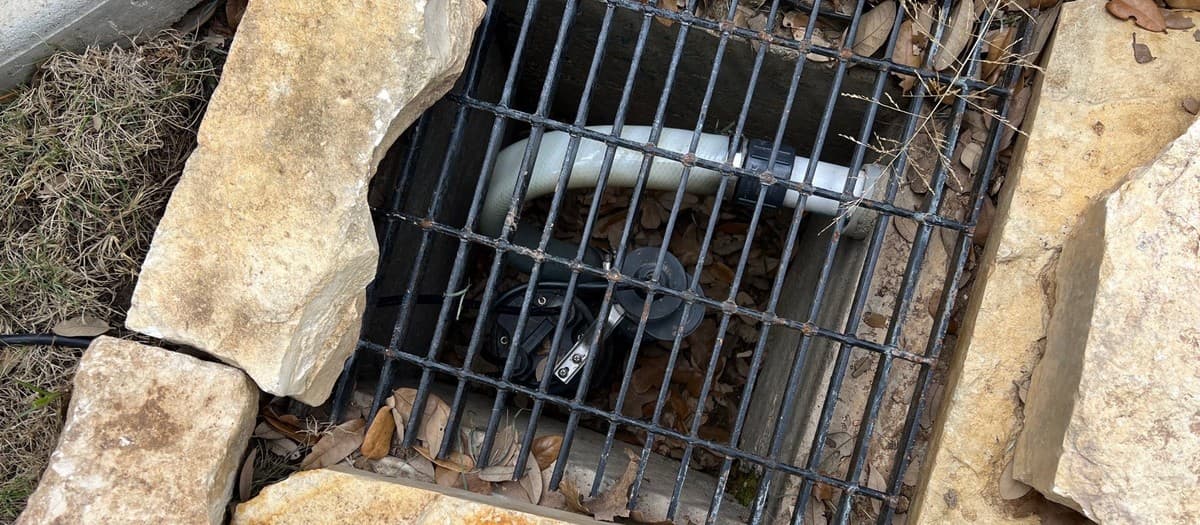
A pondless waterfall done right runs for years with minimal maintenance. The mistakes that cause callbacks are almost always in the pump sizing or the reservoir — here's how to get both right.
Pondless waterfalls have become one of the most requested water features in residential landscaping. No pond means no liability concerns about open water, no mosquito breeding, and significantly less maintenance. For contractors, they're a strong upsell on hardscape projects — premium margins, high client satisfaction, and a strong word-of-mouth driver.
The failures we see in the field almost always trace back to the same two things: undersized pumps and undersized reservoirs. Fix those and most other problems either go away or become minor adjustments.
How a Pondless Waterfall System Works
The basic system: a buried reservoir filled with water and a submersible pump. The pump pushes water up a flexible pipe to a spillway or stream at the top of the feature. Water flows down over rocks back into the reservoir. No exposed pond, no standing open water.
Aquascape is the dominant manufacturer in this category and their kits set the standard for sizing and component compatibility. Their Pondless Waterfall Kit comes in 4x5, 6x8, and 8x11 basin sizes with matched pump and spillway components. Using a kit simplifies the installation significantly and the components are designed to work together — pump curve, pipe diameter, and spillway width are all matched.
Pump Sizing: GPH Calculations That Actually Work
The rule of thumb for pondless waterfalls: 100 GPH per inch of spillway width at 1 foot of head pressure. A 12" wide spillway at 4 feet of total head (vertical lift plus pipe friction) needs a pump delivering at least 1,200 GPH at that head pressure.
Head pressure calculation: add the vertical rise from pump to spillway, plus 1 foot for every 10 feet of horizontal pipe run, plus fitting losses. A pump sitting 3 feet below a spillway with 20 feet of horizontal pipe run has approximately 5 feet of total head (3' vertical + 2' for horizontal run). Look up that pump's flow rate at 5 feet of head, not the max GPH rating printed on the box.
Common sizing examples for Aquascape systems:
- Small feature, 8" spillway, 2-3' height: Aquascape AquaSurge 2000 (2,000 GPH max). Runs quietly, handles small stream applications.
- Mid-size, 12" spillway, 3-5' height: Aquascape AquaSurge 4000-8000 or Tsurumi pumps in the 4,000–6,000 GPH range at working head.
- Large feature, 18"+ spillway, 5'+: Aquascape AquaSurge Pro 4000-8000 or dedicated external pump. Verify GPH at actual working head — not the label spec.
Reservoir Sizing: Bigger Is Always Better
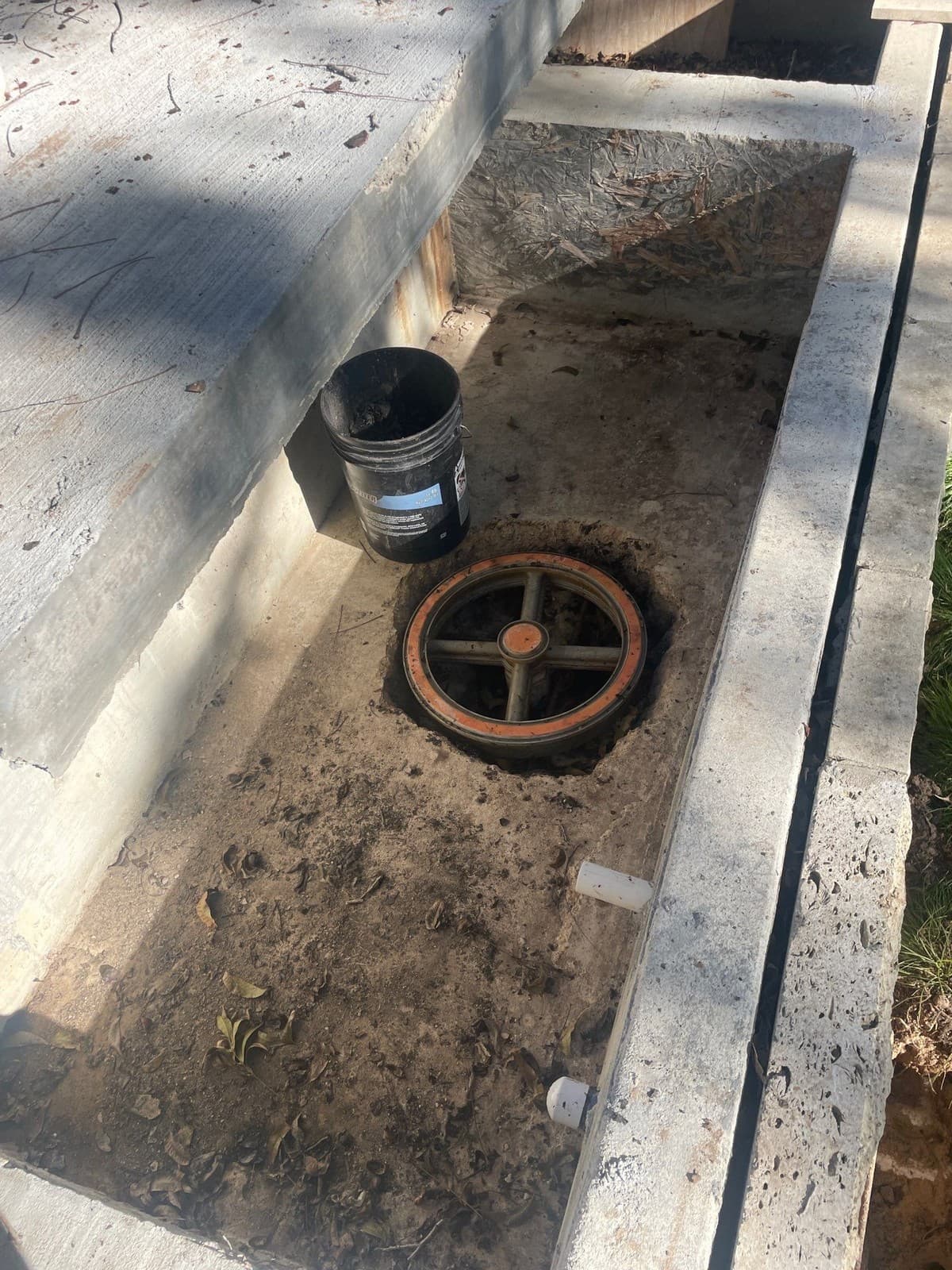
The reservoir holds all the water when the pump is off. When the pump runs, water travels up to the spillway and fills the stream channel. That water has to come from somewhere — the reservoir. If the reservoir is undersized, the pump runs dry when the stream channel fills up.
Size the reservoir to hold 1.5x the total water volume in the stream channel plus pipe. Estimate the stream channel volume by length × width × depth in cubic feet, multiply by 7.48 to get gallons. A 10-foot stream that's 18" wide and 4" deep holds about 7.5 cubic feet or 56 gallons of water. The reservoir should hold at least 85 gallons to be safe.
Aquascape's Pondless Waterfall Vault (4x5 or larger) plus their IronCore basins stacked together is the cleanest approach for larger systems. The vault provides a large reservoir volume in a compact footprint, and the grate top is safe for foot traffic. Minimum reservoir depth is 24" — shallower and you risk pump cavitation in summer when evaporation drops the water level.
"Every time we've had a client call about the pump running loud, it's been an undersized reservoir. The pump is pulling from an empty basin. Go bigger on the reservoir — you won't regret it."
Stream and Waterfall Construction Details
The stream channel is built with flexible EPDM liner, at least 45-mil thickness. Cut the liner 3 feet wider than the stream on each side to allow for edge tucking and rock placement. Underlayment fabric goes under the liner to protect against rock puncture — don't skip it.
Set waterfalls with flat creek stone or flagstone laid on a mortar bed. The fall lip — the edge the water flows over — needs to be level side to side and angled slightly forward. A fall lip that's higher on one side sends all the water to one edge. Check with a level after every stone placement.
Foam all gaps between rocks with black waterfall foam (Aquascape or similar). This prevents water from disappearing under rocks and redirects flow over the face of each fall. Without foam, 20–30% of flow can be lost to subsurface channels that look fine on startup but slowly erode the liner bed.
Electrical Requirements for Water Features
Every water feature pump must be on a GFCI-protected circuit. The outlet or junction box must be weatherproof, rated for outdoor use, and located outside the 10-foot perimeter zone defined by NEC 680. A licensed electrician should run and connect the circuit — see our dedicated post on NEC 680 requirements for the full breakdown.
Most residential pondless waterfall pumps run on standard 120V, drawing 1–5 amps depending on pump size. Factor the electrical rough-in into your estimate — it's a separate line item, often subcontracted to a licensed electrician, and clients appreciate seeing it broken out rather than buried in the total.
Estimate water features in Ledge
Line out pump, liner, reservoir, stone, and electrical as separate items. Send a proposal clients can actually read and sign.
Frequently Asked Questions
How often does a pondless waterfall need maintenance?
Minimal. Top off water every 1–2 weeks during summer (evaporation loss). Clean the pump intake screen every 1–2 months. Annual service involves removing the pump, cleaning the impeller, and checking liner for any shifts. Budget 1–2 hours per year of actual maintenance labor.
What's the difference between a pondless waterfall and a disappearing waterfall?
Same thing — different names for the same system. Water appears to disappear into the rock bed at the base rather than collecting in a visible pond. Both terms describe a subsurface reservoir system.
Can I run a pondless waterfall pump 24/7?
Yes, and most manufacturers recommend it for water quality. Stagnant water in the reservoir can go anaerobic and cause odor. Running the pump continuously keeps the water oxygenated. An outdoor timer or smart outlet can shut it off at night if noise is a concern.
What causes a pondless waterfall to lose water quickly?
Usually one of three things: evaporation (normal and highest in summer heat), splash loss (stream edge rocks directing water outside the liner), or a liner leak (less common). Check splash points first by plugging the pump and watching the water level while the system is off. If the level holds, the loss is splash or evaporation, not a liner leak.
How much does a pondless waterfall cost to install?
Small system (8-10 ft stream, Aquascape kit, basic rock): $3,500–$5,500 installed. Mid-size (12-15 ft, multiple falls, premium boulders): $6,000–$10,000. Large custom feature with stream, bog plants, and premium stone: $12,000+. Material cost for an Aquascape kit runs $800–$1,500 depending on size — labor and stone are the primary cost drivers.
Edgar Galindo
Co-founder, Ledge
Edgar built Ledge while running a landscape construction company in Central Texas. He writes about installation techniques, estimating, and building a profitable field operation.