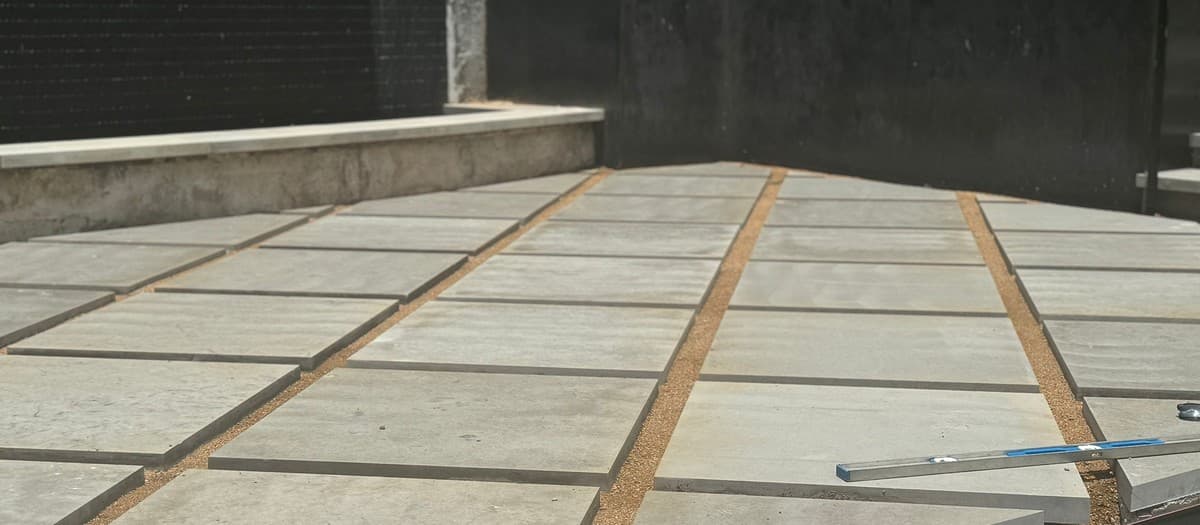
You won the paver patio job and lost money on it. Not because the price was too low — because you forgot four line items that add up to $900 on every job.
Paver patio proposals have a reliability problem. Most contractors price the pavers, price the labor, and call it done. Then dump fees hit. The plate compactor rental was not in the estimate. The crew spent two extra hours hauling material through a narrow gate. The job finished fine — but the margin did not.
Here is the complete list of line items that belong in a properly scoped paver patio proposal.
Phase 1: Site Preparation
- Utility marking / 811 call: Required before any excavation. Some contractors absorb this; it should be in your process either way. If you charge a mobilization fee, include it here.
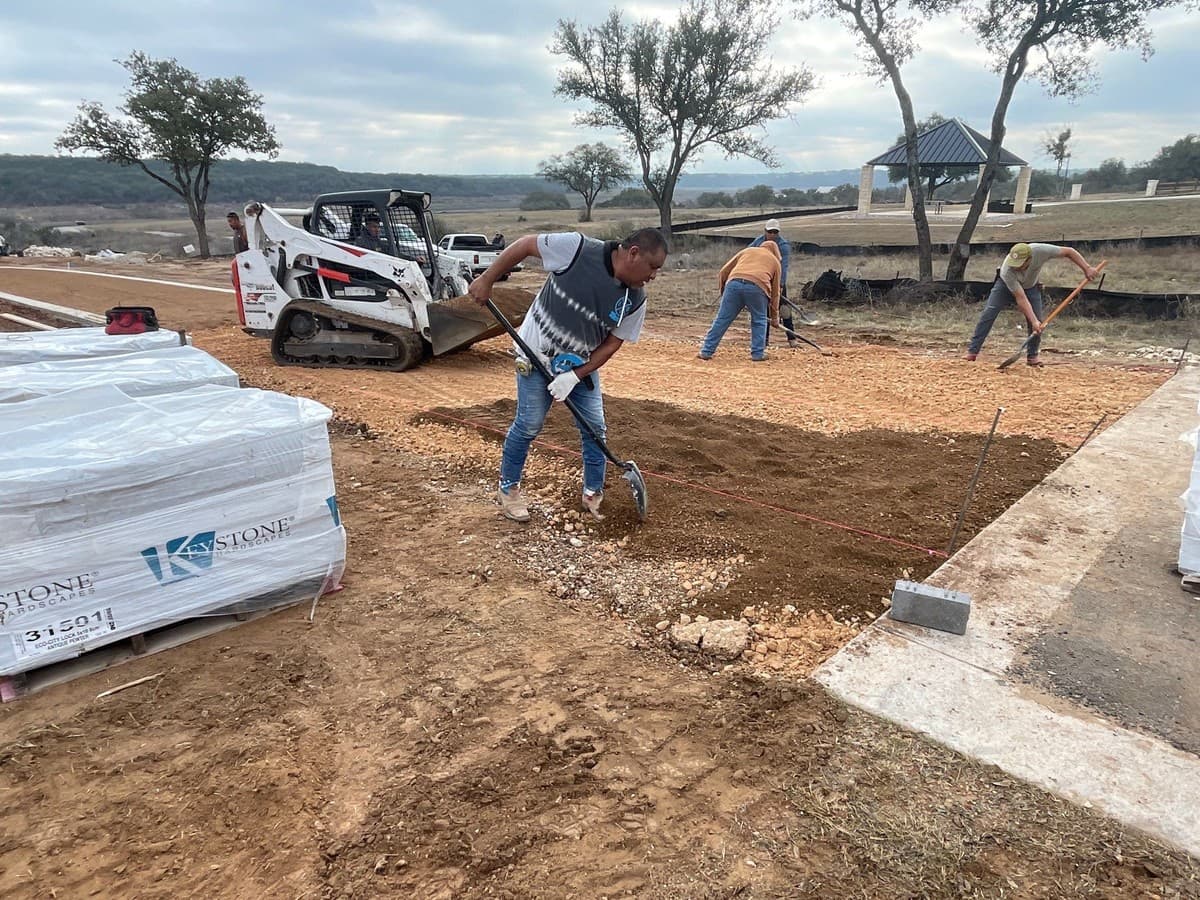
- Excavation: Price per SF based on depth and soil type. Clay adds time. Rocky soil adds time. Soft or sandy soil runs fast. Your rate should reflect what you actually measured at the site visit.
- Haul-off of excavated material: Price by the load or estimated tonnage. This is not optional. Excavated material has to go somewhere. If you are charging $1/SF for excavation and not pricing dump fees separately, you are losing money.
- Grading and slope preparation: If the grade needs adjusting beyond a standard slope for drainage, price it separately. "Grading to establish 1% slope away from structure" is a line item — not assumed in excavation.
Phase 2: Base Construction
- Crushed limestone base: Specify depth (6 or 8 inches compacted), tonnage ordered, and delivery charge. Price this from your supplier quote — not from a cost-per-SF average.
- Compaction labor: Include passes with plate compactor as part of base labor. Two-pass minimum; three passes on larger jobs with thicker base.
- Equipment: plate compactor: If renting, line item it. If you own it, build a daily equipment rate into your overhead and still include it. A $200/day equipment fee on a $15K job is real cost — do not absorb it silently.
- Bedding sand (1 inch): Coarse washed sand. Price by the ton. One ton covers approximately 200 SF at 1-inch depth.
- Geotextile fabric (if needed): Used in areas with poor drainage or weed pressure beneath the base. Not required on every job — but when it is needed, price it.
Phase 3: Paver Installation
- Pavers — material: Specify brand, product, color, and size. Price from your supplier invoice plus delivery charge. Add your waste factor (10% running bond, 15% diagonal, 20% curves).
- Paver installation labor: Rate per SF or per man-hour tied to production rate and pattern complexity. Herringbone runs 20–30% slower than running bond. That difference belongs in the estimate.
- Concrete edge restraints: Priced per linear foot of perimeter. Measure separately — this is not a SF cost. Spiked plastic restraints are cheaper; concrete is more permanent. Specify which you are using.
- Polymeric sand: Priced by bag count (not SF average). Count bags based on joint width and SF. Vibratory plate compact after installation.
- Soldier course / border pavers (if applicable): A contrasting border is a separate material and separate labor. Price it per LF if the client requested it.
Phase 4: Finishing and Access
- Access surcharge (if applicable): Backyard access through a narrow gate? Add a line item. Wheelbarrowing material 80 feet costs real labor. Price it — do not absorb it.
- Site cleanup and debris removal: Paver cuts, packing material, leftover polymeric sand bags. This takes 1–2 hours on a mid-size job. Include it.
- Sealer (optional upsell): Wet-look or natural-finish. Price per SF, include as a separate optional line item so clients can add it at signing or request it later.
"A complete scope is not about padding the price. It is about knowing exactly what the job costs before you commit to it."
Close more jobs
Ledge proposals get signed 3× faster than PDF quotes.
Good/Better/Best options, digital e-signature, job photos built in, and automatic follow-up reminders. Built for landscape contractors.
Book a Demo →Frequently Asked Questions
Do I need to list every line item in the client-facing proposal?
Group related items into phases for the client view. Your internal estimate needs every line item. The client proposal can show phase-level subtotals — base preparation, paver installation, finishing — with a brief description of what each covers. Too many line items invite nickel-and-dime negotiations. Phases with descriptions build confidence without opening every cost to scrutiny.
Should dump fees be a separate line or built into excavation?
Either works — but they must be in the estimate. If you build dump fees into your excavation rate, make sure your rate is actually covering them. If you track them separately (easier for larger jobs where loads are variable), list them as a line item estimated at project start and trued up at completion. Surprise dump fee overages are how jobs end arguments with clients.
How do I price the access surcharge?
Estimate the additional labor time caused by restricted access. If a normal 400 SF patio takes 3 days and the access adds a full extra day of material moving, add one day of crew labor to the estimate. Some contractors apply a flat surcharge ($300–$600) for any job requiring wheelbarrow haul of 50+ feet. Either method works — as long as the cost is in the estimate before the job starts.
What line items are optional vs. required in every paver patio proposal?
Required every time: excavation, haul-off, base material, bedding sand, compaction, pavers, edge restraint, polymeric sand, site cleanup. Optional depending on the job: geotextile fabric, soldier course border, sealer, access surcharge, permit allowance, irrigation adjustments. Flag optional items clearly and price them separately so the client can add or remove them without renegotiating the entire proposal.
Edgar Galindo
Co-founder, Ledge
Edgar built Ledge while running a landscape design-build company in Central Texas. He has priced hundreds of paver installations and learned which line items disappear from estimates — and reappear on the job site.