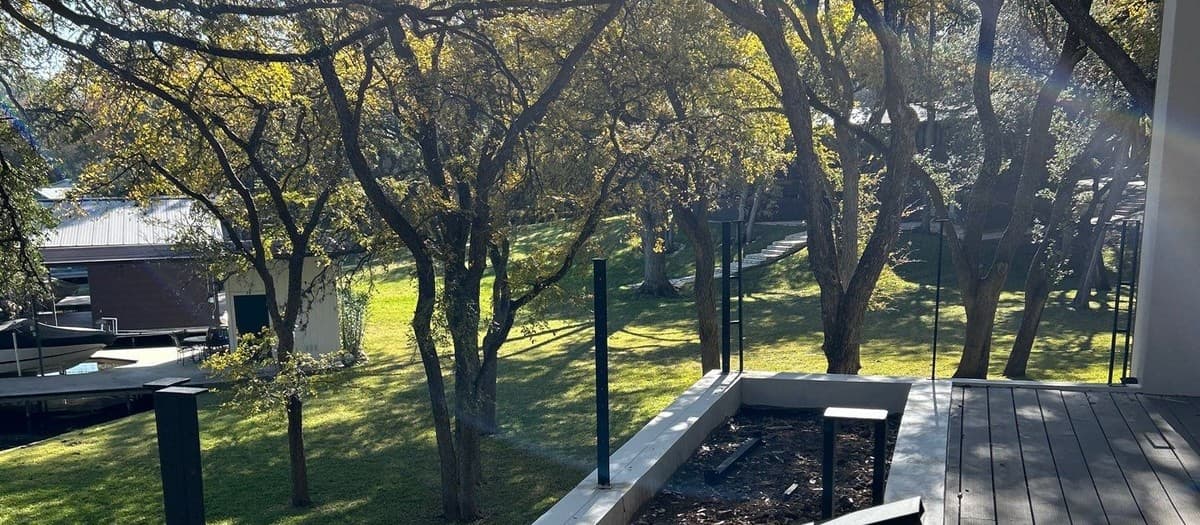
Most raised planter failures trace to three causes: wrong material, no drainage, or a footing that moves. Fix those three things and you build planters that outlast the warranty call.
Raised planters are one of those jobs where the margin looks good until you get a callback two years later. The wall is bowing out. The wood is rotting at the base. The cap cracked over winter. None of these are mysteries — they're predictable failures that happen when corners get cut on material choice or drainage.
This is what we've learned building planters in Central Texas, where the soil expands and contracts with rainfall swings, freeze events come without warning, and summer heat accelerates wood deterioration faster than almost anywhere else in the country.
Material Options and Their Real Lifespan
The material you choose determines whether you get a callback. Here's an honest assessment of each option:
- Cedar: 10–15 years if properly detailed. Naturally rot-resistant heartwood is the key — sapwood fails fast. Use 2x10 or 2x12 rough-sawn cedar, not dimensional finish lumber. Seal all cut ends before assembly. In direct soil contact, even cedar will degrade faster than expected.
- Pressure Treated Pine (ACQ): 15–20 years. Widely available, cost-effective. Use .40 retention for ground contact rated lumber, not .15. The stamp matters. Pair with stainless or hot-dipped galvanized hardware — ACQ eats regular zinc screws within 2 years.
- Redwood: 20+ years. Better rot resistance than cedar, but increasingly expensive and harder to source in Texas. If a client wants it, charge accordingly — it's a premium product.
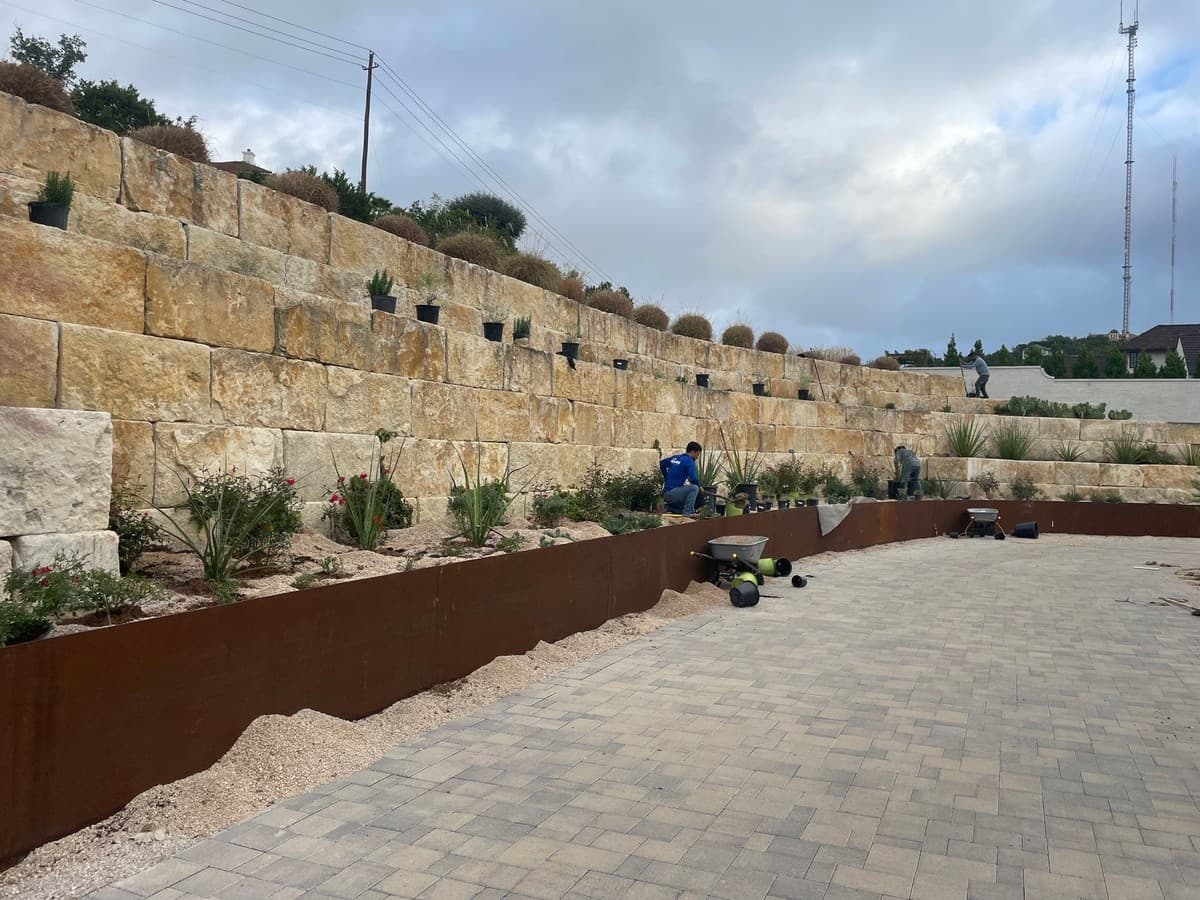
- Steel (Corten or powder-coated): 25+ years with zero rot risk. Corten develops a stable rust patina that actually protects the steel. 12-gauge or 14-gauge plate works for most residential planters. Clean modern look that reads well in contemporary landscapes.
- Concrete block or CMU: Indefinite lifespan if properly built. No rot, no warping, no movement if the base is right. Labor-intensive but durable. Works well for large planters where wood would require heavy timbers.
- Composite lumber: Don't use composite decking as planter walls. It's not designed for lateral soil pressure and will bow. If you want a composite look, use cellular PVC trim boards (like Azek) — they handle soil contact better but still need structural support.
Drainage: The Detail That Determines Everything
Standing water is what kills wood planters. It's also what kills plants. The two failure modes are related, which makes drainage a double win.
On wood planters, drill 1" drainage holes every 18–24" along the bottom course. If the planter sits on a hard surface, space the bottom course off the ground using 1/2" composite shims or small rocks. This prevents the base from sitting in pooled water after rain.
Line the interior with 6-mil poly sheeting or HDPE liner before filling. Fold it down inside the walls so it doesn't show at the top, and cut slits at the base over your drainage holes. The liner separates wet soil from wood contact, which extends planter life significantly.
Fill the bottom 4–6" with 3/4" crushed granite or coarse gravel before adding soil. This drainage layer prevents soil from compacting against the liner slits and keeps water moving. In Central Texas clay-heavy zones, this step is not optional.
Base and Footing: What Prevents Heaving
Small planters — under 24" tall and 4 feet long — can sit directly on a level gravel base. Compact 4" of 3/4" crushed granite, check for level, set the planter down. Done.
Larger planters, especially anything 36" tall or over 8 feet long, need more thought. The weight of saturated soil is substantial — a 4x8x3 planter holds roughly 1,200–1,600 lbs of soil when wet. That load needs to go somewhere.
For big wood planters, set corner posts into concrete footings. Dig 12–18" down, pour a tube form, and set a 4x4 post anchor. The boards attach to the posts, which keep the structure rigid as the soil swells and contracts with rain. Without this, the walls will bow outward within a season or two.
"Lined the interior, drilled drainage holes, crushed granite in the base — client called two years later to add another one. That's the kind of callback you want."
Hardware and Assembly Details That Matter
Use structural screws, not deck screws. GRK RSS or similar structural fasteners hold lateral pressure better than standard deck screws, which will back out as wood expands and contracts. Pre-drill all connections to prevent splitting, especially in cedar corners.
At corners, use a butt joint with the long wall overlapping the short wall, and drive two fasteners per board layer. Stagger joints on multi-layer builds — don't stack them on the same vertical line or you create a weak point.
Cap boards reduce water intrusion at the top edge, which is where most rot starts. A 2x cap, sloped slightly outward with a drip edge cut on the underside, sheds water away from the top course. Attach with countersunk stainless screws and fill the holes with exterior wood filler if the client wants a clean look.
Estimating Raised Planters: What to Include
Most contractors underestimate planters because they price just the wood. A proper estimate includes materials (lumber, fasteners, liner, drainage gravel, soil), labor (excavation if needed, assembly, drainage detail, soil fill), and disposal if you're hauling old materials.
A standard 4x8x2 cedar planter with drainage liner, gravel base, and soil runs $600–900 installed in most Central Texas markets. Corten steel at the same size runs $1,200–1,800. Those numbers change quickly with add-ons like drip irrigation, specialty soil blends, or plantings. Build those as separate line items in your estimate — clients can choose what they want without feeling like the base price is inflated.
Estimate planters fast with Ledge
Build material lists, price labor, and send professional proposals — all in one place. No spreadsheets required.
Frequently Asked Questions
How tall can a wood planter be without structural support?
Keep freestanding wood planters at 24" or under without additional support. Above 24", soil pressure will bow 2x lumber walls outward unless you use structural posts at corners and mid-span. At 36" tall, treat it like a retaining wall and engineer accordingly.
Should I use landscape fabric or poly liner inside a planter?
Poly liner (6-mil or HDPE) for wood planters. Landscape fabric lets moisture through and won't protect the wood. Cut drainage slits in the poly at the base over your drainage holes — don't just poke holes randomly or you'll trap pockets of water.
What soil mix works best in raised planters in Central Texas?
A blend of 60% topsoil, 30% compost, and 10% coarse sand or perlite drains well and doesn't compact into concrete like native clay soil. Avoid 100% compost — it shrinks as it breaks down and leaves air pockets. Most local landscape suppliers offer a pre-blended raised bed mix that works well.
How do I prevent a corten steel planter from staining the patio?
Fresh corten bleeds rust for the first 1–2 rain cycles before the patina stabilizes. Apply a corten sealer like Permalac or Everbrite before installation to accelerate stabilization and reduce initial bleed. Alternatively, set the planter on rubber feet to create a gap between the steel base and the patio surface.
Can I attach a planter directly to a fence or wall?
Yes, but account for soil pressure. A wall-mounted planter needs lag screws into studs or masonry anchors into concrete block — not just toggle bolts into drywall. Size the fasteners for the weight of wet soil. Leave a gap between the planter and the wall surface for airflow and to prevent moisture trapping.
Edgar Galindo
Co-founder, Ledge
Edgar built Ledge while running a landscape construction company in Central Texas. He writes about installation techniques, estimating, and building a profitable field operation.