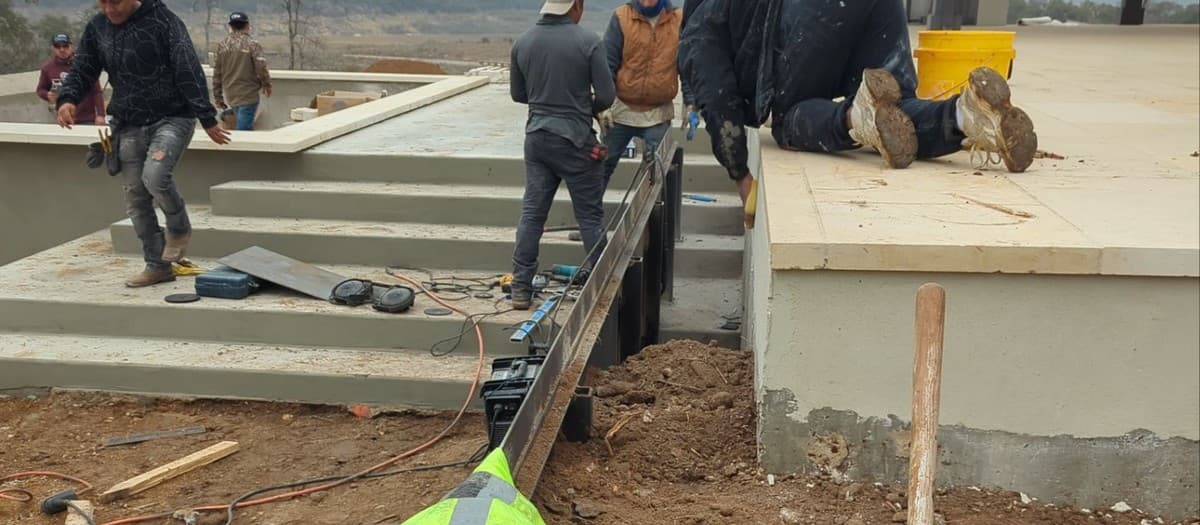
Most rework traces back to something that was never communicated before the job started. A structured pre-job briefing — 10 minutes, every time — closes that gap.
Your crew shows up on day one ready to work. But nobody confirmed the paver color after the client changed their mind last week. Nobody told the lead that the backyard gate needs a key from the neighbor. And nobody mentioned that the client wants the old sod saved, not hauled off. By noon, three decisions have been made wrong — all because the information existed somewhere but did not make it to the field.
The pre-job briefing is not about trust or oversight. It is about information transfer. A crew that starts with complete, accurate information makes better decisions, works faster, and creates far less rework. Here is the format that actually works.
When to Run the Briefing
The night before, not the morning of. By the time your crew is loading the truck at 6:30am, decisions should already be made. The briefing the night before gives time to resolve anything that surfaces — a missing material spec, a client question that needs answering, a tool that needs to come from the yard. Morning is for execution, not planning.
For a multi-day job, run a shorter version every morning at the yard or on arrival at the site. Cover what is different today from yesterday, what the target is, and anything new that came up. Five minutes is enough if the baseline information was covered at the original briefing.
The 8-Point Pre-Job Briefing Framework
- 1. What are we building? Plain language scope summary. Not the contract — what it looks like when it is done. "600 SF running bond patio in the backyard, one step down from the door, soldier course border."
- 2. Material specs, confirmed. Paver color, product name, edge restraint color, poly sand brand. Not "the tan one" — the actual product name. If there was a client change, confirm the updated spec explicitly.
- 3. Site access and logistics. Where to park, gate access, where to stage materials, nearest water source for the wet saw, where to dump excavated material (on-site or hauled off?).
- 4. Client-specific notes. Client name and contact. Are they home during the day? Dogs? Specific requests about timing or noise? Any sensitivity to protect adjacent plantings or property?
- 5. Day 1 target. What gets done today in measurable terms. "Excavation complete, base compacted, and delivery staged" — not "as much as we can get done."
- 6. Known site constraints. Anything atypical about this job: clay soil that will fight excavation, a slope that needs extra edge restraint, underground utilities in the work zone, HOA signage requirements.
- 7. Decision authority. What can the crew lead decide independently on this job? What requires a call? Make this explicit so you are not the bottleneck for every question.
- 8. Photo milestones. When to send photos and of what — base compacted, pattern laid, job complete. Set the expectation before the job starts, not mid-afternoon.
The Questions That Surface Problems Before They Start
At the end of the briefing, open it up with one question: "What do you need that you do not have?" This is where crew leads will surface missing information, equipment gaps, or material concerns. A crew lead who is missing a piece of information and does not know it will start the job and improvise. A crew lead who gets asked directly will tell you.
What kinds of things come up? "We only have one plate compactor and the other job needs it too." "The material order has Belgard Urbana but the contract says Bristol Valley." "I have never done a step with Versa-Lok — who is showing me the detail?" Every one of those is better to surface the night before than to discover at 10am on a job site.
"Ten minutes of briefing prevents hours of rework. The math on that trade is not complicated."
What to Document After the Briefing
The briefing creates a shared understanding. The documentation makes it recoverable. After the briefing, the job package should include: confirmed material specs, site access notes, day 1 target, and any client-specific flags. This does not need to be a formal document — a note in your job management tool or a shared message thread is enough. What matters is that the information exists somewhere other than your crew lead's memory.
When something goes wrong on a job — and eventually something will — the documented briefing tells you whether the information was communicated or not. That matters for warranty resolution, for learning what to do differently, and for having an honest conversation with a crew lead about execution vs. information gaps.
Run a tighter operation
Ledge gives you visibility into every job without being on-site.
Job tracking, crew assignments, photo documentation, and production notes — all in your phone. Stop managing by walking job sites.
Book a Demo →Frequently Asked Questions
How long should a pre-job briefing take?
Ten to fifteen minutes for a full briefing on a new job. Less if you have worked with the same crew lead before and they already know your format. The goal is not to be thorough for its own sake — it is to make sure every person who needs information has it. When briefings consistently take more than 20 minutes, the job package was not prepared properly beforehand.
Should I run the briefing on site or before the crew arrives?
The full first-day briefing works best at the yard before departure, or the evening before over the phone. On-site briefings are hard because everyone wants to start working immediately and the site itself creates distractions. If you need to do a site walkthrough, do it after the briefing — not during it.
What if my crew leads are resistant to pre-job briefings?
Resistance usually comes from two places: they see it as overhead they do not have time for, or they see it as a signal you do not trust them. Address the first by keeping it genuinely short and focused. Address the second by framing it as information delivery, not oversight. "I want to make sure you have everything you need" lands differently than "let me make sure you know what you are doing."
Do I need a briefing for repeat jobs or regular maintenance?
For recurring maintenance with the same crew on the same accounts, a full briefing every visit is overkill. A brief check-in covering anything new or different is usually enough. For installation work — even repeat clients — a briefing is worth it every time. Client preferences change, site conditions change, and material specs change. What was true on last spring's job may not be true on this one.
Edgar Galindo
Co-founder, Ledge
Edgar built Ledge while running a landscape design-build company in Central Texas. He has run hundreds of pre-job briefings and paid for the rework that happened when he skipped them.