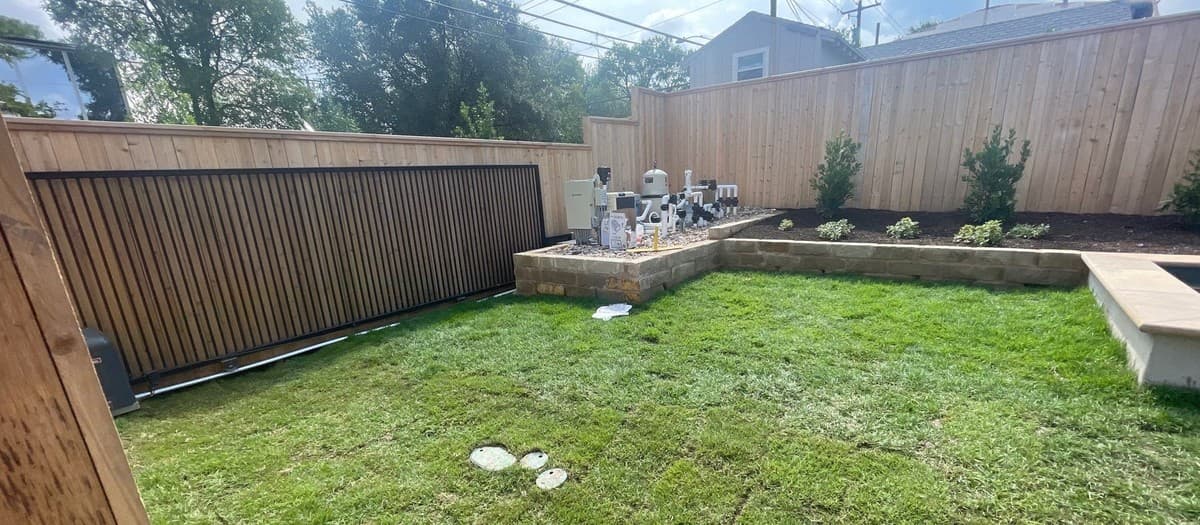
Wood fence pricing is deceptively simple until you actually build one and discover the post count is off, the concrete ran short, and the gate hardware was not in the estimate. Here is the per-linear-foot formula that accounts for everything.
Fence jobs look straightforward on paper. Measure the linear footage, multiply by your per-foot rate, send the bid. That approach works until you hit a sloped lot, a corner with a gate, or rocky soil that slows your post hole progress by half. The contractors who stay profitable on fence work build their estimate from components — post count, concrete, lumber, hardware, and labor — not from a flat rate.
Post Count and Concrete: Start Here
For a standard 6-foot privacy fence, posts go in every 8 feet on center. That gives you panel spacing that works with standard 8-foot board lengths and avoids excessive spans that cause racking over time. For 100 LF of fence: 100 ÷ 8 = 12.5, round up to 13 line posts + 2 end posts + corner posts as needed = 15–18 total posts for a straight run with two ends.
Post depth: one-third of the total post length plus 6 inches into undisturbed soil. A 6-foot fence with 4×4 posts uses a 9-foot post — 3 feet in the ground. In frost-prone regions, posts go below the frost line regardless of the one-third rule.
Concrete per post: a 12-inch diameter hole, 36 inches deep holds approximately 2.5 cubic feet. One 80-lb bag of Quikrete yields 0.60 CF. You need about 4 bags per post hole. At $7–$9 per 80-lb bag, that is $28–$36 in concrete per post — a real number that belongs in the estimate.
Lumber: Cedar vs. Pressure-Treated
Cedar is the premium choice for residential privacy fences — it resists rot, accepts stain, and looks far better than pressure-treated pine. Pressure-treated is the common choice for posts (even in cedar fences) because it holds up in ground contact better than cedar. Use cedar pickets and rails, pressure-treated posts. That combination gives you the look of a cedar fence with posts that will not fail at grade.
- 4×4×9 pressure-treated post: $18–$28 each depending on market
- 2×4×8 cedar rail: $8–$14 each. Two rails per 8-foot span = 2 per panel × 13 panels = 26 rails for 100 LF with top and bottom.
- 1×6×6 cedar dog-ear pickets: $3.50–$6.00 each. For 100 LF of fence at 5.5-inch picket width with 1/4-inch gaps: approximately 200 pickets.
- Add 10% waste factor for cuts, damaged pickets, and odd-width closures at corners.
Gates: Price Them as a Separate Scope
Gates are not linear footage — they are a separate scope item with different labor and hardware costs. A single 4-foot walk gate adds $350–$600 in installed cost. A double drive gate (12 feet wide) adds $800–$1,600 depending on framing, hardware, and latch system.
Gate hardware is not cheap. Galvanized strap hinges for a 4-foot gate: $22–$40 per set. Self-closing spring hinge: $35–$55. Latch and cane bolt for a double gate: $45–$80. Estimate hardware per gate, not as a percentage of total job.
Gate posts carry more load than line posts and typically need to be 4×6 or 6×6 with deeper, larger-diameter footings. Do not use 4×4 gate posts — they flex under gate weight and create a sagging gate within two years. Price the upgrade.
Labor Rate and Production for Wood Fences
A two-man crew builds a standard cedar privacy fence at 80–120 LF per day on flat ground with easy post hole access. Rocky soil, sloped terrain, or difficult access drops that to 50–80 LF per day. Sloped lots with stepped panels require more cuts and fitting — add 15–25% to labor hours.
At $80/man-hour burdened and 2 men building 100 LF in one day (8 hours): 16 man-hours × $80 = $1,280 in labor cost. That is $12.80/LF in labor alone. Add material cost and you quickly understand why quality fence work priced below $25–$30/LF loses money.
"The crew that bids $15/LF and the crew that bids $30/LF are not building the same fence."
Slope Adjustment: How to Handle Graded Lots
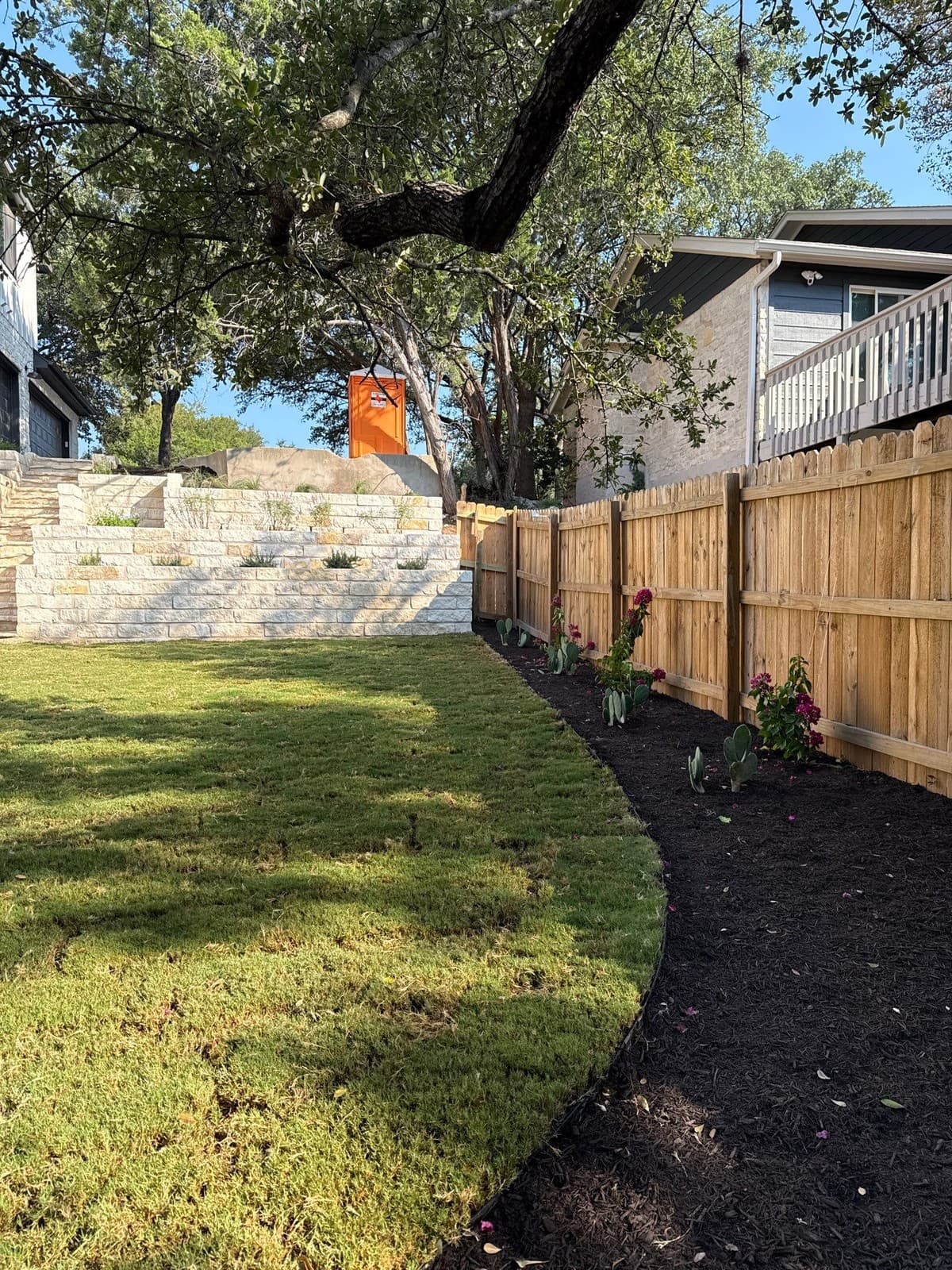
Sloped lots require either stepped panels (flat top of fence, panels drop in steps) or racked panels (fence follows the grade continuously). Racking works with solid board fences. Stepped panels are required for lattice tops or decorative styles. Both options add labor over a flat-ground fence.
For stepped panels on significant grade (more than 8 inches of drop per panel): add 1–2 hours of labor per 8-foot panel for cutting, fitting, and step calculation. On a 100-LF fence with 10 steps, that is 10–20 extra man-hours. At $80/man-hour, that is $800–$1,600 that flat-rate pricing misses entirely.
Old Fence Removal and Disposal
If there is an existing fence to remove, that is a separate line item. Old post removal — especially posts in solid concrete footings — can take 30–60 minutes per post with a bobcat or manual labor. For 100 LF with 13 posts in old concrete: budget 6–10 man-hours of removal labor, plus dump fees.
Old fence material: one truckload of old fence debris typically runs 300–400 LF of fence. Dump fees at $80–$120 per load plus haul time. Price it separately — never absorb demolition into your new fence rate.
Stop guessing on estimates
Build accurate estimates in minutes, not hours.
Ledge has assembly-based estimating built in — material takeoffs, labor rates, and markup all in one place. No more spreadsheet math.
Book a Demo →Frequently Asked Questions
How much does a wood fence cost per linear foot installed?
A professionally installed cedar privacy fence runs $28–$55 per linear foot in most markets, depending on height, post size, and site conditions. Flat-ground, straight-run installs with no gates come in at the lower end. Sloped lots, gates, or premium lumber push higher. Pressure-treated pine fences run $18–$35/LF. Any quality install below $22/LF is leaving out labor burden, concrete, or overhead.
How many pickets do I need per linear foot?
Standard 1×6 dog-ear cedar pickets are 5.5 inches wide. At 1/4-inch spacing between pickets, each picket covers approximately 5.75 inches. Divide your total linear footage by 5.75 inches (0.479 feet) to get your picket count. For 100 LF: 100 ÷ 0.479 = 209 pickets. Add 10% for waste and cuts = 230 pickets. Always confirm your spacing preference with the client — some prefer tighter installation with no gaps.
How deep do fence posts need to be?
A minimum of one-third of the total post length, plus 6 inches below the frost line in frost-prone areas. For a 6-foot fence with 4×4 posts: use 9-foot posts set 3 feet deep minimum. Gate posts should go deeper — at least 3.5 feet for a 4-foot-wide gate, and 4 feet for wider or heavier gates. Never set posts in loose soil without concrete.
Is cedar or pressure-treated better for a fence?
Use pressure-treated for all posts (in-ground contact) and cedar for pickets and rails. Cedar accepts stain better, looks more premium, and is easier to work with for finish work. Pressure-treated holds up better in ground contact — cedar posts in concrete can fail in 8–12 years in wet climates, while properly set pressure-treated posts last 20–30 years. This combination gives you the best of both materials.
Edgar Galindo
Co-founder, Ledge
Edgar built Ledge while running a landscape design-build company in Central Texas. Fence jobs taught him that flat-rate pricing is a race to the bottom.