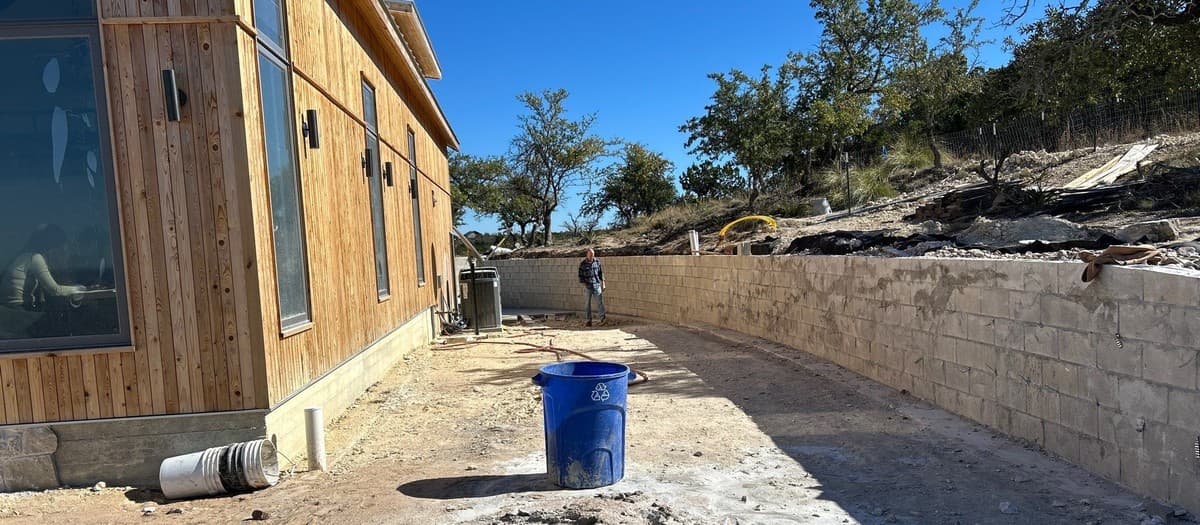
Everything changes above 4 feet. Engineering letters, structural review, expanded geogrid requirements, and permit timelines can add $2,000–$5,000 to your cost before a single block is set. Here is how to estimate tall retaining walls correctly.
The 4-foot mark is not arbitrary. Below it, most municipalities treat retaining walls as standard landscape construction. Above it, you are in engineering territory. Structural review, geotechnical considerations, permit timelines, and inspection requirements all change. Your estimate needs to reflect that reality — not the price of a taller version of your standard wall.
What Changes Above 4 Feet
Most building codes — including IBC and the model codes adopted by most Texas municipalities — trigger permit and engineering requirements for retaining walls over 4 feet of exposed height. Some jurisdictions set the threshold at 3 feet. Check the local code before you quote. Assumptions here create expensive problems.
- Engineering letter or stamped drawings required in most jurisdictions for walls over 4 feet
- Building permit required, with associated fee and inspection schedule
- Expanded geogrid requirements — more layers, potentially longer embedment depth
- Surcharge analysis — what is above the wall? A driveway, a structure, or a slope changes the design
- Inspection holds — city inspector must approve each geogrid layer before you continue
Engineering Costs: Budget $800–$2,500
Engineering for a residential retaining wall over 4 feet runs $800–$2,500 for a stamped letter or structural drawings, depending on the engineer's scope of work, the complexity of the wall, and whether a site visit is included. Some engineers offer a desk review and letter for $800–$1,200. Others require a site visit and full structural analysis for $1,800–$2,500+.
Engineering cost is a pass-through. Add your 10–15% markup and put it on the estimate as a line item — "Engineering and structural review." Clients who balk at engineering cost need to understand it is not optional. It protects them from a wall that fails and injures someone.
Do you need a geotechnical report? For walls over 6 feet or with significant surcharge loads (driveway above, building setback close), some engineers require a soils report from a geotechnical firm. Geotech reports run $1,500–$4,000. Confirm with your structural engineer before you promise the client a price.
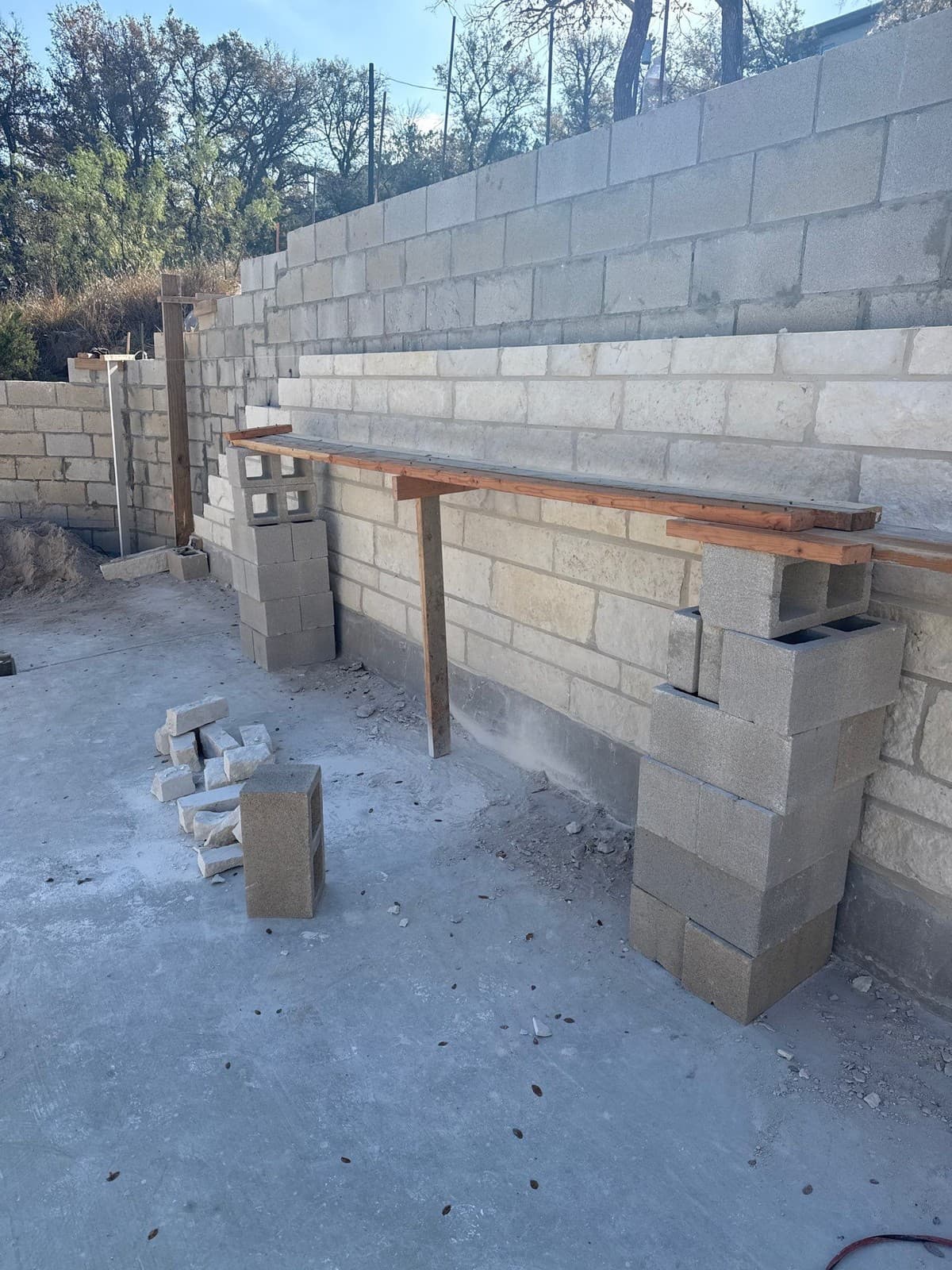
Geogrid for Tall Walls: More Layers, More Material
For a standard 36-inch wall, Allan Block and Belgard engineering specifications typically require 1–2 layers of geogrid. A 6-foot wall in average soil conditions might require 3–4 layers, depending on block type and surcharge. A wall near a driveway or with significant slope above it could require 4–5 layers with geogrid extending 6–8 feet back into the retained slope.
Geogrid material cost: $0.60–$1.10 per SF of wall face per layer. For a 50 LF wall at 6 feet tall with 4 geogrid layers extending 6 feet back: 50 × 6 = 300 SF of wall face × 4 layers × $0.85/SF average = $1,020 in geogrid material. Plus the labor to fold and compact fill over each layer before continuing.
Geogrid installation takes time. Lay the grid, fold back the exposed end, compact fill at every lift, then inspect. For an engineered wall with 4 geogrid layers, expect 30–50% more labor hours per linear foot than a standard ungridded wall of the same height.
Permit Timelines: Build It Into Your Schedule
Pulling a retaining wall permit for a structure over 4 feet is not a next-day approval. Most jurisdictions take 2–6 weeks to review plans and issue the permit. During busy periods, plan reviews can take 8–12 weeks. If your client wants construction to start next month, they need to approve the contract and engineering budget today — not after the estimate sits for two weeks.
Inspection holds slow construction further. When the city requires an inspection at each geogrid layer, you may need to stop for 24–48 hours per layer waiting for the inspector. On a 4-layer wall, that is potentially 4 inspection windows over the course of the build. Factor those delays into your schedule and communicate them to the client before the job starts.
"A tall wall with no permit is a time bomb. It will either fail structurally or fail inspection at resale — usually both."
Full Cost Estimate: 50 LF × 6-Foot Engineered Wall
Here is a real-world cost build for a 50 linear foot, 6-foot exposed height engineered retaining wall in Central Texas.
- Engineering and stamped drawings: $1,600
- Permit fee: $380
- Block (9 courses, 350 units @ $3.80): $1,330
- Cap block (50 caps @ $5.00): $250
- Base course gravel (4 tons @ $58): $232
- Drainage aggregate (8 tons @ $58): $464
- Filter fabric + 4-inch perforated pipe: $240
- Geogrid (4 layers, 300 SF × 4 @ $0.90): $1,080
- Equipment (mini-ex 3 days, plate compactor): $1,500
- Dump fees (8 loads @ $85): $680
- Labor (190 man-hours @ $82): $15,580
- Total cost: $23,336 | Client price at 45% GM: $42,430
That is $848 per linear foot. Contractors who quote $500–$600/LF on an engineered 6-foot wall are either skipping the engineering cost, underestimating labor hours, or both. The inspection delays alone add days of overhead that a flat per-foot rate cannot absorb.
Stop guessing on estimates
Build accurate estimates in minutes, not hours.
Ledge has assembly-based estimating built in — material takeoffs, labor rates, and markup all in one place. No more spreadsheet math.
Book a Demo →Frequently Asked Questions
Do I need an engineer for a retaining wall over 4 feet?
In most jurisdictions, yes. Walls over 4 feet of exposed height typically require a permit and engineering review — either a stamped letter from a licensed structural engineer or full structural drawings. Some municipalities set the threshold at 3 feet. Check the local building code before quoting. Building without a required permit creates liability for both you and the client when the property sells or the wall fails.
How much does it cost to engineer a retaining wall?
Expect $800–$2,500 for structural engineering on a residential retaining wall over 4 feet. Simple desk reviews with a letter of conformance come in at the lower end. Full structural drawings with site visit run higher. If the engineer requires a geotechnical soils report, add $1,500–$4,000 for that study. Pass all engineering costs through to the client with your markup — they are direct project expenses, not overhead.
How many geogrid layers does a 6-foot retaining wall need?
Typically 3–5 layers depending on soil type, surcharge, and block manufacturer specifications. Belgard and Allan Block both publish engineering design charts for their products — use them as the starting point, then defer to your structural engineer's specifications. In average soil with no surcharge, 3–4 layers is common for a 6-foot wall. Sandy or loose soils, or walls near driveways, may require additional layers extending deeper into the retained area.
How long does it take to get a retaining wall permit?
Plan review typically takes 2–6 weeks for residential permits in most Texas cities, though some jurisdictions take 8–12 weeks during busy periods. Engineering must be complete before the permit application is submitted — so the full timeline from design approval to permit-in-hand can be 4–10 weeks. Tell your client this timeline before they sign the contract. Most people assume permits take days, not months.
Edgar Galindo
Co-founder, Ledge
Edgar built Ledge while running a landscape design-build company in Central Texas. Tall retaining walls taught him that the most expensive line items are the ones you forgot to put in the estimate.