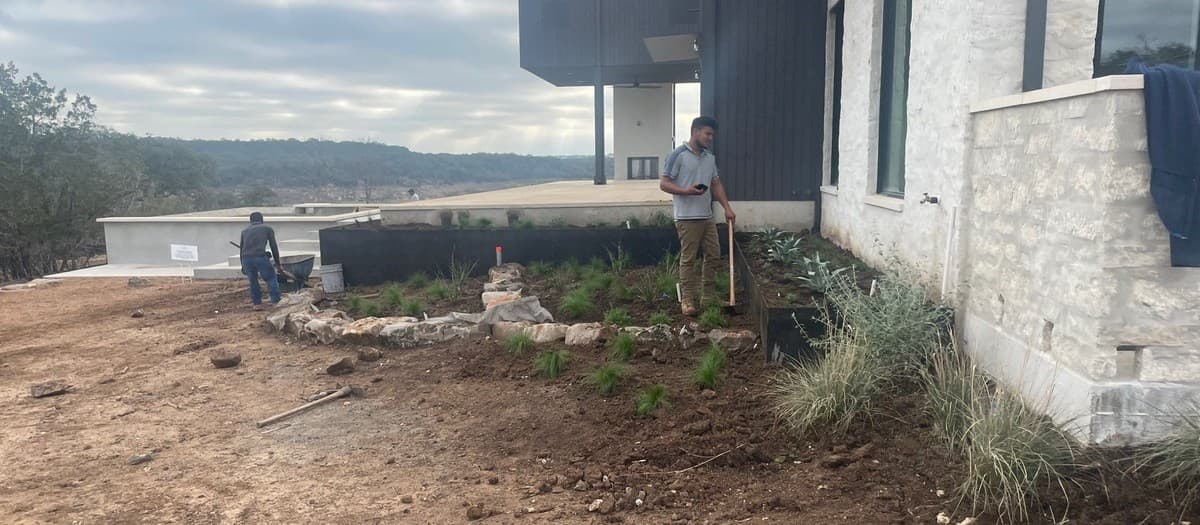
Most contractors use foreman and crew lead interchangeably. They are not the same role. Getting this distinction right changes how you hire, how you pay, and how your jobs run without you.
You tell someone they are the "lead" on a job. They think that means they drive the truck and make sure everyone shows up. You think it means they own quality, pace, client communication, and daily decisions. Neither of you is wrong — you just never defined the role.
In landscape construction, site leadership titles get used loosely. Crew lead, foreman, lead tech, site supervisor — these get assigned based on seniority or convenience rather than defined scope. That ambiguity creates gaps in accountability and confusion about who owns what when something goes wrong. Here is how to clean it up.
What a Crew Lead Actually Does
A crew lead is primarily a working position. They do the skilled installation work — they lay pavers, set wall block, read site plans — while also directing the rest of the crew on what to do and in what order. Their authority is operational, not administrative. They make task-level decisions: where to start the pattern, which area to prep first, how to handle an access problem.
A crew lead is not expected to handle client conversations beyond basics, make scope change decisions, or manage material ordering. They are the best installer on site who also keeps the crew organized and on pace. They escalate problems rather than resolve them independently.
- Owns: Installation quality, crew task sequencing, daily pace, equipment safety
- Escalates: Scope changes, material shortages, client concerns, site conditions not in the plan
- Typical pay range: $22–$32/hour depending on market and skill level
What a Field Foreman Actually Does
A field foreman operates above the crew lead. They may or may not be working with their hands on a given day — their primary job is coordination, not installation. A foreman oversees multiple crews or multiple phases of a complex project. They can have client conversations, make scope decisions within defined limits, handle material ordering, and manage crew lead performance.
In a two-to-four crew operation, a field foreman is typically the owner's primary delegate — the person who keeps everything moving while the owner handles sales and business development. This is a management role, not just a senior installation role.
- Owns: Job scheduling across crews, material coordination, crew lead performance, client communication, quality sign-off
- Escalates: Pricing changes, contract disputes, personnel issues beyond their authority
- Typical pay range: $28–$45/hour or salaried $55,000–$80,000 depending on scope and market
Which Role Does Your Operation Actually Need?
If you have one crew: you need a crew lead. Someone trusted to run the daily install while you are handling business development or on-site elsewhere. You do not need a foreman — that is your role as owner.
If you have two to three crews: you need a crew lead for each team, and a field foreman who ties it together. Without a foreman at this stage, you end up being the de facto coordinator for both crews — which means you are in the field instead of in sales, and your pipeline dries up.
If you have four or more crews: you need at least one full-time field foreman, potentially two. The ratio of foreman to crew is roughly 1:2 to 1:3 depending on job complexity and geography.
"Do not promote your best installer to foreman and then wonder why your install quality drops. Installing and managing are different skills."
The Promotion Trap
The most common mistake is promoting your best installer to foreman because they deserve a raise and a title. The problem: your best installer may be a terrible manager. Installing pavers requires physical skill, pattern recognition, and attention to detail. Managing crew requires communication, conflict resolution, planning, and the ability to give direct feedback. These skills rarely arrive together in the same person.
When you pull your best installer off the tools and into coordination, you lose their installation output and often get a reluctant, uncomfortable manager who does not know how to address crew performance. Better approach: keep your best installer as a senior crew lead, pay them accordingly, and find someone with demonstrated management instincts for the foreman role.
Run a tighter operation
Ledge gives you visibility into every job without being on-site.
Job tracking, crew assignments, photo documentation, and production notes — all in your phone. Stop managing by walking job sites.
Book a Demo →Frequently Asked Questions
Should a field foreman still work with their hands?
On smaller operations, yes — a working foreman who installs alongside the crew while coordinating is common and cost-effective. As the operation grows beyond three crews, the coordination load becomes a full-time job. At that point, a foreman who is also installing is either doing neither job well or burning out. Know when to make that transition based on how many hours the coordination work is actually consuming.
How should I pay a crew lead vs. a foreman?
Crew leads in landscape construction typically earn $22–$32/hour depending on skill level and market. Field foremen usually earn $28–$45/hour, or a salary in the $55,000–$80,000 range if the role is primarily coordination and management. The jump in pay reflects the jump in decision-making authority and accountability. Do not pay a foreman rate for a crew lead role, and do not pay a crew lead rate for someone doing foreman work.
Can a crew lead handle client communication?
Yes, for routine site interaction — answering basic questions, confirming daily plans, flagging if a client needs to be reached. What a crew lead should not handle: scope change conversations, pricing questions, complaint resolution, or anything that could create a commitment the owner has not approved. Teach crew leads where the line is and who to hand off to when a conversation crosses it.
How do I develop someone into a foreman role?
Start by giving them visibility into the parts of the job that go beyond installation: job costing, scheduling, material ordering. Let them shadow those processes before owning them. Give them crew lead responsibility on a single job with you accessible as backup. Expand scope incrementally. Most foremen fail because they were thrown into the role without a ramp — not because they lacked the potential.
Edgar Galindo
Co-founder, Ledge
Edgar built Ledge while running a landscape design-build company in Central Texas. He has filled every role on this list at some point and learned what each one actually requires.