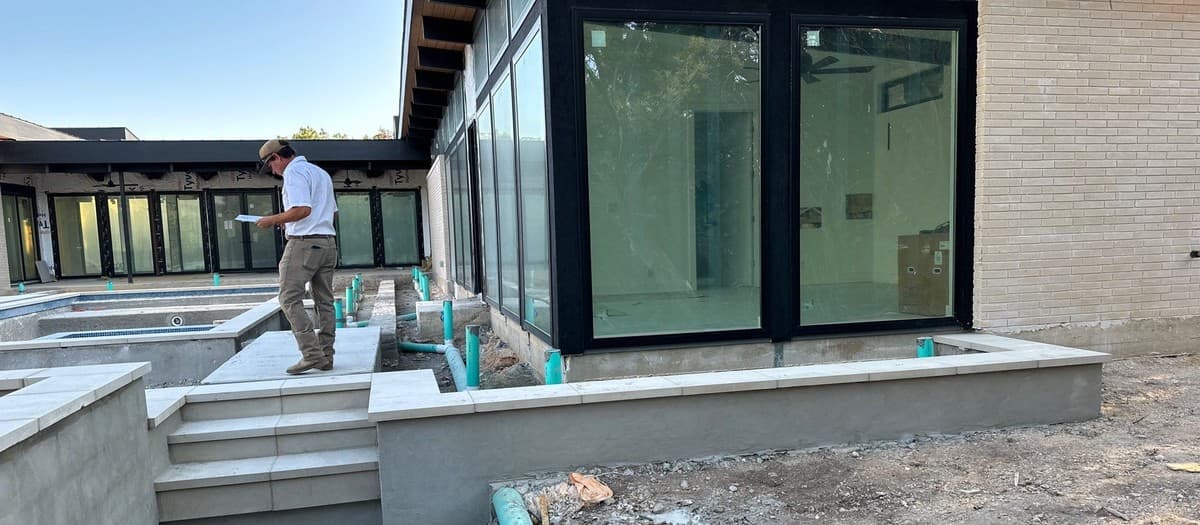
Drainage jobs get sold on the problem and lost on the scope. A catch basin is the easy part — pipe runs, outfall location, and grading to make it all work is where most estimates fall short.
The homeowner has pooling water in their yard, water running along the foundation, or a low spot that floods after every rain. They want it fixed. You can fix it. But if you price only the basin and forget the pipe run, the outfall, and the grading needed to make it work, you end up doing the full job for partial pay.
Drainage jobs should be estimated as a system, not as individual components. The catch basin collects water. The pipe moves it. The outfall releases it. The grading makes the surface drain toward the basin in the first place. Price each part separately.
The Full System Cost Breakdown
A complete catch basin installation with 30–50 LF of pipe and a simple daylight outfall runs $1,200–$2,800 installed. Multi-basin systems with longer pipe runs and complex outfall structures can reach $5,000–$12,000. Here is what drives the cost:
- Catch basin (NDS or equivalent): $35–$120 for the basin unit depending on size. A standard 9×9 NDS basin runs $35–$55. A 12×12 or 18×18 basin for higher flow areas runs $65–$120. Always install a debris basket — cleaning it costs less than digging out a clogged outlet pipe.
- Basin excavation and setting: $150–$300 per basin including excavation, bedding, and backfill. Rocky soil adds time. Multiple basins on a shared pipe run are more efficient — price each basin individually but note the efficiencies on multi-unit jobs.
- Pipe (4-inch solid PVC or corrugated): $3.50–$6.00/LF installed. PVC is more rigid, holds grade better, and lasts longer. Corrugated is cheaper and more flexible around obstacles. For runs over 30 feet, PVC is worth the premium. Measure every foot of pipe — do not estimate from basin to outfall on a straight line.
- Pipe trenching: $3–$6/LF. This is labor for digging the trench, bedding the pipe at grade, and backfilling. Hand-trenching through established lawn is slow. A trenching machine is faster but costs money to bring to site. Price accordingly.
- Outfall / daylight end: $150–$450 depending on type. A simple pipe daylighting at the property edge is $150. A flap gate (pop-up emitter) that closes between rain events runs $35–$65 for the fitting. A rip-rap outfall pad with 6–8 inch river rock over fabric to prevent erosion adds $200–$350. Specify the outfall type before you bid.
- Surface grading to basin: $0.15–$0.35/SF of area being redirected. Moving soil to establish positive drainage toward the basin is often the most time-consuming part of the job. Measure the area you are grading, not just the channel to the basin.
- Restoration (sod or seed over trenched areas): $0.50–$1.20/SF. After you cut through a lawn to lay pipe, you need to put it back. Sod over the trench line is faster for the client; seeding is cheaper. Price it as a line item, not as "included."
How to Find the Outfall Before You Bid
The outfall location determines whether the job is straightforward or expensive. Walk the property boundary and look for:
- A street curb or gutter the pipe can daylight into — best case, short run.
- A rear or side property edge that slopes away — pipe daylights through the fence line.
- An existing storm drain or swale on the property — connect to it.
- No obvious outfall — you may need a dry well, underground infiltration system, or a conversation with the homeowner about what their municipality allows.
The outfall affects pipe run length — which is your biggest variable cost. Know where it goes before you write the number down.
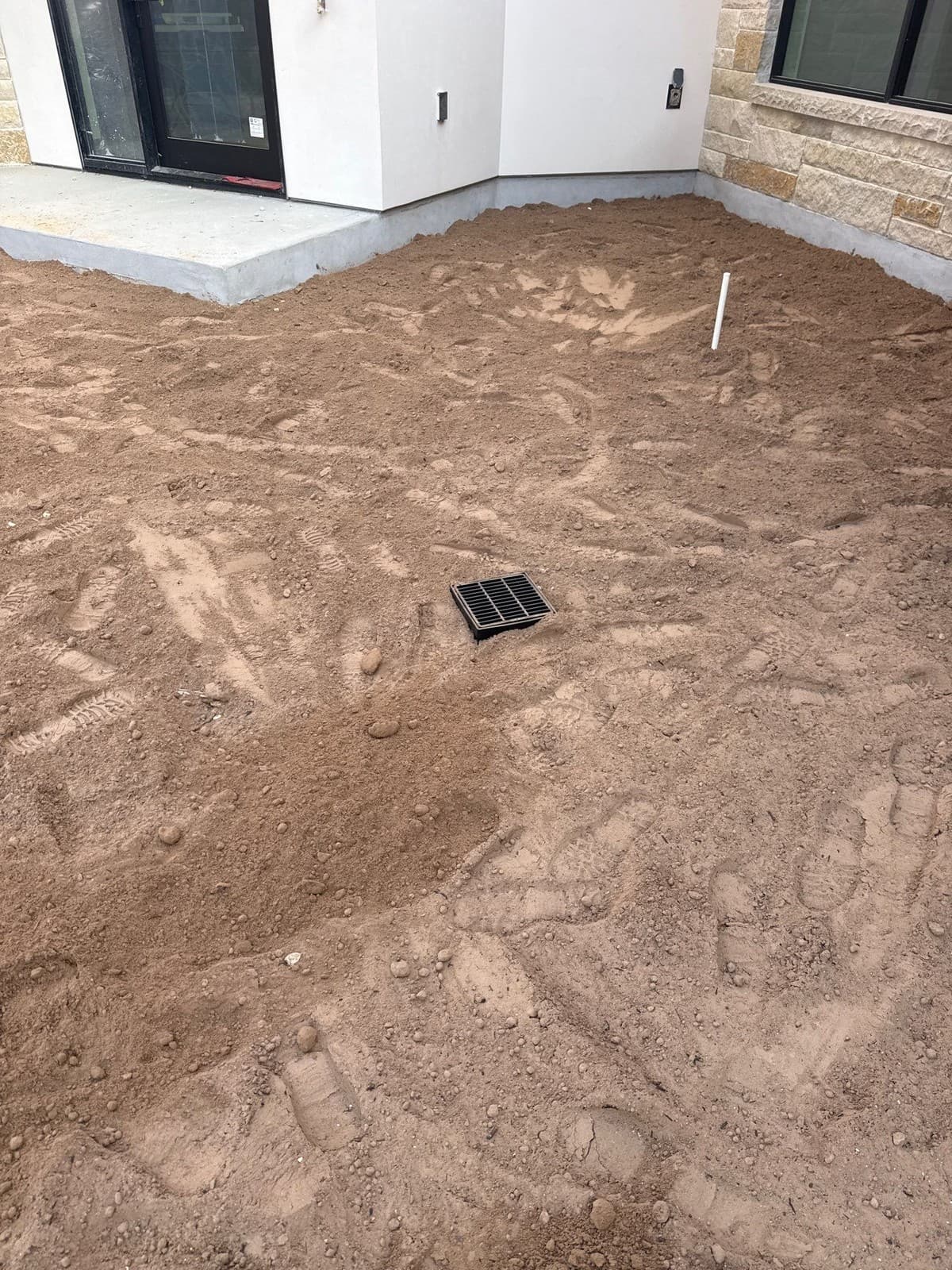
Pipe Grade: The Detail That Makes It Work
Drainage pipe requires minimum 1% grade to drain properly — that is 1 inch of drop per 8 feet of run. On a flat yard, this means your pipe trench gets progressively deeper as it moves toward the outfall. On a 50 LF run with 1% grade, the pipe at the outfall end sits about 6 inches deeper than at the basin.
What does this mean for your estimate? Deeper pipe at the outfall end means more excavation, more spoil to haul, and harder access if you are crossing concrete or hardscape. On sloped properties, the math works in your favor — on flat lots, it adds cost. Check the site grade with a level or water level before you price trenching.
"Price the pipe run, not the bird's-eye distance. Every foot of trench is real labor."
When to Recommend a French Drain Instead
Catch basins collect surface water at a point. French drains collect subsurface water along a line. If the client has ponding in one specific low spot, a catch basin solves it. If they have a yard that stays wet across a large area after rain, a French drain is the better solution.
The right diagnosis saves you from installing the wrong system and handling the callback. Walk the site after a rain if possible, or ask the homeowner to describe exactly where the water sits and for how long. A catch basin in the wrong location will not fix a French drain problem.
Stop pricing drainage as one line item
Price basins, pipe runs, and outfalls separately.
Ledge has drainage system assemblies built in — enter basin count, pipe footage, and outfall type. The system calculates trenching, restoration, and grading costs automatically.
Book a Demo →Frequently Asked Questions
How much does a catch basin installation cost?
A single catch basin with 30–50 LF of pipe and a simple outfall runs $1,200–$2,800 installed. Multi-basin systems with longer pipe runs cost $4,000–$12,000+. The biggest cost variable is pipe run length and outfall complexity — measure both before you bid.
What size catch basin should I install?
A standard 9×9 NDS basin handles typical residential drainage. Low-lying areas that collect significant sheet flow need a 12×12 or 18×18 basin. Match the basin inlet grate size to the expected flow rate — an undersized basin will fill and overflow. When in doubt, size up.
What pipe grade is required for drainage pipe?
Minimum 1% grade — 1 inch of fall per 8 feet of pipe. On flat lots this means your pipe trench deepens as it approaches the outfall. Factor this into your trenching labor estimate, especially on long runs across flat properties where the trench depth at the outfall end may be 8–12 inches deeper than at the basin.
Should I include lawn restoration in a drainage estimate?
Yes. Always. After you trench through a lawn to lay pipe, the client expects it to look like you were not there. Price sod or seeding over the trench line as an explicit line item — $0.50–$1.20/SF depending on sod variety. Never include it as "cleanup."
Edgar Galindo
Co-founder, Ledge
Edgar built Ledge while running a landscape design-build company in Central Texas. Drainage was the scope that taught him the most about site reading — because a basin in the wrong spot just moves the problem.