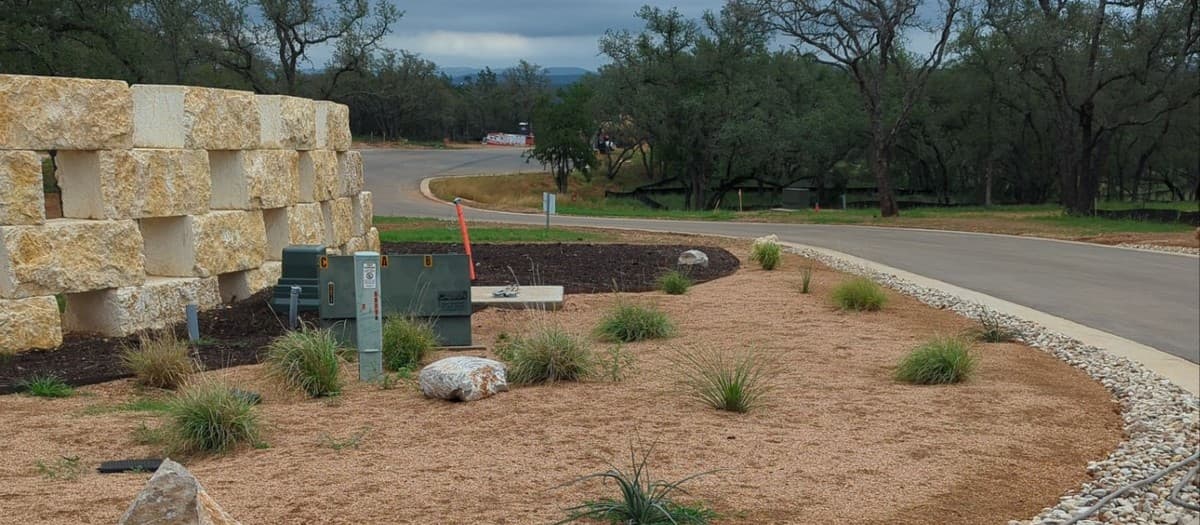
Commercial accounts offer recurring revenue and predictable cash flow. Winning them doesn't require a sales team — it requires the right relationships and a credible proposal process.
Residential landscaping is feast-or-famine work. When the phone rings, you're busy. When it doesn't, you're slow. Commercial accounts change that math. An HOA, office park, or apartment complex signs a contract that pays you $3,000 to $8,000 per month — every month — regardless of whether your phone rings for new residential leads. A handful of solid commercial accounts can fund your whole operation.
Most small landscape companies assume commercial accounts require a bid team, a formal proposal department, and years of commercial references. They don't. What they require is knowing who to approach, how to bid correctly, and how to follow up consistently.
Who Buys Commercial Landscape Services
Before you can win commercial accounts, you need to know who makes the buying decision for different property types:
- HOA communities: The HOA property manager or board president. Decisions often go through a board vote. Timing: 60 to 90 days before contract renewal.
- Office parks and commercial properties: The facility manager or property management company. Look for the management company name on the building directory.
- Apartment complexes: The property manager. Maintenance contracts are often annual and renew in fall for spring start.
- General contractors on new development: The GC project manager. Relationships here open doors to ongoing site development work.
- Municipalities: Bid through a formal RFP process. More paperwork but steady, bondable work if you qualify.
The Fastest Path: Warm Introductions
Cold outreach to commercial property managers has a low conversion rate. Warm introductions work much better. Start with who you already know:
- Residential clients who own commercial property or work in property management
- Real estate agents who work with commercial property owners
- GCs you've worked with on residential jobs who also do light commercial
- Your local chamber of commerce — property managers are often members
- Regional AIA and NAIOP (commercial real estate) chapter events
One warm introduction from a shared contact converts at 3 to 5 times the rate of a cold email to a property manager who has never heard of you.
"Our first HOA account came from a residential client who happened to be on their neighborhood board. One referral turned into a $4,800/month contract that we've held for three years."
How to Bid Commercial Work Correctly
Commercial bids are different from residential estimates. Property managers evaluate bids on scope clarity, reliability indicators, and price — roughly in that order. A vague bid loses to a clear one even if the price is similar.
Your commercial proposal should include:
- Scope of work: Exactly what's included, with frequency. "Mowing and edging: weekly, April through October. Monthly November through March."
- Exclusions: What's not included. This prevents scope creep and disputes later.
- Insurance and licensing documentation: Attach your COI and any required licenses. Managers won't have to ask and your bid moves forward faster.
- References: Even one or two commercial references help. If you don't have commercial references yet, strong residential references with high-value projects work for smaller commercial accounts.
- Response time commitment: "We respond to all service requests within 4 business hours." Commercial managers value reliability above almost everything else.
Follow Up Like You Mean It
Commercial bid cycles are longer than residential. A property manager might receive your bid, sit on it for three weeks while comparing three other bids, and then make a decision. If you don't follow up, you lose to someone who did.
Follow up five to seven days after submitting, then again at two weeks. Keep each follow-up short — two sentences, asking if they have any questions about your bid. A third touch at four weeks is appropriate for larger accounts. Don't apologize for following up. Property managers respect persistence when it's professional.
Track every commercial bid. Never miss a follow-up.
Ledge keeps all your open bids organized, reminds you when to follow up, and helps you build proposals that look as credible as a company three times your size.
FAQ
Do I need to be bonded and insured to bid commercial work?
Yes. Most commercial property managers require proof of general liability insurance ($1M minimum, often $2M) and workers' comp coverage if you have employees. Some require you to be bonded as well. Get these in place before you bid commercial work — you won't win without them.
Should I price commercial work lower to win my first accounts?
Undercutting on price to break in is a losing strategy. Property managers want reliability more than the lowest bid. A bid that's 10% lower than a known, reliable competitor rarely wins on price alone — and it trains the client to expect low prices from you going forward. Price accurately and win on your proposal quality and references instead.
How long are typical commercial landscape contracts?
One-year contracts are standard for maintenance work, often with an auto-renewal clause and a 30 or 60-day cancellation notice requirement. Installation projects are typically single-contract scopes. HOA contracts sometimes run two or three years for established vendors.
How do I find out when a commercial property's contract is up for renewal?
Ask directly. Call or email the property manager and say you'd like to submit a bid when their current landscape contract is up for renewal. Ask when that typically happens and if they accept new bids. Most managers will tell you — they keep a list of qualified vendors on file. That call alone puts you ahead of most competitors who never reach out.
Edgar Galindo
Co-founder, Ledge
Edgar built Ledge while running a landscape construction company in Central Texas. He writes about lead generation, client retention, and building a landscape brand that commands premium pricing.